What Is
Pickleball?
A backyard invention from 1965 that became a billion-dollar industry. Combining tennis, badminton, and table tennis on a compact court — simple enough to learn in an afternoon, deep enough to master over a lifetime.
Pickleball is the fastest-growing sport in the United States — and it started in a backyard. A combination of tennis, badminton, and table tennis, it is played on a compact court with solid paddles and a perforated polymer ball. The rules are simple enough to learn in an afternoon. The strategy runs as deep as you’re willing to go.
Easy on the joints, fast to learn, and relentlessly social — pickleball has found a way to appeal across every demographic. Eight-year-olds and eighty-year-olds compete on the same type of court, with the same equipment, under the same rules. That accessibility, combined with a fiercely competitive professional scene and celebrity investor backing, has turned a rainy-day invention into a billion-dollar industry.
The Basics — For Newcomers
Never picked up a paddle? Here’s everything you need to understand the sport.
Pickleball is played on a 20 × 44 foot court — the same dimensions as a doubles badminton court — divided by a low net. Games go to 11 points (win by 2), and only the serving team can score. The most common format is doubles (2v2), though singles is growing fast in the pro game.
The serve must be made underhand, below the waist, and cross-court into the service box. After the serve, both teams must let the ball bounce once before volleying — this is called the Two-Bounce Rule, and it’s what keeps the game from being dominated by powerful serves.
The most distinctive feature is the Kitchen — officially the Non-Volley Zone (NVZ). This is the 7-foot strip on each side of the net where you cannot volley the ball. It forces players into soft, strategic “dink” exchanges rather than blasting winners from close range — and it’s where most points are ultimately decided.
Invented in 1965 on Bainbridge Island, Washington, pickleball has exploded from a backyard game into a professional sport with nationally televised tournaments, dedicated facilities, and millions of active players. Whether you’re 8 or 80, recreational or competitive, there’s a place for you on the court. — The story of pickleball in one sentence
Court Dimensions & Zones
The official pickleball court is 20 ft wide × 44 ft long. The Kitchen (NVZ) is the defining feature that separates pickleball strategy from all other racquet sports.
The transition zone — the middle area between the kitchen line and the baseline — is where tactical battles are often won or lost. Moving from the baseline toward the kitchen while avoiding hitting the ball into the net is one of the fundamental skills of pickleball. Pros call reaching the kitchen line without giving away an attackable ball “the third-shot drop.”
Complete History Timeline
From a bored summer afternoon in 1965 to a billion-dollar professional sport — every pivotal moment in sixty years.
Growth Explosion: Players 2016–2024
From 2.5 million recreational players to 19.8 million (2024) in under a decade — a 692% surge. SFIA’s 2025 report puts the total at 24.3 million when casual players are included. Chart below shows core player data through 2024.
Why the Sport Keeps Growing
Eight structural advantages that explain an unprecedented growth curve.
Pickleball vs. Racquet Sports
Including padel — the fastest-growing global competitor — across every dimension that matters to players and investors.
| Dimension | Pickleball | Tennis | Badminton | Table Tennis | Padel |
|---|---|---|---|---|---|
| Court Size | 20×44 ft | 36×78 ft | 20×44 ft | Table only | 32.8×65.6 ft |
| Serve Style | Underhand only | Overhead + toss | Underhand | Backhand toss | Underhand + walls |
| Scoring System | 11 pts (serve-only) | Sets / games / pts | 21 pts (rally) | 11 pts (rally) | 6 games / sets |
| Physicality | Medium-low | High | High (cardio) | Low | Medium-high |
| Learning Curve | ~2 hours | Weeks to months | Days to weeks | Hours to days | Days (walls help) |
| Spin & Strategy | High (dinks, drops) | High (slice, topspin) | Medium | Very high (spin) | High (walls add depth) |
| Startup Cost | $50–$200 | $150–$400 | $40–$120 | $20–$80 | $150–$400 |
| Similarity to Pickleball | — | High (court, net, serve) | Very high (court size!) | High (spin / strategy) | Growing rival (walls) |
Who Is Playing? Demographics
The fastest-growing age segment is 18–34. But the 55+ cohort remains the largest overall — and the sport’s gender gap is rapidly closing.
Age Distribution
Gender Split
Geographic Hotspots
Pickleball by the Numbers
The raw scale of the sport in 2025 — from players to prize money to global reach. All figures sourced below.
Pro Tour • Player Profiles
Pro Players
& the Ben Johns System
Meet the athletes redefining what is possible with a paddle, a plastic ball, and terrifying precision. At the top of the mountain stands one man who turned pickleball into a science — and then kept winning anyway.
The GOAT • #1 Overall
Ben
Johns
Ben Johns does not play pickleball the way you do. He plays it the way a chess grandmaster plays blitz — every move calculated, every shot purposeful, every rally a slow squeeze you do not see until it is too late. There is no flash here, no crowd-pleasing theatrics. Just a system that has produced more titles than any player in the history of the sport.
A biochemistry student turned full-time professional, Johns approaches the game with an analytical precision that borders on scientific. He films opponents, catalogues tendencies, and arrives at every tournament with a game plan for each potential matchup. His peak DUPR rating of ~7.41 — the highest ever recorded in the sport, a full half-point clear of the next best player — makes the gap feel almost unfair. After splitting from brother Collin in early 2025, Ben partnered with Gabe Tardio in men's doubles — winning 13+ titles together and going undefeated through the first half of 2026.

Record
"Ben Johns has won more PPA titles than any player in pickleball history — 180 and counting."
His 21 Triple Crowns (winning singles, doubles, and mixed in a single tournament) remain a benchmark that no other player has approached.
The 5 Principles of the Ben Johns System
How the GOAT turns pickleball into a slow, methodical execution
System Over Brilliance
He does not hit highlight-reel shots. He runs a system that makes every rally a slow, methodical squeeze until you crack. Consistency is the highlight reel.
Own the Kitchen
50.7% of his winning shots finish at the NVZ line. He controls the kitchen like it is his living room and you are a guest who overstayed the welcome.
Decision Before Contact
By the time the ball reaches his paddle, the decision is already made. Zero hesitation. Zero wasted motion. The shot is pre-loaded before the bounce.
Patience is a Weapon
99-out-of-100 dink consistency. He will dink with you all day long, waiting for the one ball you pop up. His patience is not passive — it is a psychological weapon.
Study Opponents
Film study, pattern recognition, tendencies catalogued. He knows your weakness before you step on court. The game is won in the preparation, not the execution.
"Ben Johns does not beat you — he lets you beat yourself. His 99-out-of-100 dink consistency means he is just waiting for you to blink first."— Anonymous PPA Tour Pro, post-match interview
Feature Players
The names right behind Johns — and closing fast
#1 Women's • Franklin + Nike ($10M+)
Anna Leigh
Waters
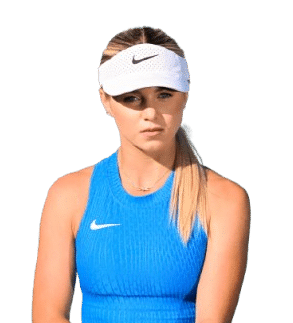
Waters became the #1 ranked women's player at just 15 years old — the youngest in the sport's history. She combines a ferocious two-handed backhand with an IQ for the game that belies her age. In five years on tour she has accumulated more professional titles than most players achieve in a career.
Her partnership with Ben Johns in mixed doubles has yielded an almost absurd 97.7% win rate. When asked what separates her, opponents consistently cite the same thing: she is never, ever in a hurry. Every shot is measured. Every point is a puzzle she has already solved.
Top 3 Overall • Free Agent
JW
Johnson

At 22, Johnson already has the fastest hands on the professional tour. His speed-ups are the closest thing to undefendable in the modern game — a blur-of-motion attack off the kitchen line that neutralises opponents before they can reset.
Currently unsigned and one of the most sought-after free agents in the sport's history, he combines elite athleticism with a competitive ferocity that makes him dangerous in any format.
The Money
Prize money grew 100x in five years. Pickleball is finally paying like the sport it has become.
Top pros now earn seven-figure sponsorship deals. JW Johnson is unsigned — and worth every dollar of whatever comes next. Anna Leigh Waters' Franklin deal is reportedly $10M+. The fastest-growing sport in America is starting to pay like it.
The Full Roster
The Contenders
The next wave of elite talent pushing the top ranks across all categories
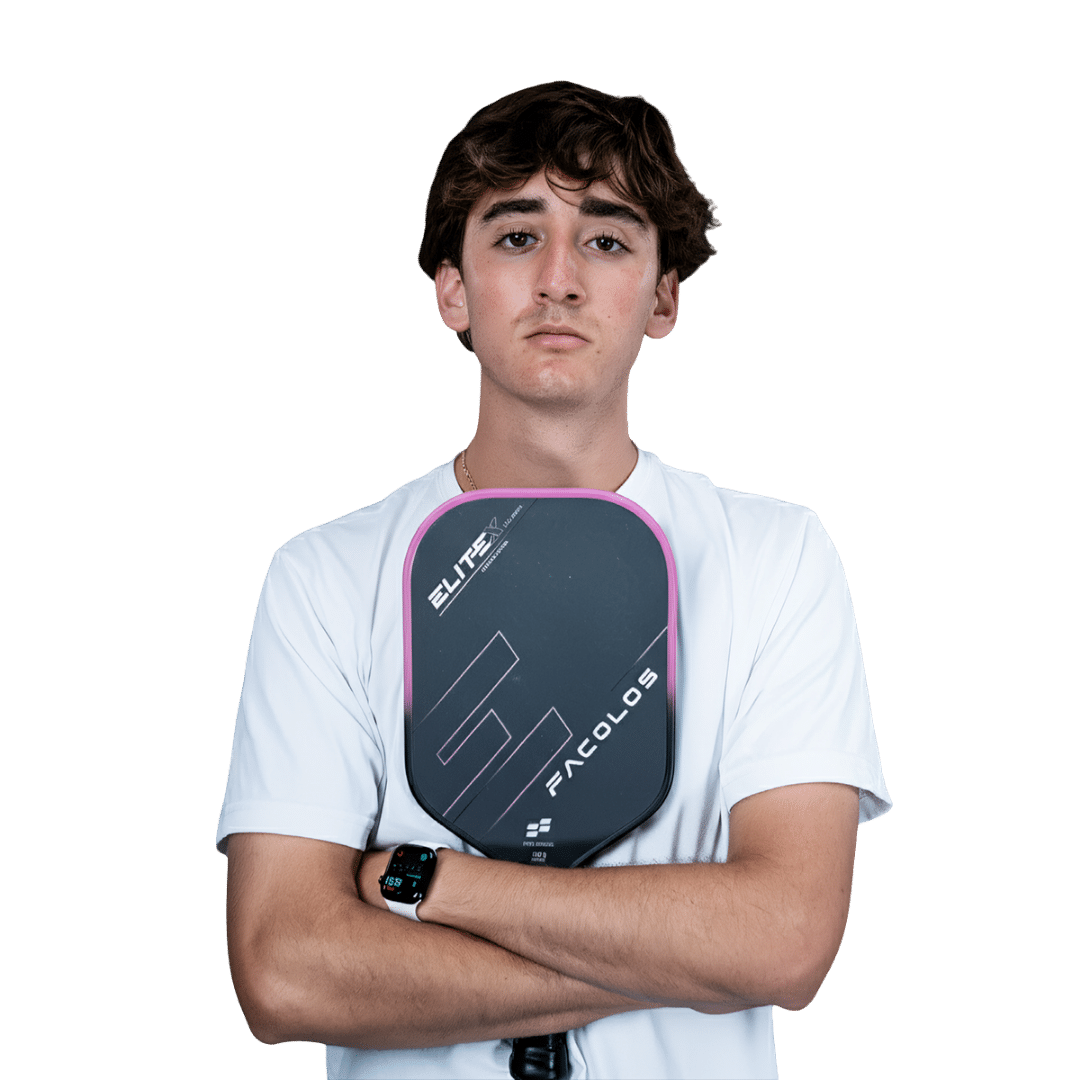
Gabriel Tardio
Age 20. Ben Johns’ doubles partner since early 2025. 20 career PPA titles. Multi-year Facolos deal through 2027.

Hunter Johnson
Age 31. Co-founded HIT Pickleball. 66.8% win rate. Complete singles game. ELO 2100.

Anna Bright
Age 26. $1.23M MLP record draft pick. 78.9% win rate. Partners with ALW — undefeated streak in women’s doubles 2026.
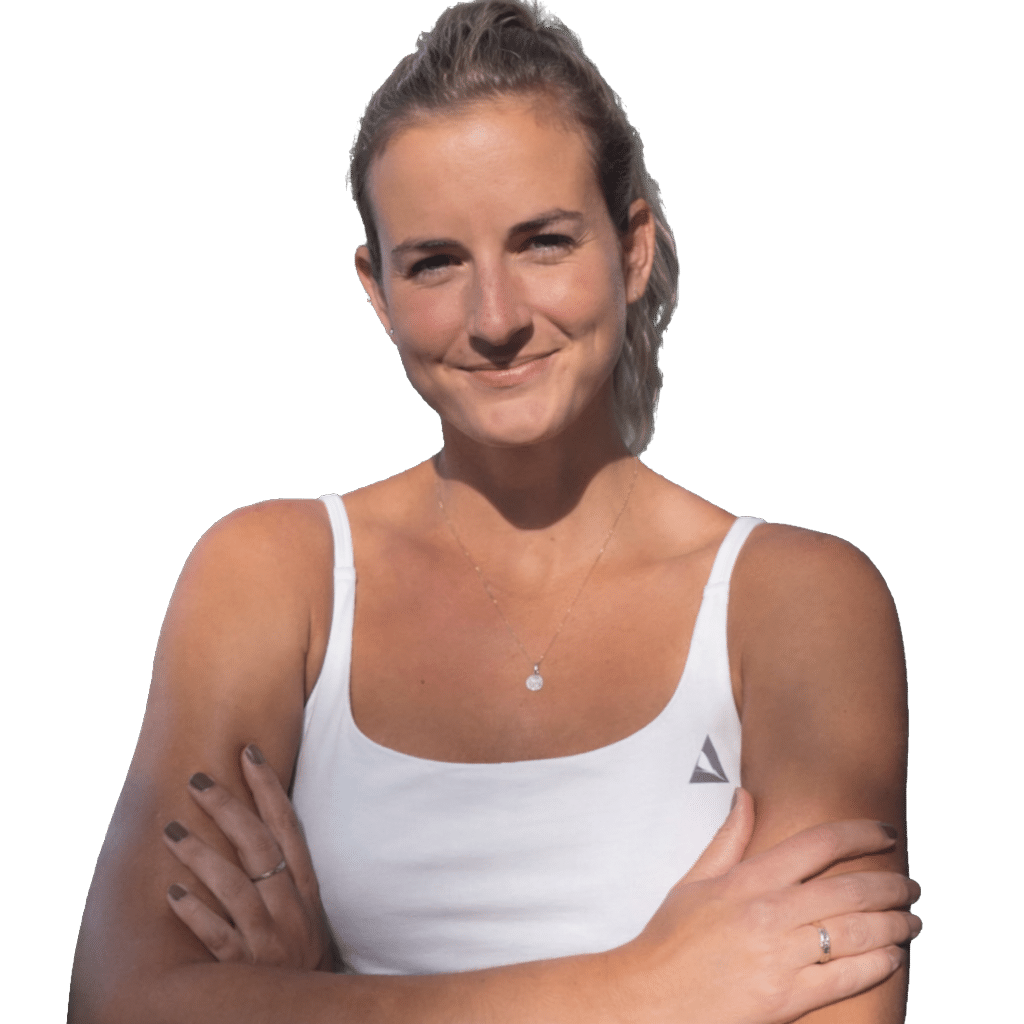
Kate Fahey
Age 29. Former D1 tennis. 66.9% win rate. Signed ProXR January 2026. All-around consistency.
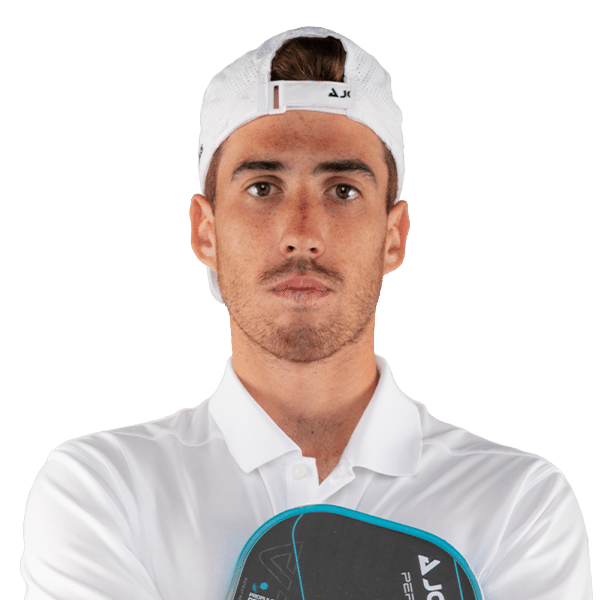
Federico Staksrud
Age 35. Argentine powerhouse. 71.0% win rate. 17 career titles. DUPR 7.117 singles. Returned to JOOLA in 2026.

Christian Alshon
Age 24. Tennis at U of Chicago. Explosive speed-ups. 20 clean winners vs Staksrud in Tucson 2025. DUPR 7.148 doubles.
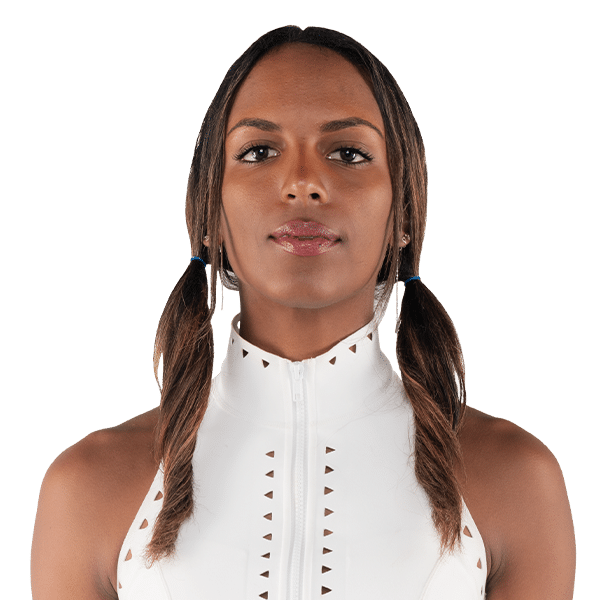
Tyra Black
One of the highest-ranked women on tour. Dominant doubles specialist with elite court coverage and consistency.

Christopher Haworth
Age 31. 6’4” power game. 63.6% win rate. Switched to Luzz in 2026. Beat Ben Johns 11-6, 11-6 at Mesa Cup.

Kaitlyn Christian
Former WTA doubles pro. Transitioned to pickleball and rose to #3 in Women’s Singles. Elite net game and doubles IQ.

Andrei Daescu
Age 37. Romanian-American. Partners with Alshon — 3 golds in 4 events. DUPR 7.086 doubles. Elite consistency.
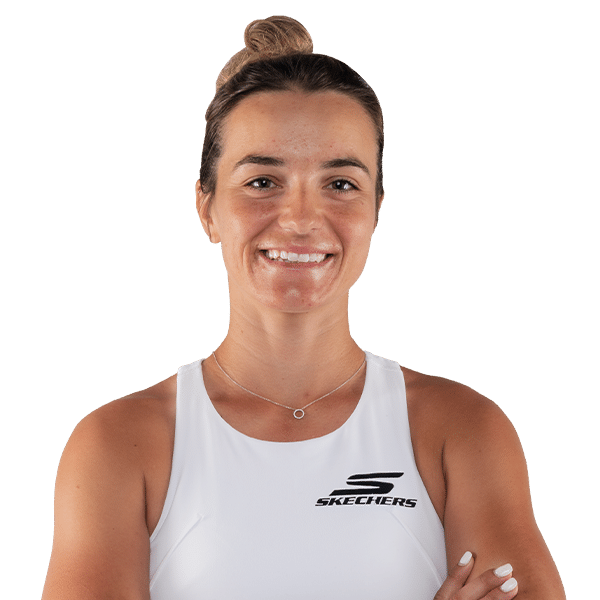
Catherine Parenteau
Age 31. Pioneered the “drip” hybrid third shot. DUPR 6.198 doubles. 73.5% career win rate.
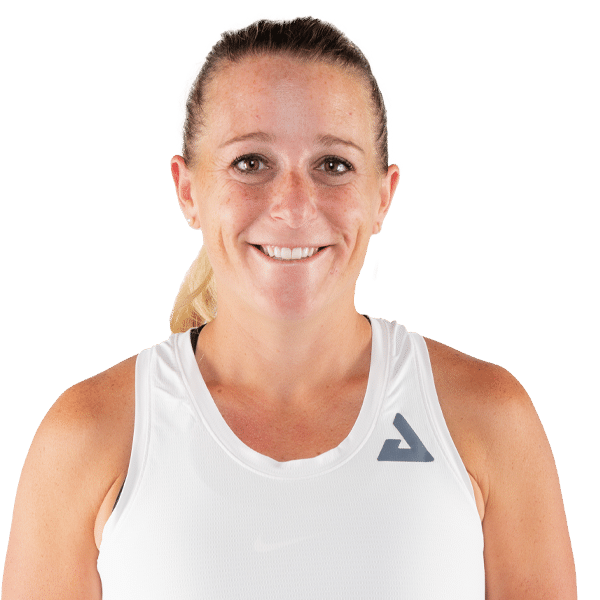
Brooke Buckner
Age 33. Consistent top-5 finisher with a powerful baseline game and relentless competitive drive.
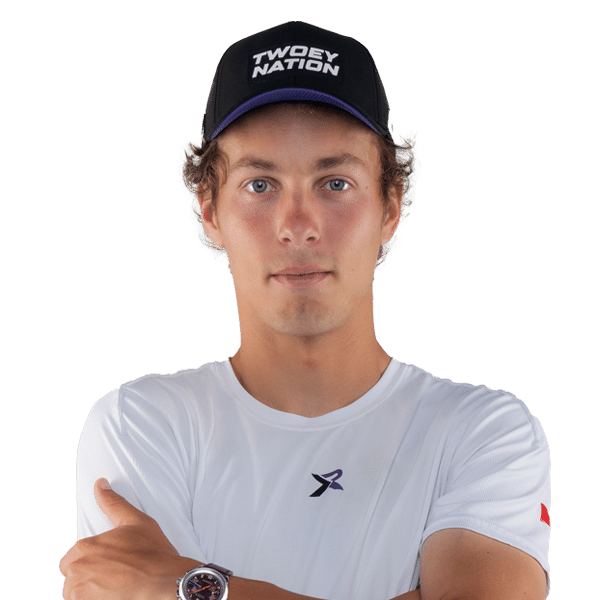
Connor Garnett
Age 28. Signed with Paddletek in 2026. DUPR 6.571. Aggressive, athletic game style. Rapidly ascending.

Lea Jansen
Age 33. Type 1 diabetic. 70.7% win rate. Won Columbus Sliders MLP championship. Aggressive baseline play.
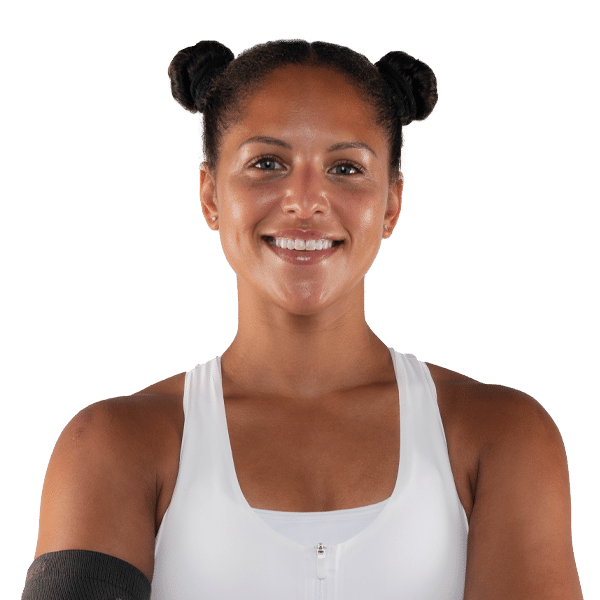
Jessie Irvine
Age 36. Pursuit Pro Signature paddle. Veteran doubles specialist with elite court sense and positioning.
Rising Stars
The next generation is already here — and they started younger than anyone before them
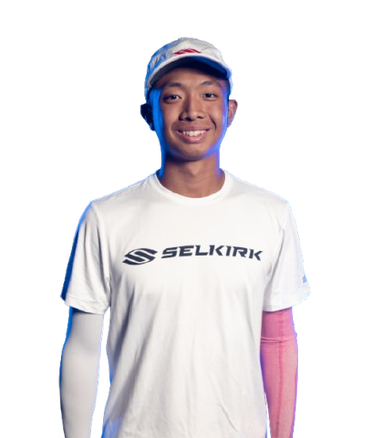
To Watch
Quang Duong
Vietnamese-American from Manhattan Beach. Started competing at 13. One of the most electric young prospects in the game.

Next Gen
Jorja Johnson
JW Johnson’s younger sister. #2 Women’s Mixed Doubles. Best pure right-side women’s player of her generation. Free agent after leaving Franklin.
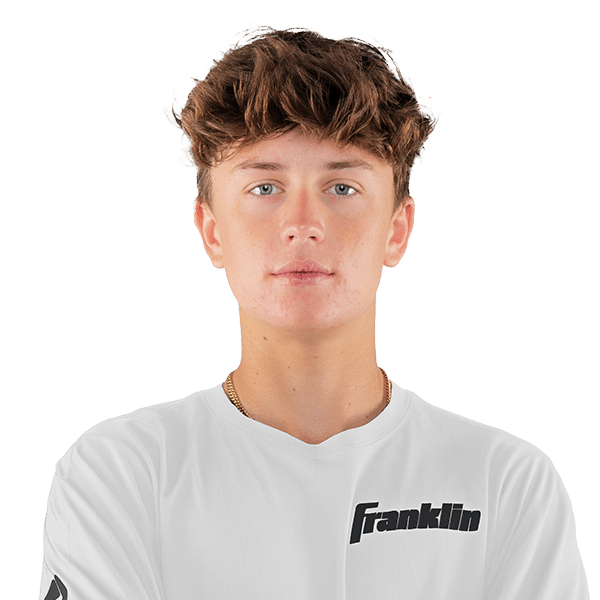
Generational
Hayden Patriquin
Born 2005, Ukiah CA. Started PB at 13, turned pro 2022. #4 Men’s Doubles, #3 Men’s Mixed. DUPR 7.003. Won men’s doubles gold at Pickleball World Championships with Staksrud.
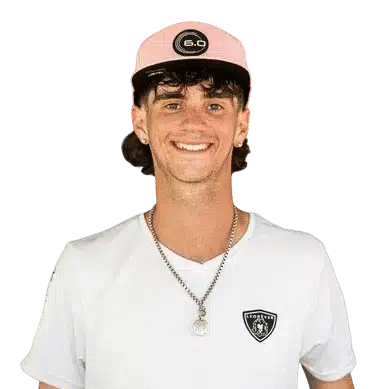
Pure Prodigy
Zane Ford
No tennis background. Pure pickleball, developed from scratch. One of the youngest men in the top 10 — growing every week.

Big Upside
CJ Klinger
6'3", left-handed, from Ohio. Started at 12. Signed with Pilla. Size, southpaw serve, and touch is rare.
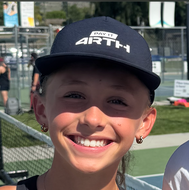
Future
Elsie Hendershot
The youngest legitimate talent on the pro circuit. A DUPR of 5.912 at 12 is extraordinary. If the sport has a future, she is part of it.
Head to Head: The Top Three
Johns vs Waters vs JW Johnson — by the numbers
| Stat | Ben Johns | Anna Leigh Waters | JW Johnson |
|---|---|---|---|
| Peak DUPR (Overall) | ~7.41 | 6.83 | 7.10 |
| Overall Win Rate | 86.8% | 96.1% | ~80% |
| Doubles ELO (DBL) | 2397 | 2691 | 2150 |
| Age | 27 | 19 | 22 |
| Sponsor | JOOLA (Lifetime) | Franklin + Nike ($10M+) | Free Agent |
| Signature Weapon | Dink System | 2H Backhand | Speed-Ups |
Pro Roster — By the Numbers
Verify on myDUPR →Top 50 professionals ranked by PPA points · Paddle setups, contracts, and performance data
| Name | Rank | PPA SGL | PPA DBL | PPA MXD | Age | ELO (DBL) | Win % (Career) | Hand | Paddle | Brand | Style | Core | Status |
|---|---|---|---|---|---|---|---|---|---|---|---|---|---|
| Ben Johns | #1 Men's Mixed | 3,587.5 | 20,600 | 22,500 | 27 | 2397 | 86.8% | R | Perseus Pro V 16mm | JOOLA | Control | 16mm | Lifetime Deal |
| Anna Leigh Waters | #1 Women's Doubles | 19,000 | 22,200 | 21,500 | 19 | 2370 | 96.1% | R | Franklin Signature 12.7mm | Franklin | Power | 12.7mm | Nike + Franklin |
| Anna Bright | #2 Women's Doubles | 200 | 21,000 | 14,500 | 25 | — | ~81% | R | Scorpeus Pro V | JOOLA | Power | 14mm | Active |
| Gabriel Tardio | #1 Men's Doubles | 1,600 | 20,800 | 6,800 | 20 | — | ~60% | R | Facolos EliteX Pro | Facolos | Power | — | Signed 2026 |
| Christian Alshon | #3 Men's Doubles | 9,450 | 15,600 | 9,600 | 24 | 2007 | 71.4% | R | Bantam TKO-CX | Paddletek | Power | 12.7mm | Active |
| JW Johnson | #2 Men's Mixed | 1,137.5 | 14,600 | 14,900 | 22 | — | ~80% | R | TBA | UNSIGNED | Control | — | Free Agent |
| Jorja Johnson | #2 Women's Mixed | 2,075 | 13,400 | 14,900 | 18 | — | ~65% | R | TBA | UNSIGNED | Control | — | Free Agent |
| Andrei Daescu | #4 Men's Doubles | — | 14,700 | 9,200 | 37 | — | ~69% | R | CRBN TruFoam Barrage | CRBN | Control | — | Active |
| Hayden Patriquin | #6 Men's Doubles | — | 14,200 | 11,150 | 20 | — | ~62% | R | FS Tour Dynasty | Franklin | All-Around | 14mm | Active |
| Hunter Johnson | #1 Men's Singles | 13,800 | 2,450 | 1,825 | 30 | 2100 | 79.8% | R | HIT Signature | HIT | Control | 16mm | Co-Founded |
| Kate Fahey | #2 Women's Singles | 13,800 | 4,200 | 3,600 | 28 | 2036 | 79.8% | R | JOOLA Agassi Pro 14mm | JOOLA | All-Around | — | Active |
| Catherine Parenteau | #4 Women's Doubles | 6,900 | 13,600 | 5,600 | 31 | 1912 | 72.8% | R | Vanguard Power Air | Selkirk | Control | — | Active |
| CJ Klinger | #7 Men's Doubles | — | 13,300 | 2,475 | 19 | — | ~60% | L | Pilla Model | Pilla | Power | — | Active |
| Federico Staksrud | #2 Men's Singles | 12,150 | 13,200 | 5,500 | 35 | 2021 | 80.7% | R | TBD | TBD | Control | 16mm | Signature |
| Parris Todd | #6 Women's Doubles | 6,700 | 12,700 | 4,850 | 27 | 2020 | 73.9% | R | Franklin C45 Parris Todd 13.25mm | Franklin | All-Around | 13.25mm | Active |
| Christopher Haworth | #3 Men's Singles | 12,100 | 715 | 650 | 32 | — | 79.1% | R | Luzz Signature | Luzz | Power | 16mm | Signed 2026 |
| Rachel Rohrabacher | #7 Women's Doubles | — | 11,000 | 4,500 | 27 | — | ~65% | R | Friday Aura Signature | Friday | All-Around | — | Signature 2026 |
| Jade Kawamoto | #8 Women's Doubles | — | 9,700 | 1,675 | 29 | — | ~70% | L | Proton Signature | Proton | Control | — | Signed 2026 |
| Connor Garnett | #5 Men's Singles | 8,750 | 3,400 | 2,725 | 28 | 1824 | ~65% | R | Paddletek Model | Paddletek | Control | — | Signed 2026 |
| Lea Jansen | #5 Women's Singles | 8,350 | 3,950 | 2,200 | 32 | 1991 | 70.7% | R | JOOLA Model | JOOLA | Power | — | Active |
| Eric Oncins | #9 Men's Doubles | 1,337.5 | 7,400 | 3,950 | 23 | — | ~62% | R | Engage Model | Engage | Power | — | Signed 2026 |
| Lacy Schneemann | #9 Women's Doubles | 387.5 | 7,150 | 1,875 | 28 | — | ~60% | R | Model TBD | UNSIGNED | Power | — | Active |
| Dylan Frazier | #10 Men's Doubles | 3,375 | 7,100 | 3,025 | 23 | 1740 | ~69% | R | Volair Shift | Volair | All-Around | — | Active |
| Tina Pisnik | #11 Women's Doubles | — | 6,400 | 5,425 | 44 | — | ~68% | R | Phoenix | Warping Point | All-Around | — | Active |
| Roscoe Bellamy | #6 Men's Singles | 6,337.5 | 1,750 | 975 | 25 | 1950 | 65.1% | R | Model TBD | UNSIGNED | All-Around | — | Active |
| Jessie Irvine | #5 Women's Mixed | 1,275 | 4,400 | 5,950 | 35 | — | ~73% | R | Pursuit Pro Signature | Engage | Control | — | Active |
| Tyson McGuffin | #11 Men's Doubles | 825 | 5,900 | 2,550 | 36 | 1711 | ~74% | R | Kosmos Pro V | JOOLA | Power | 14mm | Active |
| Jack Sock | #7 Men's Singles | 5,650 | 2,187.5 | 1,387.5 | 32 | 1941 | 66.7% | R | Boomstik | Selkirk | Power | — | Active |
| Jay Devilliers | #12 Men's Doubles | 2,787.5 | 5,600 | 2,650 | 30 | 1762 | ~63% | R | Model TBD | UNSIGNED | Power | — | Active |
| Meghan Dizon | #13 Women's Doubles | — | 5,600 | 2,700 | 26 | — | ~60% | R | Model TBD | UNSIGNED | All-Around | — | Active |
| Matt Wright | #13 Men's Doubles | — | 4,925 | 1,037.5 | 48 | — | ~60% | R | Warping Point Model | Warping Point | Control | — | Active |
| Genie Bouchard | #8 Women's Singles | 4,750 | 1,012.5 | 487.5 | 31 | 1850 | 54.3% | R | Versix Vector Signature | Versix | Power | — | Active |
| Riley Newman | #14 Men's Doubles | — | 4,612.5 | 2,675 | 30 | — | ~75% | R | Paddletek Model | Paddletek | All-Around | — | Active |
| Jaume Martinez Vich | #17 Men's Doubles | 3,650 | 4,200 | 1,425 | 31 | 1842 | ~62% | R | Model TBD | UNSIGNED | All-Around | — | Active |
| Dekel Bar | #18 Men's Doubles | — | 3,850 | 3,000 | 32 | — | ~67% | R | Vapor Power 2 | 11SIX24 | Power | — | Active |
| Callie Smith | #22 Women's Doubles | — | 3,850 | 2,225 | 33 | — | ~65% | R | Evoke Premier Pro Raw | ONIX | All-Around | 16mm | Active |
| Zane Ford | Top 10 Men's | 3,275 | 1,165 | — | 20 | 1850 | ~60% | R | Model TBD | UNSIGNED | Power | — | Active |
| Pablo Tellez | Top 15 Men's Doubles | 662.5 | 3,050 | 1,587.5 | 29 | — | ~66% | R | LOTTO Ultimo | LOTTO | All-Around | 16mm | Active |
| Mary Brascia | Top 15 Women's Doubles | 2,875 | 2,350 | 1,050 | 25 | 1796 | ~71% | R | SLK Halo Pro | Selkirk | Control | — | Active |
| Collin Johns | #21 Men's Doubles | — | 2,725 | 550 | 32 | — | ~65% | R | Scorpeus Pro V | JOOLA | Control | 16mm | Active |
| Zane Navratil | Top 25 Men's Singles | 725 | 2,575 | 1,275 | 29 | — | ~68% | R | Reserve Honeyfoam Gen 4 | Paddletek | All-Around | — | Active |
| Tyler Loong | Top 25 Men's Singles | 437.5 | 2,550 | 812.5 | 23 | — | ~55% | R | Vulcan Model | Vulcan | Power | — | Active |
| James Ignatowich | Top 20 Men's Singles | 775 | 2,425 | 1,675 | 24 | — | ~70% | R | RPM Friction Pro | RPM | Power | 16mm | Own Brand |
| AJ Koller | Top 20 Men's Doubles | — | 2,100 | 1,025 | 30 | — | ~62% | R | Model TBD | UNSIGNED | Power | — | Active |
| Julian Arnold | Top 40 Men's Singles | — | 2,025 | 1,100 | 29 | — | ~65% | R | Volair Mach 1 Forza | Volair | All-Around | — | Co-Founder |
| Donald Young | Top 25 Men's Singles | 1,012.5 | 1,600 | 762.5 | 35 | 1658 | ~60% | R | Model TBD | UNSIGNED | Power | — | Active |
| Sofia Sewing | Top 10 Women's Singles | — | — | — | 25 | — | 86.0% | R | Model TBD | UNSIGNED | Power | — | Active |
| Quang Duong | Top 15 Men's Doubles | — | — | — | 19 | — | ~58% | R | Wika Model | Wika | All-Around | — | Signed 2026 |
| Simone Jardim | Legend | — | — | — | 46 | — | ~76% | R | Perseus Pro V | JOOLA | Control | 16mm | Active |
Your First
Day
You've never held a paddle. That's perfect. This is everything you need — what to buy, where to go, what to wear, how the game works, and what to expect when you walk onto a court for the very first time.
What to Buy First
The only thing you actually need to purchase is a paddle. Everything else — balls, court time at open play, even a loaner paddle at some venues — is usually provided. Don't over-invest until you're sure this is your sport.
| Tier | Price | Materials | Best For |
|---|---|---|---|
| Budget — Start Here | $30–60 | Composite face, polymer core | Absolute beginners, first 1–3 months |
| Mid-Range | $60–120 | Carbon fiber face, honeycomb core | Improving players, 3.0–3.5 level |
| Premium | $120–250+ | Advanced materials, optimised weight | Competitive play, 3.5+ rated |
Brands like Amazin' Aces, Onix, and Gamma all make solid $30–$40 starters widely available on Amazon or at sporting goods stores. Any composite or graphite beginner paddle is fine.
What to Wear
Find Your First Court
usapickleball.org/membership ↗
Your First Day Timeline
Here's exactly what to expect when you show up to your first open play session. Knowing the format removes the anxiety of not knowing what's normal.
Beginner FAQ
The questions every first-timer has, answered plainly.
First 30 Days Roadmap
A realistic timeline for brand-new players. Most beginners improve dramatically in the first month if they follow a structured approach rather than just showing up and playing.
- Learn kitchen rule, two-bounce rule & scoring
- Goal: get every serve in play consistently
- Practice wall dinking 10 min per day
- Play 2 open sessions to experience live rallies
- Focus: Continental grip, paddle up, watch the ball
- Sprint to the NVZ line after every return
- Start 50-dink drill with a partner (10 consecutive first)
- Practice deep return targets — aim past the service line
- Understand up vs. down: below net = lift, above = attack
- Play 3 sessions this week
- Achieve 95%+ serve consistency — no unforced misses
- Hit 20 consecutive dinks with a partner
- Watch one instructional video per day (5 min)
- Add athletic ready position: knees bent, weight forward
- Begin targeting middle of court to reduce errors
- Hit 30+ consecutive dinks with a partner
- Introduce skinny singles for focused repetition
- Play 4 sessions — mix rec play and drilling
- Begin noticing third-shot drop opportunities
- Self-assess: you are now solidly at 2.5–3.0 level
Court Etiquette
Follow these and you'll fit right in from day one.
First Game Tips
Six things to remember when you step on court for the first time.
Common Beginner Mistakes
These six mistakes account for the vast majority of errors made by players in the 2.0–3.0 range. Fixing even two will noticeably improve your game within a week.
The 5 Basic Shots to Learn First
Master these five shots in order. Don't skip ahead — each one builds on the last, and the dink is more important than everything else combined.
Progression Path: 1.0 to 3.0 in 6 Months
Playing 3–5 times per week, most dedicated beginners reach 3.0 within 6 months. Here's the journey broken down by phase.
- Rules, basic serve/return, kitchen awareness
- 2–3x per week, 1–2 hours
- Wall dinking, serve placement, basic rallies
- Goal: Full game without constant rule violations
- Consistent dinking, third shot drops, positioning
- 3–4x per week
- Cross-court dinking, drop shots, transition movement
- Goal: 10+ dink rallies, drops in kitchen 50%
- Shot selection, patience, strategy
- 3–5x per week
- Skinny singles, pattern play, serve variety
- Goal: Strategic play, drive vs drop, controls kitchen
Skill Level Descriptions (DUPR — Official USA Pickleball Rating)
Understanding where you are helps you find appropriate games and track growth objectively. DUPR (2.000–8.000 scale) became the exclusive official rating system for USA Pickleball in December 2025.
The Kitchen (NVZ) Rules Explained Simply
The Non-Volley Zone has the most nuanced rules for new players. Here's every scenario clarified in plain language.
Recommended YouTube Channels
Five channels worth bookmarking from day one.
The Equipment
Playbook
Your paddle is your most intimate connection to the game. From $30 beginner composites to $250 thermoformed raw-carbon tour weapons — every material choice, every gram of weight tape, every millimeter of core thickness shapes how you play. This is your complete guide.
Approved Paddles
Ball Holes
Paddle (Bainbridge)
What Actually
Matters in a Paddle
Your paddle is the one piece of equipment that directly determines your shot ceiling. Weight, face material, core thickness, and shape each tune a different dimension of your game. Here's what actually matters — and why.
| Level | Paddle | Total Startup | What You Get |
|---|---|---|---|
| Casual | $15–$30 | $30–$60 | Wood or basic composite. Just for fun, not for development. |
| Beginner | $30–$80 | $60–$120 | Composite face, polypropylene honeycomb core. Good for fundamentals. |
| Intermediate | $100–$175 | $180–$350 | Carbon fiber face for spin and control. 14–16 mm core, USAPA approved. |
| Advanced / Pro | $150–$250+ | $300–$500+ | Raw carbon face, thermoformed construction, precision weight specs. |
Paddle Shapes — Complete Guide
Shape is the most underrated paddle variable. Elongated paddles give more reach but trade a smaller sweet spot — off-center hits punish you harder.
The most forgiving shape. Balanced dimensions produce a large sweet spot and predictable responses across all shot types. Best choice for beginners and doubles players who need consistency at the kitchen.
Extra length extends reach for groundstrokes and overhead shots. The tradeoff: the sweet spot shrinks as width narrows. Off-center hits will betray you more often. Favored by singles players who own full court coverage.
The widest face produces the largest sweet spot in the lineup — off-center contact still yields usable shots. Shorter overall length reduces reach but increases forgiveness. Perfect for consistency over power.
Splits the difference between standard and elongated. A slight width reduction from standard gives modest extra reach without the severe sweet-spot penalty of full elongated. Growing popular among intermediates.
Ball Types — Indoor vs. Outdoor
Indoor Ball
- Softer, lighter, slower flight
- Larger holes, higher spin potential
- Less wind-affected (gym play)
- Quieter impact sound
Outdoor Ball
- Harder, heavier, faster flight
- Smaller holes, more wind-resistant
- More durable on rough surfaces
- Bounce varies 15–20% with temperature
Matters
Effects
Footwear & Apparel
Pickleball is 70%+ lateral movement. Running shoes are engineered for forward motion — elevated heels, flexible soles, no side-wall reinforcement. On pickleball courts, that's an ankle roll waiting to happen on lateral cuts.
Accessories
Wrap over your existing grip to restore tackiness and absorb sweat. Change every 3–8 hours of play. Adds 3–8 g to paddle weight depending on thickness.
Fine-tune swing weight and balance without buying a new paddle. Every gram placed at 12 o'clock adds ~0.35 to swing weight. Placed at the handle, it reduces head-heaviness.
Extreme heat (car trunks in summer) and cold both degrade core and face materials. Thermal regulation extends paddle lifespan significantly.
Weight Customization — The Clock Zone System
Place weight tape at specific clock positions on the paddle face to surgically tune power, control, spin, and feel. Every gram counts.
| Position | Pwr | Ctrl | Spin | Mnvr | Swing | Twist |
|---|---|---|---|---|---|---|
| 12 (top) | +1.6 | -0.6 | +0.4 | -1.2 | +2.4 | +0.1 |
| 1 / 11 | +1.2 | -0.3 | +0.7 | -0.9 | +1.8 | +0.4 |
| 2 / 10 | +0.7 | +0.2 | +1.1 | -0.5 | +1.0 | +0.7 |
| 3 / 9 (sides) | +0.4 | +0.6 | +1.3 | -0.2 | +0.5 | +0.96 |
| 4 / 8 | +0.3 | +0.9 | +1.1 | +0.1 | +0.3 | +0.7 |
| 5 / 7 (throat) | +0.2 | +1.4 | +0.8 | +0.4 | +0.2 | +0.4 |
Equipment Regulations (USA Pickleball)
The PaddleLab
Face material, core construction, shape geometry — every variable changes how the ball leaves your paddle. This is the physics of pickleball, translated.
Why Paddle Science Matters
Most players pick a paddle by brand, color, or price. But the players who level up fastest understand the physics driving every shot. The difference between a 13mm and 16mm core is the difference between a drive you can't control and a dink that drops like a stone. Understanding materials science is a competitive edge most players leave on the table.
Ball & Paddle Physics: The Numbers
The pickleball's 40 holes fundamentally cap spin potential. Max spin on a driven ball is ~1,500 RPM — compared to 4,800+ RPM in tennis — because the holes reduce gyroscopic stability. The ball's COR alone is 0.65 (57% energy loss per bounce). Ball on paddle COR: 0.68 — only a 3% improvement over bare surface contact, which is why paddle face material matters far more for spin and control than for raw power. The equipment market reflects growing awareness of this science: $702.9M in 2026, projected to reach $1.85B by 2033.
COR Deep Dive: Effective Mass & the 82-Paddle Study
COR depends on effective mass, not just raw paddle weight. The formula: Me = 1/(1/M + b²/Icm) — where M is paddle mass, b is impact distance from the center of mass, and Icm is the moment of inertia. This means off-center hits have dramatically lower effective mass and therefore lower COR. An 82-paddle study by Pickleball Science found that paddles return only 37–42% of impact energy back to the ball — meaning 58–63% is lost to deformation, vibration, and heat every single contact. That narrow 5-point spread across 82 paddles shows how little COR varies between equipment compared to technique.
Face Materials
Maximum spin, most control, premium price point. The textured surface grabs the ball for wicked spin generation. The dominant face material among professional players, though exact percentages shift with regulatory changes and sponsorship cycles.
More power and pop, softer feel on contact. Budget-friendly and forgiving. An excellent choice for beginners who want to feel the ball.
The best-of-both-worlds approach. Balanced spin and power with a comfortable feel. Growing rapidly in popularity among 3.5–4.5 players.
Extreme durability and stiffness. A niche material favored by hard-hitting players who go through paddles. Less common but uniquely tough.
“The face material is only half the equation. The core is where the ‘feel’ lives — and feel is everything at 5.0+.”
Paddle Science PrincipleEngineering Note: Surface Grit & Spin Physics
Raw carbon fiber gets its spin-generating power from the microscopic texture of the woven T700 fiber weave. USAP regulations now specify a maximum surface roughness (Rz ≤ 30µm and Rt ≤ 40µm per the Equipment Standards Manual) to prevent "grit-enhanced" faces. The finest legal carbon faces produce ball-contact friction coefficients measurably higher than fiberglass — raw carbon surfaces provide measurable spin advantages on low-angle brushing strokes. However, TWU research shows that above ~45° impact angle, surface material differences largely disappear. Top-performing spin paddles measure 2,000–2,300 RPM in standardized testing.
Core Types
The modern standard. Best touch and control with a quieter sound. Found in 95%+ of current paddles.
The loudest core material. Maximum power and pop. Used in early competitive paddles but less control than polymer.
Highest strength-to-weight ratio but heavier than Nomex. Maximum control and dampening — least power of the three core types. Can dent over time.
The Honeycomb Principle
Honeycomb cores aren't just cheap construction — they're aerospace engineering borrowed for pickleball. The hexagonal cell geometry provides the maximum strength-to-weight ratio possible in a regular tiling of the plane (mathematically proven by the Honeycomb Conjecture, proved by Thomas Hales in 1999). Cell size determines feel: smaller cells = harder, snappier response. Larger cells = softer, more absorbent feel. Most modern premium paddles use 3.5–4mm cell sizes.
Shape & Dimensions
Most popular shape. Balanced sweet spot. Great for all playstyles.
More reach, more spin potential. Smaller sweet spot. Increasingly popular with competitive players.
Biggest sweet spot. Less reach. Extremely forgiving — ideal for beginners.
All paddles used in sanctioned USA Pickleball events must appear on the official approved equipment list. Check the USAP Approved Paddle List → — several popular paddles have been removed for exceeding deflection or surface roughness limits.
The “thermoformed” revolution: In 2023–2024, thermoformed paddle construction (carbon fiber sheets heat-molded around the core) became the hottest trend. It creates a stiffer frame, larger sweet spot, and more power — but USA Pickleball has been tightening regulations on how much “pop” is allowed. Several top paddles were de-listed for exceeding deflection limits, sending shockwaves through the industry.
Sweet Spot Science
The “sweet spot” is the node on the paddle face where vibration is minimized and energy transfer is maximized. Hit it and the ball just goes with zero sting. Miss it and you feel the torque instantly in your wrist.
Resistance to rotation on off-center hits. Wide body: ~6.8 TW. Elongated: ~5.8 TW. Each 1-point difference in TW is immediately perceptible on edge mishits.
Measured from butt cap. Higher balance = sweet spot higher on face. Control paddles: 22.5–23.5″. Power paddles: 24–25″+. The difference affects feel dramatically.
Node Placement & Vibration Physics
The sweet spot is technically the center of percussion (COP) — the point on the paddle where rotational and translational forces cancel out perfectly. Hit the COP and zero vibration transfers to your grip. Miss it by 1 inch and you generate up to 8x more wrist torque. Swing weight and twist weight are the two measurements that define where your COP sits and how forgiving the area around it is.
Thermoformed vs. Traditional Construction
Carbon fiber face layers are heat-pressed directly around the honeycomb core in a mold, creating a monocoque structure. No separate edge guard — the face wraps the entire perimeter for a seamless frame.
Face layers are laminated to the core; a separate edge guard is affixed around the perimeter. Decades of refinement make this the reliable, arm-friendly standard.
The 2023–2024 Thermoforming Controversy
USA Pickleball's USAP deflection test fires a ball at the paddle face and measures how much it bounces back. Paddles exceeding a "coefficient of restitution" threshold are de-listed. In 2023–24, over a dozen popular thermoformed paddles were removed mid-season — including models mid-contract with pro players. The industry is still adapting. Current approved list →
Core Thickness Effect
| # | Paddle Name | Brand | Price | Power (mph) | Spin (rpm) | Pop | Swing Wt | Twist Wt | Weight (oz) | Shape |
|---|---|---|---|---|---|---|---|---|---|---|
| 1 | Gearbox Pro Power Elongated with 10 grams tungsten 14mm | Gearbox | $274.99 | 62.6 | 1827 | 38.7 | 122.0 | 5.67 | 8.50 | Standard |
| 2 | Ronbus Ripple R1 - Beta 2 Model 14mm | Ronbus | $250 | 61.3 | 2329 | 38.7 | 112.5 | 5.49 | 7.90 | Standard |
| 3 | Ronbus Ripple R2 - Production Model 14mm | Ronbus | $250 | 60.5 | 2305 | 38.5 | 104.2 | 6.15 | 7.80 | Standard |
| 4 | Holbrook Arma S 14mm | Holbrook | $269.99 | 60.3 | 2156 | 38.1 | 113.0 | 7.21 | 8.10 | Widebody |
| 5 | Ronbus EV1.16 16mm | Ronbus | $180 | 62.1 | 1148 | 36.3 | 117.0 | 5.94 | 8.10 | Standard |
| 6 | Ronbus Ripple R1 - Production Model 16mm | Ronbus | $250 | 60.0 | 2341 | 38.1 | 115.6 | 5.63 | 7.90 | Standard |
| 7 | Holbrook Arma T 14mm | Holbrook | $269.99 | 60.0 | 2114 | 38.0 | 118.2 | 6.35 | 8.00 | Elongated |
| 8 | Ronbus Ripple R1 - Beta 1 Version 14mm | Ronbus | $250 | 60.1 | 2343 | 37.9 | 108.1 | 5.35 | 7.80 | Standard |
| 9 | JOOLA Perseus 3 Ben Johns 14mm | JOOLA | $280 | 58.8 | 2193 | 39.0 | 116.9 | 5.83 | 8.00 | Standard |
| 10 | JOOLA Scorpeus 3 Anna Bright 14mm | JOOLA | $280 | 58.5 | 2310 | 39.3 | 109.3 | 6.64 | 7.80 | Standard |
| 11 | Ronbus Ripple R2 Beta 1 with 1 oz Slyce cap & 5.5 grams tungsten at neck & sides 14mm | Ronbus | $250 | 59.7 | 2344 | 37.9 | 106.2 | 6.55 | 8.80 | Standard |
| 12 | JOOLA Scorpeus 3 Collin Johns 16mm | JOOLA | $280 | 58.7 | 2115 | 38.7 | 111.7 | 6.94 | 8.00 | Standard |
| 13 | Holbrook Arma Metallic-T 14mm | Holbrook | $279.99 | 60.0 | 2133 | 37.1 | 117.6 | 6.19 | 8.00 | Elongated |
| 14 | Adidas Metalbone LP S (Red EVA) 16mm | Adidas | $249 | 58.8 | 2096 | 38.0 | 125.0 | 5.75 | 8.50 | Elongated |
| 15 | JOOLA Perseus MOD TA-15 16mm | JOOLA | $279.98 | 58.9 | 2128 | 37.8 | 117.6 | 6.11 | 8.32 | Elongated |
| 16 | Gearbox Pro Power Elongated 14mm | Gearbox | $274.99 | 58.9 | 2024 | 37.5 | 120.5 | 5.19 | 7.94 | Elongated |
| 17 | Ronbus Ripple V2-R1 14mm | Ronbus | $280 | 58.6 | 2064 | 37.4 | 126.5 | 5.88 | 8.20 | Elongated |
| 18 | Ronbus Ripple V2-R4 14mm | Ronbus | $280 | 58.5 | 2077 | 37.4 | 122.0 | 5.87 | 8.10 | Elongated |
| 19 | Adidas Metalbone LP Team (Blue EVA) 16mm | Adidas | $209 | 58.1 | 2056 | 37.7 | 114.1 | 5.14 | 7.95 | Elongated |
| 20 | Ronbus Ripple V2-R2 14mm | Ronbus | $280 | 58.4 | 2070 | 37.5 | 122.9 | 6.26 | 8.20 | Elongated |
| 21 | JOOLA Magnus 3S 16mm | JOOLA | $259.95 | 58.4 | 2117 | 37.0 | 113.5 | 6.12 | 7.90 | Elongated |
| # | Paddle Name | Brand | Price | Power (mph) | Spin (rpm) | Pop | Swing Wt | Twist Wt | Weight (oz) | Shape |
|---|---|---|---|---|---|---|---|---|---|---|
| 1 | Diadem Hush 18mm | Diadem | $189.95 | 62.9 | 2776 | 38.5 | 122.7 | 5.13 | 8.30 | Standard |
| 2 | JOOLA Perseus 3 Ben Johns 16mm | JOOLA | $280 | 59.9 | 2487 | 38.1 | 119.2 | 6.08 | 8.00 | Standard |
| 3 | Thompson 515-Uni 14mm | Thompson | $249 | 57.6 | 2484 | 37.1 | 107.5 | 6.48 | 8.20 | Standard |
| 4 | JOOLA Magnus 3 Tyson McGuffin 14mm | JOOLA | $280 | 58.8 | 2425 | 37.9 | 114.7 | 6.05 | 8.00 | Standard |
| 5 | Thompson 515-Twill 14mm | Thompson | $249 | 57.6 | 2418 | 36.7 | 112.5 | 6.83 | 8.60 | Standard |
| 6 | Owl Owl CXE 16mm | Owl | $169 | 56.0 | 2380 | 35.2 | 118.5 | 5.51 | 7.90 | Standard |
| 7 | Dymon Mayhem 16mm | Dymon | $199.99 | 57.4 | 2366 | 36.4 | 110.6 | 6.31 | 7.80 | Standard |
| 8 | Ronbus Ripple R2 - Beta 1 Version 14mm | Ronbus | $250 | 58.9 | 2344 | 38.0 | 103.6 | 6.10 | 7.80 | Standard |
| 9 | Ronbus Ripple R2 Beta 1 with 11 grams tungsten at neck & sides 14mm | Ronbus | $250 | 59.2 | 2344 | 38.0 | 108.9 | 7.17 | 8.30 | Standard |
| 10 | Ronbus Ripple R2 Beta 1 with 5.5 grams tungsten at neck and sides 14mm | Ronbus | $250 | 59.2 | 2344 | 37.9 | 105.5 | 6.46 | 8.00 | Standard |
| 11 | Synergy Royale 16mm | Synergy | $200 | 57.1 | 2324 | 35.2 | 127.4 | 6.51 | 8.40 | Standard |
| 12 | Synergy Supreme 13mm | Synergy | $200 | 56.6 | 2305 | 36.7 | 115.3 | 5.82 | 7.80 | Standard |
| 13 | Diadem Edge 18K 16mm | Diadem | $229.95 | 56.5 | 2304 | 35.6 | 119.5 | 6.23 | 7.85 | Elongated |
| 14 | PaddleTek Bantam TKO-CX 14mm | Paddletek | $229.99 | 58.6 | 2293 | 37.1 | 119.3 | 6.67 | 7.86 | Elongated |
| 15 | Honolulu Pickleball Co. J7K Pro 16mm | Honolulu Pickleball | $160 | 57.3 | 2285 | 35.7 | 120.0 | 6.25 | 8.12 | Extra-elongated |
| 16 | Mark unMARKed Alpha 15mm | Mark | $174.99 | 58.4 | 2277 | 37.1 | 121.4 | 6.52 | 8.10 | Standard |
| 17 | Six Zero Ruby 16mm | Six Zero | $209.50 | 56.9 | 2271 | 35.2 | 116.5 | 6.40 | 8.40 | Hybrid |
| 18 | Engage Pursuit MX Pro 13mm | Engage | $259.99 | 56.8 | 2264 | 36.8 | 119.2 | 5.87 | 8.03 | Elongated |
| 19 | ProXR Signature 16mm | ProXR | $209.99 | 57.1 | 2264 | 35.9 | 115.7 | 5.74 | 8.32 | Elongated |
| 20 | Tecnifibre TF Blitz 15mm | Tecnifibre | $199 | 56.7 | 2261 | 36.6 | 124.5 | 5.84 | 8.30 | Standard |
| 21 | Ace Heart 14mm | Ace | $189.99 | 56.9 | 2260 | 35.3 | 115.7 | 5.80 | 7.80 | Standard |
| 22 | ProXR Zane Navratil "The Standard" 14mm | ProXR | $209.99 | 55.9 | 2260 | 35.4 | 107.0 | 6.92 | 8.20 | Standard |
| 23 | Engage Pursuit MX 6.0 Pro 16mm | Engage | $259.99 | 57.2 | 2258 | 35.9 | 127.0 | 6.61 | 7.98 | Elongated |
| 24 | GRÜVN Raw-13S 13mm | GRÜVN | $139 | 54.7 | 2255 | 35.6 | 106.4 | 6.80 | 7.80 | Standard |
| 25 | CRBN CRBN 1X 14mm | CRBN | $229.99 | 56.0 | 2244 | 35.1 | 116.0 | 5.78 | 8.00 | Standard |
| 26 | PaddleTek Bantam ALW-C 14mm | Paddletek | $240 | 57.0 | 2236 | 37.3 | 105.0 | 6.65 | 7.62 | Widebody |
| 27 | Adidas Metalbone 14.5 (Polypropylene) 14mm | Adidas | $229 | 58.0 | 2232 | 36.9 | 113.5 | 5.39 | 8.40 | Standard |
| 28 | Avoura Rhapsody 13 13mm | Avoura | $225 | 56.8 | 2225 | 36.3 | 102.6 | 7.17 | 8.00 | Standard |
| 29 | GRÜVN LAZR-16S 16mm | GRÜVN | $169 | 55.6 | 2213 | 35.9 | 106.2 | 7.09 | 8.10 | Standard |
| 30 | 11Six24 Monarch Jelly Bean 16mm | 11SIX24 | $99.99 | 55.0 | 2209 | 34.3 | 114.6 | 6.72 | 8.02 | Elongated |
| 31 | Electrum Pro II Stealth 12mm | Electrum | $220 | 54.4 | 2204 | 37.1 | 93.0 | 4.83 | 7.00 | Standard |
| 32 | Franklin C45 Hybrid with 8.5 grams tungsten and 9 gram Flick weight 14mm | Franklin | $229 | 57.4 | 2204 | 37.9 | 112.6 | 6.92 | 8.60 | Standard |
| 33 | GRÜVN Raw-16S 16mm | GRÜVN | $139 | 55.4 | 2202 | 34.3 | 105.3 | 6.83 | 7.80 | Standard |
| 34 | Vatic Pro Prism Flash 16mm | Vatic Pro | $99.99 | 56.1 | 2200 | 35.0 | 111.5 | 6.66 | 7.86 | Widebody |
| 35 | 11Six24 Vapor Alpha Pro Power 16mm | 11SIX24 | $199.50 | 58.2 | 2198 | 36.6 | 112.2 | 6.75 | 8.00 | Hybrid |
| 36 | 11Six24 Vapor Jelly Bean 16mm | 11SIX24 | $99.99 | 56.5 | 2198 | 35.2 | 115.0 | 6.73 | 8.00 | Hybrid |
| 37 | PIKKL Hurricane Pro 16mm | PIKKL | $159.99 | 54.2 | 2198 | 35.6 | 109.8 | 6.87 | 7.85 | Widebody |
| 38 | Pickleball Apes Pro Line Energy S 16mm | Pickleball Apes | $169.99 | 54.6 | 2192 | 36.3 | 117.0 | 6.30 | 8.10 | Hybrid |
| 39 | Vatic Pro Saga Flash LH 16mm | Vatic Pro | $149.99 | 58.2 | 2186 | 35.6 | 120.5 | 6.25 | 8.18 | Elongated |
| 40 | PIKKL Vantage Pro 14mm | PIKKL | $139.99 | 54.9 | 2182 | 35.7 | 113.2 | 6.24 | 7.97 | Hybrid |
| 41 | Vatic Pro Bloom Prism 16mm | Vatic Pro | $99.99 | 56.1 | 2175 | 34.6 | 112.3 | 7.16 | 7.96 | Widebody |
| 42 | ProXR Sweet Spot 16mm | ProXR | $210 | 55.5 | 2169 | 36.0 | 115.3 | 6.99 | 8.25 | Widebody |
| 43 | GRÜVN Raw-16H 16mm | GRÜVN | $139 | 53.9 | 2166 | 34.5 | 121.0 | 5.74 | 7.70 | Standard |
| 44 | Volair Mach 2 Forza 16mm | Volair | $179.99 | 54.8 | 2158 | 34.2 | 112.2 | 7.28 | 8.06 | Widebody |
| 45 | Neonic Flow Prime X 16mm | Neonic | $139.99 | 55.8 | 2158 | 35.9 | 113.5 | 6.30 | 7.95 | Hybrid |
| 46 | Volair Mach 2 16mm | Volair | $159.99 | 54.5 | 2158 | 34.8 | 109.1 | 7.08 | 8.01 | Widebody |
| 47 | GRÜVN Raw-16V 16mm | GRÜVN | $139 | 54.2 | 2152 | 34.1 | 100.2 | 7.32 | 7.80 | Standard |
| 48 | GRÜVN Raw-16X 16mm | GRÜVN | $139 | 55.1 | 2152 | 34.5 | 122.0 | 6.07 | 8.00 | Standard |
| 49 | Gearbox G2 Quad 14mm | Gearbox | $99.99 | 54.6 | 2139 | 34.1 | 108.0 | 6.23 | 7.90 | Standard |
| 50 | PIKKL Hurricane Pro 14mm | PIKKL | $159.99 | 54.5 | 2130 | 35.8 | 107.8 | 6.63 | 7.81 | Widebody |
| 51 | PIKKL Vantage Pro 16mm | PIKKL | $139.99 | 55.2 | 2128 | 35.5 | 121.1 | 6.67 | 8.40 | Hybrid |
| 52 | Vatic Pro Saga V7 16mm | Vatic Pro | $149.99 | 56.0 | 2118 | 35.0 | 115.4 | 6.80 | 8.05 | Widebody |
| 53 | Neonic Flow 16mm | Neonic | $124.99 | 55.2 | 2112 | 35.0 | 116.7 | 6.55 | 8.12 | Hybrid |
| 54 | GRYP Balance 1 - 10g cap 15mm | GRYP | $200 | 55.9 | 2107 | 35.4 | 113.0 | 6.15 | 8.30 | Standard |
| 55 | Vatic Pro Bloom Prism 14 14mm | Vatic Pro | $99.99 | 55.9 | 2103 | 35.4 | 107.6 | 6.40 | 7.75 | Widebody |
| 56 | Volair Mach 1 Forza 16mm | Volair | $179.99 | 55.5 | 2096 | 35.6 | 116.0 | 6.49 | 8.09 | Elongated |
| 57 | GRÜVN CRÜZ-16S 16mm | GRÜVN | $129 | 55.6 | 2084 | 35.4 | 113.0 | 7.45 | 8.30 | Standard |
| 58 | Engage Evolution Extreme V2.16 16mm | Engage | $159.99 | 55.9 | 2082 | 35.1 | 121.8 | 6.66 | 8.20 | Standard |
| 59 | Babolat WZRD 20mm | Babolat | $219.50 | 55.6 | 2072 | 35.0 | 109.3 | 6.42 | 8.59 | Widebody |
| 60 | Gearbox G2 Integra 14mm | Gearbox | $204.99 | 55.7 | 2069 | 34.6 | 115.7 | 5.67 | 7.91 | Hybrid |
| 61 | Ronbus NOVA R3 16mm | Ronbus | $180 | 55.9 | 2068 | 35.1 | 120.5 | 6.07 | 8.09 | Elongated |
| # | Paddle Name | Brand | Price | Power (mph) | Spin (rpm) | Pop | Swing Wt | Twist Wt | Weight (oz) | Shape |
|---|---|---|---|---|---|---|---|---|---|---|
| 1 | Gearbox CX14H Ultimate Power 14mm | Gearbox | $249.99 | 52.4 | 1962 | 33.8 | 101.5 | 5.54 | 8.50 | Widebody |
| 2 | Bird Ball Hawk Classic 14mm | Bird | $199 | 52.6 | 2099 | 33.1 | 106.0 | 7.05 | 7.90 | Standard |
| 3 | PCKL Pro 13 13mm | PCKL | $159.99 | 52.6 | 1834 | 33.0 | 120.0 | 5.91 | 8.10 | Standard |
| 4 | Gentle Booms Sports GBS-001 11mm | Gentle | $49.99 | 53.2 | 1493 | 32.4 | 115.0 | 6.65 | 8.50 | Standard |
| 5 | Selkirk SLK Halo Power XL 13mm | SLK | $140 | 53.2 | 1849 | 32.4 | 117.5 | 5.43 | 7.73 | Elongated |
| 6 | Volair Mach 2 14mm | Volair | $139.99 | 53.2 | 2156 | 34.9 | 105.7 | 6.75 | 7.85 | Widebody |
| 7 | Six Zero Quartz 15mm | Six Zero | $89.99 | 53.4 | 1937 | 34.9 | 107.9 | 6.43 | 7.94 | Widebody |
| 8 | GRÜVN Raw-13R 13mm | GRÜVN | $139 | 53.6 | 2171 | 35.3 | 96.8 | 6.51 | 7.60 | Standard |
| 9 | Selkirk Luxx Control Air Invikta 20mm | Selkirk | $250 | 53.6 | 2044 | 33.7 | 117.5 | 5.87 | 8.03 | Elongated |
| 10 | GRÜVN Raw-13V 13mm | GRÜVN | $139 | 53.8 | 1965 | 35.5 | 99.0 | 6.80 | 7.70 | Standard |
| 11 | Volair Corto 14mm | Volair | $129.99 | 53.9 | 1896 | 35.9 | 109.2 | 6.33 | 7.82 | Elongated |
| 12 | Electrum Pro Stealth 12mm | Electrum | $220 | 53.9 | 1927 | 36.8 | 92.0 | 5.63 | 7.30 | Standard |
| 13 | GRÜVN Raw-16R 16mm | GRÜVN | $139 | 53.9 | 1597 | 34.1 | 97.3 | 6.72 | 7.70 | Standard |
| 14 | Volair Mach 1 14mm | Volair | $149.99 | 53.9 | 2012 | 35.5 | 114.5 | 5.87 | 7.92 | Elongated |
| 15 | Volair Alto 14mm | Volair | $129.99 | 54.0 | 1849 | 35.7 | 112.7 | 5.79 | 7.77 | Elongated |
| 16 | Volair Mach 1 16mm | Volair | $149.99 | 54.0 | 2004 | 34.6 | 114.0 | 5.87 | 7.88 | Elongated |
| 17 | Volair Mach 1 Forza 14mm | Volair | $179.99 | 54.0 | 2143 | 35.7 | 110.0 | 5.99 | 7.75 | Elongated |
| 18 | Cheetah Predion E16 Edgeless 16mm | Cheetah | $200 | 54.1 | 1556 | 35.0 | 106.0 | 5.37 | 7.70 | Standard |
| 19 | GRÜVN Raw-16RX 16mm | GRÜVN | $139 | 54.1 | 1877 | 34.9 | 119.0 | 5.70 | 7.80 | Standard |
| 20 | PCKL Pro 16 16mm | PCKL | $159.99 | 54.1 | 1853 | 32.8 | 121.0 | 6.56 | 7.80 | Standard |
| 21 | Volair Mach 2 Forza 14mm | Volair | $179.99 | 54.1 | 2117 | 36.0 | 108.3 | 6.85 | 7.80 | Widebody |
| 22 | Selkirk Vanguard Power Air Invikta 12mm | Selkirk | $250 | 54.2 | 2035 | 36.5 | 109.0 | 5.46 | 7.90 | Elongated |
| 23 | Selkirk Luxx II Control Air Invikta 19mm | Selkirk | $265 | 54.3 | 2000 | 33.8 | 116.3 | 5.86 | 7.98 | Elongated |
| 24 | Six Zero Infinity Black Diamond 16mm | Six Zero | $220 | 54.3 | 2132 | 35.6 | 106.6 | 5.75 | 7.98 | Hybrid |
| 25 | Proton Series Two 16mm | Proton | $220 | 54.4 | 1818 | 35.1 | 120.8 | 5.95 | 8.34 | Hybrid |
| 26 | Electrum Pro II 11mm | Electrum | $149.99 | 54.5 | 2089 | 36.1 | 106.0 | 6.75 | 7.60 | Standard |
| 27 | Engage Evolution Extreme V2.14 14mm | Engage | $159.99 | 54.5 | 1915 | 35.4 | 117.7 | 6.38 | 8.00 | Standard |
| 28 | Volair Alto 16mm | Volair | $129.99 | 54.5 | 1871 | 34.8 | 118.9 | 6.11 | 8.13 | Elongated |
| 29 | Volair Corto 16mm | Volair | $129.99 | 54.5 | 1994 | 34.5 | 114.0 | 6.56 | 8.08 | Elongated |
| 30 | Spartus Apollo 16mm | Spartus | $129.99 | 54.6 | 2028 | 35.0 | 109.0 | 7.55 | 8.09 | Widebody |
| 31 | Core Reaction Pro Standard 16mm | Core | $124.99 | 54.8 | 1892 | 34.7 | 111.7 | 7.25 | 8.20 | Standard |
| 32 | Ethos Dunamis 14mm | Ethos | $179.95 | 54.8 | 1678 | 35.2 | 99.6 | 6.18 | 7.50 | Standard |
| 33 | Wilson Vesper Control 17 17mm | Wilson | $249 | 54.8 | 2006 | 34.9 | 113.7 | 6.05 | 8.07 | Widebody |
| 34 | Six Zero Infinity Double Black Diamond 16mm | Six Zero | $220 | 54.9 | 2077 | 35.3 | 110.0 | 5.85 | 8.10 | Hybrid |
| 35 | Franklin Carbon STK 14mm | Franklin | $149.99 | 55.0 | 1251 | 33.9 | 118.0 | 5.76 | 7.60 | Standard |
| 36 | 11Six24 Hurache Control 16mm | 11SIX24 | $124.99 | 55.0 | 2070 | 35.3 | 111.5 | 5.97 | 7.78 | Elongated |
| 37 | Diadem Warrior BluCore Pro 14mm 14mm | Diadem | $284.98 | 55.1 | 1934 | 36.3 | 110.8 | 5.79 | 8.00 | Elongated |
| 38 | Vatic Pro V7 16mm | Vatic Pro | $119.99 | 55.1 | 1981 | 34.9 | 126.0 | 6.82 | 8.32 | Elongated |
| 39 | Komodo Katana 16mm | Komodo | $227.97 | 55.2 | 2032 | 34.1 | 106.5 | 5.75 | 7.50 | Standard |
| 40 | Gamma Obsidian 13 13mm | Gamma | $159.99 | 55.3 | 1874 | 35.2 | 114.1 | 6.09 | 7.96 | Elongated |
| 41 | PROLITE K2 Power 14mm | PROLITE | $180 | 55.3 | 1628 | 34.3 | 101.0 | 6.40 | 7.80 | Standard |
| 42 | Diadem Warrior 19mm | Diadem | $254.97 | 55.4 | 1835 | 36.0 | 120.5 | 7.35 | 8.50 | Widebody |
| 43 | Electrum Model E Stealth 16mm | Electrum | $220 | 55.4 | 1810 | 36.3 | 107.0 | 5.00 | 7.70 | Standard |
| 44 | Hudef Mage Pro 16mm | Hudef | $99 | 55.4 | 2004 | 34.8 | 116.0 | 6.27 | 7.93 | Elongated |
| 45 | Hudef Viva Pro Gen1 16mm | Hudef | $114.50 | 55.5 | 1966 | 35.5 | 123.5 | 6.29 | 8.08 | Elongated |
| 46 | Ronbus NOVA R1 16mm | Ronbus | $180 | 55.5 | 1986 | 34.9 | 116.5 | 5.86 | 7.92 | Elongated |
| 47 | Diadem Icon V2 XL 13mm | Diadem | $199.95 | 55.5 | 1718 | 35.7 | 125.0 | 5.69 | 8.20 | Standard |
| 48 | Diadem Warrior BluCore Standard 19mm 19mm | Diadem | $284.98 | 55.5 | 1928 | 36.0 | 113.2 | 7.02 | 8.35 | Widebody |
| 49 | Gamma Airbender 10mm | Gamma | $199.99 | 55.5 | 1942 | 35.5 | 114.6 | 5.44 | 8.27 | Elongated |
| 50 | Gamma Obsidian 10 10mm | Gamma | $159.99 | 55.5 | 1902 | 36.0 | 117.2 | 5.82 | 7.95 | Elongated |
| 51 | Gearbox Pro Control Integra 14mm | Gearbox | $274.99 | 55.5 | 2022 | 35.5 | 115.5 | 5.13 | 7.97 | Widebody |
| 52 | Selkirk AMPED Control Invikta 16mm | Selkirk | $160 | 55.5 | 1855 | 34.8 | 112.2 | 6.23 | 8.10 | Widebody |
| 53 | Engage Pursuit EX 6.0 Maxx 16mm | Engage | $259.99 | 55.6 | 1806 | 36.0 | 115.3 | 7.40 | 7.96 | Widebody |
| 54 | GRÜVN MÜVN-16X 16mm | GRÜVN | $159 | 55.6 | 2013 | 34.9 | 116.7 | 6.30 | 8.20 | Standard |
| 55 | Core Reaction Pro Elongated 16mm | Core | $124.99 | 55.7 | 1863 | 34.6 | 125.4 | 6.03 | 8.20 | Standard |
| 56 | Gearbox Pro Control Elongated 14mm | Gearbox | $274.99 | 55.7 | 2022 | 35.0 | 122.5 | 5.04 | 8.09 | Elongated |
| 57 | Selkirk Vanguard Pro Invikta 16mm | Selkirk | $225 | 55.7 | 1912 | 35.6 | 114.2 | 5.92 | 8.02 | Elongated |
| 58 | Ronbus Pulsar R3 16mm | Ronbus | $175 | 55.8 | 1936 | 35.5 | 123.5 | 6.31 | 8.14 | Elongated |
| 59 | Gamma Airbender 16mm | Gamma | $199.99 | 55.8 | 1900 | 34.9 | 116.7 | 5.69 | 8.47 | Elongated |
| 60 | Bread & Butter Shogun 16mm | Bread & Butter | $189.99 | 55.9 | 1966 | 35.4 | 121.8 | 6.17 | 8.19 | Elongated |
| 61 | Gamma Airbender 13mm | Gamma | $199.99 | 55.9 | 2002 | 35.1 | 115.9 | 5.52 | 8.27 | Elongated |
| 62 | Gearbox G2 Elongated 14mm | Gearbox | $194.99 | 55.9 | 2038 | 34.8 | 121.5 | 5.50 | 7.92 | Elongated |
| 63 | Gamma Obsidian 16 16mm | Gamma | $159.99 | 56.0 | 1887 | 34.9 | 119.8 | 6.50 | 8.12 | Elongated |
| 64 | Rokne Republic 2.16 Standard 16mm | Rokne | $209.99 | 56.0 | 1176 | 34.9 | 126.2 | 6.50 | 8.40 | Standard |
| 65 | Komodo Tonto Unidirectional 14mm | Komodo | $227.97 | 56.1 | 1765 | 36.0 | 118.5 | 5.64 | 8.10 | Standard |
| 66 | Diller Wood Paddle 9mm | Diller | $13.59 | 56.2 | 1167 | 34.8 | 110.9 | 5.02 | 9.00 | Standard |
| 67 | Honolulu Pickleball Co. Sword & Shield-J1 16mm | Honolulu Pickleball | $155.75 | 56.2 | 1880 | 35.0 | 118.9 | 6.86 | 8.38 | Hybrid |
| 68 | Speedup Ice 16 16mm | Speedup | $119.99 | 56.2 | 1863 | 34.1 | 122.0 | 6.05 | 7.80 | Standard |
| 69 | Electrum Model E Stealth-with 0.5 oz. lead tape 16mm | Electrum | $220 | 56.3 | 1810 | 35.7 | 109.0 | 6.10 | 8.20 | Standard |
| 70 | Honolulu Pickleball Co. Sword & Shield-J3 16mm | Honolulu Pickleball | $137.75 | 56.4 | 1778 | 35.2 | 110.7 | 6.90 | 7.97 | Hybrid |
| 71 | ProDrive Drive Carbon 19mm | ProDrive | $199 | 56.9 | 1870 | 34.1 | 130.0 | 7.24 | 8.60 | Standard |
| 72 | Engage Pursuit MX 6.0 Maxx 16mm | Engage | $229.99 | 57.1 | 1716 | 35.8 | 120.6 | 6.19 | 7.83 | Elongated |
| 73 | Honolulu Pickleball Co. Sword & Shield-J2 16mm | Honolulu Pickleball | $145 | 57.1 | 1714 | 35.3 | 113.8 | 6.68 | 7.97 | Hybrid |
| 74 | OM Aero 14mm | OM | $245 | 57.3 | 1584 | 37.1 | 106.7 | 6.48 | 7.90 | Standard |
| 75 | Proton Series Three 15mm | Proton | $230 | 57.4 | 1755 | 34.4 | 121.8 | 6.32 | 8.29 | Hybrid |
| # | Paddle Name | Brand | Price | Power (mph) | Spin (rpm) | Pop | Swing Wt | Twist Wt | Weight (oz) | Shape |
|---|---|---|---|---|---|---|---|---|---|---|
| 1 | Holbrook Arma Metallic-S 14mm | Holbrook | $279.99 | 58.2 | 2106 | 36.6 | 113.8 | 7.22 | 8.15 | Widebody |
| 2 | Honolulu Pickleball Co. Sword & Shield-J1H 16mm | Honolulu Pickleball | $155.75 | 58.2 | 2032 | 35.3 | 120.0 | 6.80 | 8.32 | Hybrid |
| 3 | ProDrive Encounter 16mm | ProDrive | $219 | 58.0 | 2020 | 35.2 | 119.2 | 5.49 | 8.20 | Standard |
| 4 | Thrive Smoke 14mm | Thrive | $219.99 | 58.0 | 2085 | 37.0 | 119.1 | 6.20 | 7.98 | Elongated |
| 5 | Vatic Pro Saga Flash 16mm | Vatic Pro | $149.99 | 57.9 | 2157 | 35.4 | 118.4 | 6.48 | 8.23 | Elongated |
| 6 | Gearbox Pro Power Integra 14mm | Gearbox | $274.99 | 57.7 | 2032 | 37.0 | 113.0 | 5.05 | 7.99 | Widebody |
| 7 | Proton Series Four 15mm | Proton | $260 | 57.7 | 2114 | 36.2 | 118.7 | 5.77 | 8.19 | Hybrid |
| 8 | 11Six24 Hurache-X Power 16mm | 11SIX24 | $189.99 | 57.6 | 2124 | 36.9 | 116.1 | 6.17 | 8.05 | Elongated |
| 9 | Gearbox Pro Ultimate Elongated 16mm | Gearbox | $275 | 57.6 | 1988 | 36.1 | 123.7 | 5.38 | 7.98 | Elongated |
| 10 | JOOLA Perseus IV 16mm | JOOLA | $279.95 | 57.6 | 2038 | 37.3 | 116.7 | 6.20 | 8.03 | Elongated |
| 11 | Gearbox Pro Ultimate Power Elongated 14mm | Gearbox | $274.99 | 57.5 | 2128 | 36.9 | 123.8 | 5.35 | 7.89 | Elongated |
| 12 | 11Six24 Vapor Power 16mm | 11SIX24 | $189.99 | 57.5 | 2156 | 37.0 | 113.4 | 6.86 | 8.06 | Hybrid |
| 13 | Pickleball Apes Pulse X 16mm | Pickleball Apes | $199.99 | 57.4 | 2184 | 36.6 | 121.7 | 6.17 | 8.10 | Elongated |
| 14 | 11Six24 Pegasus Power 16mm | 11SIX24 | $189.99 | 57.3 | 2144 | 36.9 | 111.3 | 7.43 | 8.20 | Widebody |
| 15 | Chorus Shapeshifter with 5 grams tungsten tape & 28-gram Slyce cap 16mm | Chorus | $189.99 | 57.3 | 2139 | 36.4 | 121.3 | 7.11 | 9.30 | Standard |
| 16 | Honolulu Pickleball Co. J2Ti with 10 grams tungsten tape 16mm | Honolulu | $155 | 57.3 | 2111 | 35.9 | 113.7 | 7.30 | 8.30 | Standard |
| 17 | Honolulu Pickleball Co. J2Ti with 10 grams tungsten tape & 28-gram Slyce cap 16mm | Honolulu | $155 | 57.3 | 2111 | 36.1 | 115.1 | 7.40 | 9.10 | Standard |
| 18 | JOOLA Perseus 3S 14mm | JOOLA | $259.95 | 57.3 | 2141 | 37.2 | 118.7 | 6.04 | 7.95 | Elongated |
| 19 | Chorus Fire HX 16mm | Chorus | $174.99 | 57.2 | 2064 | 36.9 | 111.7 | 6.30 | 7.75 | Hybrid |
| 20 | Gearbox Pro Ultimate Hyper 16mm | Gearbox | $274.99 | 57.2 | 2082 | 36.5 | 113.7 | 6.38 | 8.00 | Widebody |
| 21 | PaddleTek Tempest TKO-C 14mm | Paddletek | $219.99 | 57.2 | 2054 | 37.4 | 119.0 | 6.59 | 8.04 | Elongated |
| 22 | Revolin Revo Pro Reach Hybrid 16mm | Revolin | $219.99 | 57.2 | 1942 | 35.7 | 108.4 | 5.56 | 7.96 | Elongated |
| 23 | Chorus Shapeshifter with 5 grams tungsten tape 16mm | Chorus | $189.99 | 57.2 | 2139 | 35.9 | 117.8 | 7.00 | 8.40 | Standard |
| 24 | Honolulu Pickleball Co. J2Ti+ 16mm | Honolulu Pickleball | $165 | 57.2 | 2137 | 36.9 | 116.9 | 7.19 | 8.30 | Hybrid |
| 25 | JOOLA Perseus 3S 16mm | JOOLA | $259.95 | 57.2 | 2148 | 37.1 | 117.8 | 6.08 | 7.90 | Elongated |
| 26 | JOOLA Perseus IV 14mm | JOOLA | $279.95 | 57.2 | 2062 | 37.4 | 115.5 | 6.08 | 7.93 | Elongated |
| 27 | Six Zero Double Black Diamond 16mm | Six Zero | $200 | 57.2 | 2062 | 36.6 | 112.0 | 6.28 | 8.10 | Hybrid |
| 28 | PaddleTek Bantam TKO-C 12mm | Paddletek | $229.99 | 57.1 | 2108 | 37.8 | 113.5 | 6.57 | 7.74 | Elongated |
| 29 | CRBN TruFoam Genesis 3 14mm | CRBN | $279.99 | 57.1 | 2199 | 36.5 | 123.5 | 6.33 | 8.35 | Elongated |
| 30 | Honolulu Pickleball Co. J2Ti 16mm | Honolulu Pickleball | $155 | 57.1 | 2111 | 36.1 | 111.8 | 6.75 | 8.07 | Hybrid |
| 31 | PaddleTek Bantam ESQ-C 12mm | Paddletek | $250 | 57.1 | 2205 | 37.5 | 102.8 | 6.69 | 7.71 | Widebody |
| 32 | Pickleball Apes Harmony V 16mm | Pickleball Apes | $189.99 | 57.1 | 2178 | 36.4 | 108.2 | 7.18 | 7.95 | Widebody |
| 33 | Tecnifibre TF Select 15mm | Tecnifibre | $219 | 57.1 | 2144 | 36.5 | 116.6 | 6.73 | 8.20 | Standard |
| 34 | Versix Vector 15mm | Versix | $129.99 | 57.1 | 2010 | 36.3 | 121.6 | 6.89 | 8.35 | Elongated |
| 35 | CRBN TruFoam Genesis 1 14mm | CRBN | $279.99 | 57.0 | 2158 | 36.8 | 121.0 | 5.67 | 7.85 | Elongated |
| 36 | Franklin C45 Dynasty 14mm 14mm | Franklin | $229.99 | 57.0 | 2092 | 36.8 | 117.3 | 5.97 | 7.90 | Elongated |
| 37 | Friday Fever 16mm | Friday | $99 | 57.0 | 2056 | 36.5 | 114.0 | 5.70 | 7.78 | Elongated |
| 38 | Spartus Olympus 14mm | Spartus | $199.99 | 57.0 | 2050 | 36.8 | 111.8 | 6.22 | 8.00 | Hybrid |
| 39 | 11Six24 Hurache-X Jelly Bean 16mm | 11SIX24 | $99.99 | 57.0 | 2206 | 36.4 | 122.3 | 6.33 | 8.17 | Elongated |
| 40 | Electrum Model E Elite 16mm | Electrum | $199.99 | 57.0 | 2028 | 36.4 | 124.0 | 7.14 | 8.40 | Standard |
| 41 | GRYP Balance 1 - 30g cap 15mm | GRYP | $200 | 57.0 | 2042 | 36.4 | 114.0 | 6.00 | 8.90 | Standard |
| 42 | Honolulu Pickleball Co. Sword & Shield-J5 16mm | Honolulu Pickleball | $155.75 | 57.0 | 2067 | 34.9 | 120.0 | 6.48 | 8.28 | Hybrid |
| 43 | JOOLA Hyperion 3S 16mm | JOOLA | $279.95 | 57.0 | 2053 | 36.7 | 115.0 | 6.02 | 7.88 | Elongated |
| 44 | Nexus ProStar 16mm | Nexus | $169.99 | 57.0 | 1797 | 37.0 | 122.6 | 6.38 | 8.20 | Standard |
| 45 | PaddleTek Bantam ALW-C 12mm | Paddletek | $240 | 57.0 | 2162 | 37.6 | 102.7 | 6.53 | 7.67 | Widebody |
| 46 | PaddleTek Bantam ESQ-C 14mm | Paddletek | $250 | 57.0 | 2188 | 37.2 | 105.0 | 6.74 | 7.76 | Widebody |
| 47 | Proton Series 3-Project Flamingo 15mm | Proton | $280 | 57.0 | 2102 | 37.4 | 120.2 | 6.64 | 8.08 | Elongated |
| 48 | Wilson Vesper Power 14 14mm | Wilson | $249 | 57.0 | 1994 | 36.2 | 115.8 | 5.32 | 8.05 | Elongated |
| 49 | Selkirk SLK ERA Elongated 16mm | Selkirk | $190 | 57.0 | 2127 | 36.5 | 117.3 | 6.46 | 8.00 | Elongated |
| 50 | Vatic Saga Flash 14 14mm | Vatic Pro | $139.99 | 57.0 | 2098 | 36.3 | 109.0 | 5.98 | 7.70 | Hybrid |
| 51 | Franklin C45 Dynasty 16mm 16mm | Franklin | $229.99 | 56.9 | 2076 | 36.6 | 116.2 | 5.89 | 7.85 | Elongated |
| 52 | Gearbox GX2 Elongated 16mm | Gearbox | $269.99 | 56.9 | 2057 | 36.3 | 119.4 | 5.78 | 7.92 | Elongated |
| 53 | GRÜVN MÜVN-16H 16mm | GRÜVN | $159 | 56.9 | 1821 | 36.4 | 122.0 | 6.15 | 8.20 | Standard |
| 54 | Honolulu Pickleball Co. J2K with 10 grams tungsten tape 16mm | Honolulu | $155 | 56.9 | 2101 | 36.2 | 113.4 | 7.35 | 8.40 | Standard |
| 55 | Honolulu Pickleball Co. J2K with 10 grams tungsten tape & 28-gram Slyce cap 16mm | Honolulu | $155 | 56.9 | 2101 | 36.6 | 115.4 | 7.48 | 9.40 | Standard |
| 56 | ProDrive Ghost 16mm | ProDrive | $189 | 56.9 | 1817 | 35.8 | 117.0 | 6.73 | 8.00 | Standard |
| 57 | Selkirk Labs 007 Invikta 14mm | Selkirk Labs | $333 | 56.9 | 2102 | 36.7 | 121.2 | 6.04 | 8.27 | Elongated |
| 58 | Standout KC1 16mm | Standout | $195 | 56.9 | 2042 | 35.6 | 119.4 | 5.59 | 8.00 | Standard |
| 59 | Thrive Azul (medium-light) 16mm | Thrive | $199.99 | 56.9 | 2155 | 37.1 | 116.5 | 6.62 | 8.20 | Standard |
| 60 | Pickleball Apes Pulse E 16mm | Pickleball Apes | $199.99 | 56.9 | 2136 | 36.4 | 128.2 | 5.88 | 8.28 | Extra-elongated |
| 61 | Revolin Revo Pro Pure Hybrid 16mm | Revolin | $219.99 | 56.9 | 2074 | 36.0 | 103.8 | 6.49 | 8.05 | Widebody |
| 62 | Six Zero Black Diamond Power 14mm | Six Zero | $180 | 56.9 | 2046 | 36.6 | 111.8 | 6.42 | 7.95 | Hybrid |
| 63 | Engage Pursuit Pro Innovation 15mm | Engage | $259.99 | 56.8 | 2054 | 36.6 | 117.3 | 6.54 | 8.10 | Widebody |
| 64 | Honolulu Pickleball Co. J2NFK 16mm | Honolulu Pickleball | $195 | 56.8 | 2125 | 36.7 | 112.3 | 6.84 | 8.10 | Hybrid |
| 65 | Selkirk Labs 007 Epic 10mm | Selkirk Labs | $333 | 56.8 | 2125 | 37.2 | 108.7 | 6.19 | 7.92 | Widebody |
| 66 | Body Helix X4 Gold Kevlar 16mm | Body Helix | $140 | 56.8 | 2126 | 36.4 | 116.0 | 6.59 | 8.10 | Hybrid |
| 67 | JOOLA Scorpeus 3S 16mm | JOOLA | $259.95 | 56.8 | 2140 | 37.1 | 111.3 | 6.89 | 7.92 | Widebody |
| 68 | CRBN TruFoam Genesis 2 14mm | CRBN | $279.99 | 56.7 | 2165 | 37.0 | 113.0 | 6.73 | 8.20 | Widebody |
| 69 | Engage Pursuit Pro 1 6.0-Light 16mm | Engage | $259.99 | 56.7 | 2076 | 36.1 | 115.1 | 6.56 | 7.81 | Widebody |
| 70 | GRÜVN MÜVN-13X 13mm | GRÜVN | $159 | 56.7 | 1975 | 35.6 | 114.0 | 5.93 | 7.80 | Standard |
| 71 | Pickleball Apes Harmony S 16mm | Pickleball Apes | $189.99 | 56.7 | 2174 | 36.2 | 114.3 | 6.34 | 7.95 | Hybrid |
| 72 | Six Zero Ruby 14mm | Six Zero | $209.50 | 56.7 | 2124 | 36.6 | 115.0 | 6.25 | 8.35 | Hybrid |
| 73 | Gearbox GX2 Integra 16mm | Gearbox | $269.99 | 56.6 | 2054 | 36.4 | 118.5 | 5.76 | 7.91 | Hybrid |
| 74 | Proton Series One-Type B 15mm | Proton | $280 | 56.6 | 2137 | 35.4 | 132.3 | 6.54 | 8.70 | Elongated |
| 75 | Selkirk SLK ERA Widebody 16mm | Selkirk | $190 | 56.6 | 2112 | 36.7 | 111.1 | 7.21 | 7.98 | Widebody |
| 76 | 11Six24 Monarch All Court 16mm | 11SIX24 | $144.99 | 56.6 | 2079 | 35.8 | 116.1 | 6.85 | 8.19 | Elongated |
| 77 | 11Six24 Monarch Control 16mm | 11SIX24 | $149.99 | 56.6 | 2051 | 35.8 | 110.2 | 7.37 | 8.20 | Standard |
| 78 | Selkirk SLK Halo Pro 14mm | Selkirk | $150 | 56.6 | 2028 | 36.3 | 108.1 | 6.90 | 8.00 | Standard |
| 79 | Chorus Supercourt 16mm | Chorus | $119.50 | 56.5 | 2026 | 35.7 | 111.5 | 6.22 | 7.90 | Elongated |
| 80 | Franklin Tour Dynasty 16mm | Franklin | $150 | 56.5 | 2071 | 35.2 | 131.3 | 7.00 | 8.74 | Elongated |
| 81 | JOOLA Scorpeus Collin Johns 16mm | JOOLA | $249.95 | 56.5 | 1889 | 35.3 | 114.0 | 6.95 | 8.10 | Standard |
| 82 | Chorus Shapeshifter EX 16mm | Chorus | $177.49 | 56.5 | 2130 | 36.0 | 116.5 | 6.33 | 7.85 | Elongated |
| 83 | Franklin C45 Tempo 14mm 14mm | Franklin | $229.99 | 56.5 | 2066 | 36.6 | 103.8 | 6.39 | 7.80 | Widebody |
| 84 | Franklin Tour Tempo 16mm | Franklin | $150 | 56.5 | 2007 | 35.6 | 119.5 | 7.37 | 8.69 | Widebody |
| 85 | Thrive Azul (medium) 16mm | Thrive | $199.99 | 56.5 | 2046 | 36.0 | 117.2 | 6.62 | 8.16 | Hybrid |
| 86 | Bread & Butter Loco 16mm | Bread & Butter | $182.50 | 56.4 | 2050 | 36.4 | 116.8 | 6.14 | 7.80 | Elongated |
| 87 | Chorus Shapeshifter-Original 16mm | Chorus | $182.49 | 56.4 | 2122 | 36.0 | 115.8 | 6.39 | 7.95 | Elongated |
| 88 | Franklin C45 Tempo 16mm 16mm | Franklin | $229.99 | 56.4 | 2086 | 36.5 | 104.0 | 6.37 | 7.75 | Widebody |
| 89 | Gearbox GX2 Hyper 16mm | Gearbox | $269.99 | 56.4 | 2076 | 36.5 | 109.0 | 6.32 | 8.05 | Widebody |
| 90 | Honolulu Pickleball Co. J2K+ 16mm | Honolulu Pickleball | $165 | 56.4 | 2050 | 36.7 | 115.0 | 7.15 | 8.28 | Hybrid |
| 91 | ProXR Connor Garnett 14mm | ProXR | $209.99 | 56.4 | 2163 | 35.7 | 110.0 | 5.52 | 8.20 | Standard |
| 92 | Ronbus NOVA R2 16mm | Ronbus | $149.50 | 56.4 | 2127 | 36.1 | 105.7 | 6.42 | 7.79 | Widebody |
| 93 | 11Six24 Pegasus All Court 16mm | 11SIX24 | $139.99 | 56.4 | 2082 | 35.9 | 114.0 | 7.38 | 8.25 | Widebody |
| 94 | Selkirk Project 008 Invikta 10mm 10mm | Selkirk Labs | $288 | 56.4 | 2006 | 36.4 | 109.6 | 5.52 | 7.90 | Elongated |
| 95 | 11Six24 Hurache-X Control+ 14mm | 11SIX24 | $144.99 | 56.3 | 2115 | 36.4 | 118.2 | 6.24 | 8.19 | Elongated |
| 96 | CRBN CRBN 2X 16mm | CRBN | $229.99 | 56.3 | 1975 | 36.1 | 110.0 | 7.50 | 8.00 | Standard |
| 97 | Electrum Pro II Stealth-with 0.5 oz. lead tape 12mm | Electrum | $220 | 56.3 | 2204 | 36.7 | 97.0 | 6.35 | 7.50 | Standard |
| 98 | Electrum Pro Stealth-with 0.5 oz. lead tape 12mm | Electrum | $220 | 56.3 | 1927 | 36.4 | 93.0 | 6.90 | 7.30 | Standard |
| 99 | GRÜVN MÜVN-16E 16mm | GRÜVN | $159 | 56.3 | 1862 | 35.6 | 118.0 | 6.35 | 8.30 | Standard |
| 100 | Honolulu Pickleball Co. J3K 16mm | Honolulu Pickleball | $160 | 56.3 | 1959 | 36.9 | 116.5 | 7.22 | 8.24 | Widebody |
| 101 | Neonic Flare Prime X 14mm | Neonic | $139.99 | 56.3 | 2076 | 36.4 | 107.2 | 6.71 | 7.68 | Widebody |
| 102 | Pickleball Apes Pulse S 16mm | Pickleball Apes | $199.99 | 56.3 | 2077 | 36.5 | 114.2 | 6.25 | 7.99 | Hybrid |
| 103 | Six Zero Triple Black Diamond (Willinator) 15mm | Six Zero | $200 | 56.3 | 1974 | 36.2 | 119.0 | 6.46 | 8.10 | Hybrid |
| 104 | 11Six24 Hurache-X Control+ 16mm | 11SIX24 | $149.94 | 56.2 | 1992 | 36.0 | 119.2 | 6.31 | 8.09 | Elongated |
| 105 | Engage Pursuit Pro 1-Light 13mm | Engage | $259.99 | 56.2 | 2065 | 36.4 | 109.8 | 6.17 | 7.85 | Widebody |
| 106 | Aiso Ryu 15mm | Aiso | $99.99 | 56.2 | 2152 | 36.4 | 111.5 | 7.87 | 8.00 | Standard |
| 107 | Bread & Butter Filth 16mm | Bread & Butter | $165 | 56.2 | 1965 | 36.0 | 122.0 | 6.22 | 8.04 | Elongated |
| 108 | Franklin Tour Tempo 14mm | Franklin | $150 | 56.2 | 2060 | 35.9 | 116.7 | 7.18 | 8.48 | Widebody |
| 109 | Maverix Havik-15 Pro 15mm | Maverix | $190 | 56.2 | 1946 | 36.1 | 118.3 | 6.52 | 8.27 | Elongated |
| 110 | Neonic Flare Titanium 16mm | Neonic | $149.99 | 56.2 | 2110 | 35.5 | 113.8 | 7.04 | 8.12 | Widebody |
| 111 | Selkirk Amped Pro Air Invikta 16mm | Selkirk | $180 | 56.2 | 1988 | 36.3 | 119.6 | 5.92 | 7.93 | Elongated |
| 112 | Thrive Surge 16mm | Thrive | $199.99 | 56.2 | 2076 | 35.9 | 116.7 | 6.77 | 8.02 | Hybrid |
| 113 | 11Six24 Hurache-X Control 16mm | 11SIX24 | $144.99 | 56.1 | 1937 | 35.9 | 120.0 | 6.37 | 8.19 | Elongated |
| 114 | Adidas Metalbone 16 (Polypropylene) 16mm | Adidas | $249 | 56.1 | 2134 | 36.0 | 122.3 | 5.78 | 8.35 | Elongated |
| 115 | Holbrook Pro - Aero Metallic T 16mm | Holbrook | $219.99 | 56.1 | 1962 | 35.7 | 118.8 | 5.86 | 8.03 | Elongated |
| 116 | Hudef Viva Pro Gen2 16mm | Hudef | $129.99 | 56.1 | 1957 | 35.5 | 126.5 | 6.46 | 8.08 | Elongated |
| 117 | Ronbus Pulsar FX.R1 16mm | Ronbus | $180 | 56.1 | 2086 | 36.0 | 120.6 | 6.22 | 8.21 | Elongated |
| 118 | Ronbus Pulsar FX.R3 16mm | Ronbus | $180 | 56.1 | 2088 | 36.1 | 122.4 | 6.24 | 8.16 | Elongated |
| 119 | Selkirk Labs 008 Invikta 10mm | Selkirk Labs | $288 | 56.1 | 2064 | 36.4 | 114.8 | 5.23 | 7.95 | Elongated |
| 120 | Franklin Tour Dynasty 14mm | Franklin | $150 | 56.1 | 2132 | 35.8 | 125.0 | 6.58 | 8.24 | Elongated |
| 121 | Franklin Tour Tempo 12mm | Franklin | $150 | 56.1 | 2086 | 36.0 | 109.2 | 6.69 | 7.94 | Widebody |
| 122 | GRÜVN MÜVN-13S 13mm | GRÜVN | $159 | 56.1 | 1846 | 37.1 | 101.0 | 6.35 | 7.90 | Standard |
| 123 | Honolulu Pickleball Co. J2K 16mm | Honolulu Pickleball | $155 | 56.1 | 2024 | 36.5 | 115.2 | 7.05 | 8.21 | Hybrid |
| 124 | Honolulu Pickleball Co. J3K Pro 16mm | Honolulu Pickleball | $160 | 56.1 | 1973 | 36.6 | 114.3 | 7.13 | 8.19 | Widebody |
| 125 | Maverix Clash-15 Pro 15mm | Maverix | $190 | 56.1 | 1938 | 36.2 | 117.1 | 6.44 | 8.21 | Elongated |
| 126 | Proton Series One-Type A 11mm | Proton | $280 | 56.1 | 2112 | 36.1 | 119.2 | 6.33 | 8.12 | Elongated |
| 127 | Selkirk Labs 008 Invikta 13mm | Selkirk Labs | $288 | 56.1 | 2037 | 36.2 | 112.3 | 5.45 | 7.80 | Elongated |
| 128 | Bread & Butter Filth Hybrid 16mm | Bread & Butter | $165 | 56.0 | 2034 | 36.0 | 112.7 | 6.71 | 8.04 | Hybrid |
| 129 | Pickleball Apes Pulse V 16mm | Pickleball Apes | $199.99 | 56.0 | 2069 | 36.5 | 112.2 | 7.42 | 8.16 | Widebody |
| 130 | Engage Pursuit EX 6.0 Pro 16mm | Engage | $259.99 | 56.0 | 2103 | 36.5 | 114.8 | 7.35 | 8.01 | Widebody |
| 131 | Honolulu Pickleball Co. J2K Pro 16mm | Honolulu Pickleball | $160 | 56.0 | 1996 | 36.5 | 112.5 | 6.97 | 8.06 | Hybrid |
| 132 | Proton Series One-Type A 15mm | Proton | $280 | 56.0 | 2107 | 35.5 | 127.0 | 6.86 | 8.50 | Elongated |
| 133 | Ronbus Pulsar R1 16mm | Ronbus | $175 | 56.0 | 1915 | 35.8 | 115.0 | 6.17 | 7.88 | Elongated |
| 134 | Selkirk Amped Pro Air Epic 16mm | Selkirk | $180 | 56.0 | 2080 | 36.0 | 111.7 | 6.77 | 7.98 | Widebody |
| 135 | Speedup Fire 14 14mm | Speedup | $119.99 | 56.0 | 2016 | 35.8 | 117.0 | 5.85 | 7.80 | Standard |
| 136 | Hudef Mage Pro Gen 2 14mm | Hudef | $149.99 | 56.0 | 1955 | 35.5 | 116.8 | 6.51 | 7.98 | Elongated |
| 137 | Spartus Odyssey Apex 16mm | Spartus | $92.49 | 56.0 | 2074 | 35.6 | 111.0 | 6.49 | 7.90 | Hybrid |
| 138 | ProKennex Black Ace Pro 10mm | Prokennex | $264.50 | 55.9 | 1945 | 37.6 | 103.5 | 6.37 | 7.95 | Widebody |
| 139 | Komodo Tonto 18K 14mm | Komodo | $227.97 | 55.8 | 1854 | 36.0 | 100.0 | 5.32 | 7.10 | Standard |
| 140 | Maverix Clash-15 All Court 15mm | Maverix | $172.50 | 55.8 | 2027 | 35.9 | 117.6 | 6.56 | 8.14 | Elongated |
| 141 | Reload RLD 1-16 16mm | Reload | $200 | 55.8 | 2040 | 35.4 | 123.8 | 6.46 | 8.23 | Elongated |
| 142 | Bread & Butter Invader 16mm | Bread & Butter | $189.99 | 55.8 | 1952 | 36.2 | 116.5 | 6.83 | 8.14 | Hybrid |
| 143 | Maverix Havik-15 All Court 15mm | Maverix | $172.50 | 55.8 | 1960 | 36.0 | 117.6 | 6.46 | 8.19 | Elongated |
| 144 | Pickleball Apes Pro Line Energy 16mm | Pickleball Apes | $149.99 | 55.8 | 2081 | 35.6 | 124.5 | 5.79 | 8.23 | Extra-elongated |
| 145 | Selkirk Labs 008 Tour 13mm | Selkirk Labs | $288 | 55.8 | 2020 | 35.6 | 116.8 | 5.37 | 7.95 | Elongated |
| 146 | Engage Pursuit EX Pro 13mm | Engage | $259.99 | 55.7 | 2159 | 37.0 | 113.1 | 7.03 | 8.10 | Widebody |
| 147 | PaddleTek Tempest Wave Pro-C 14mm | Paddletek | $209.99 | 55.6 | 2068 | 36.5 | 110.2 | 7.09 | 8.06 | Widebody |
| 148 | GRÜVN MÜVN-16S 16mm | GRÜVN | $159 | 55.6 | 2002 | 35.7 | 103.9 | 6.80 | 8.00 | Standard |
| 149 | Selkirk Labs 008 Epic 13mm | Selkirk Labs | $288 | 55.6 | 1982 | 35.8 | 106.5 | 5.88 | 7.78 | Widebody |
| 150 | Franklin C45 Hybrid 14mm 14mm | Franklin | $229.50 | 55.5 | 2093 | 36.1 | 104.8 | 5.51 | 7.53 | Hybrid |
| 151 | Ethos Dunamis Pro 16mm | Ethos | $199.90 | 55.5 | 2120 | 35.9 | 115.9 | 6.86 | 8.20 | Standard |
| 152 | Ronbus Pulsar FX.R2 16mm | Ronbus | $180 | 55.4 | 2038 | 36.2 | 113.5 | 7.07 | 8.19 | Widebody |
| 153 | Bread & Butter Fat Boy 16mm | Bread & Butter | $189.99 | 55.3 | 2002 | 36.6 | 109.9 | 7.20 | 8.09 | Widebody |
| 154 | Six Zero Double Black Diamond 14mm | Six Zero | $180 | 55.3 | 2032 | 36.3 | 112.0 | 6.39 | 8.05 | Hybrid |
| 155 | Vatic Pro Bloom Saga 16mm | Vatic Pro | $149.99 | 55.2 | 2102 | 35.9 | 112.0 | 7.11 | 8.00 | Widebody |
Paddle Performance Database
Each paddle is categorized by its dominant performance trait and sorted within its category. Stats in the top 15% for each category are highlighted with the category accent color. The ★ star marks the #1 value in each category. All values come from John Kew's independent testing lab.
Pro tip: The ideal radar shape depends on YOUR game. Kitchen-first players want high TW and high Spin with moderate Power. Bangers want maximum Power and Pop. All-around competitive players (4.0–5.0) typically look for a balanced hexagon with a slight edge in Spin.
Paddle Database — 480+ John Kew Verified Paddles
Every paddle below has been independently tested by John Kew. Paddles are categorized into 4 groups by dominant performance trait.
Paddle Dimensions Reference
The Right Paddle Is a System
No single spec tells the whole story. A 16mm polymer core with raw carbon fiber and elongated shape will play completely differently from a 16mm polymer core with fiberglass and a wide-body shape — same thickness, opposite personalities. The radar chart is your shorthand. Learn to read the shape, not just one number. The players who understand paddle science don't just buy better paddles — they buy paddles that fit their specific game.
Before spending $200+ on a new paddle, verify it's still on the approved list. USA Pickleball's official approved equipment registry is updated frequently as new test results come in. A paddle de-listed mid-season cannot be used in USAP-sanctioned tournaments.
“The paddle industry moves faster than any other sport equipment sector I've covered. What's cutting-edge in January is regulated out of existence by August.”
Industry Observer, 2024Coefficient of Friction & Spin
Texas Woman’s University’s most consequential finding — and why paddle surface roughness barely matters in real play.
The TWU paddle research revealed a counterintuitive truth: above ~45° impact angle, ALL paddles produce identical spin regardless of surface roughness. This is the slide-grip transition point. Below this angle the ball slides across the face and friction matters; above it the ball grips and all paddles redirect identically.
High COF (Coefficient of Friction) Surfaces
Grip the ball at lower angles (~20°). Raw carbon fiber, gritty textures. Provides spin advantage only on very flat, brushing strokes — a narrow window in real play.
Low COF Surfaces
Don’t grip until ~45°. Smooth fiberglass, painted faces. At steep angles (most real strokes), they produce the same spin as rough surfaces.
Three forces contribute to spin generation: friction (tangential grip), normal force offset (ball deformation shifting the contact point), and horizontal elastic recovery (the ball “un-squishing” off-center). Most spin in pickleball comes from the latter two — which are surface-independent.
Why rubber surfaces are banned: Rubber bypasses the friction limit entirely. Testing shows rubber faces generate 2× the spin of any legal surface with ~14% more ball velocity. It’s not a slight edge — it breaks the game. USAP’s ban is physics-justified.
The USAP testing gap: USA Pickleball tests surface roughness at 30° — an impact angle rarely encountered in actual match play. Since most strokes impact above 45° where all surfaces behave identically, the test measures a difference that barely exists on court. The real spin differentiator? Dwell time — how long the ball stays on the face — not roughness.
PBCoR Testing Critique
Pickleball Science argues USAP’s paddle bounciness test is “a better measure of balls than paddles.”
USAP’s PBCoR (Paddle Ball Coefficient of Restitution) test fires a ball at 60 mph toward a rigidly secured paddle and measures inbound vs. outbound speeds. The ratio yields the PBCoR number. Simple, repeatable — but Pickleball Science’s analysis reveals a fundamental problem: only 2.3% of impact energy goes to paddle deformation. The remaining 97.7% is absorbed by the ball. When paddle-side differences are this minuscule, material variations between paddles become nearly invisible in the test.
Listed PBCoR Limit
0.44
The USAP ceiling. Paddles exceeding this are de-listed from tournament play.
True PBCoR
~0.62
The actual coefficient when properly calculated. Far above the listed limit — a scaling artifact of the test method.
Energy to Paddle
2.3%
The sliver of impact energy that actually goes to paddle deformation. The ball absorbs the rest.
What really matters is effective mass. The formula Me = 1/(1/M + b²/Icm) determines how much mass the ball “sees” at impact. This depends on swing weight (moment of inertia), not face material. Stock paddles range from 100–140 kg·cm² swingweight and 5–8 twistweight. These inertial properties — not PBCoR — create the feel differences players actually perceive.
The implication: PBCoR tests may be catching ball-to-ball variation more than paddle-to-paddle variation. A paddle that “fails” one day might pass the next with a different batch of balls. The test is consistent — but what it’s consistently measuring may not be what we think.
Angle of Incidence = Reflection
The mirror law of optics applied to your paddle face — and the 45° dink drill that builds perfect touch.
The classical mirror law applies directly to paddle face physics: the ball rebounds at the same angle relative to the face as it arrived. This single principle governs every shot trajectory in the game.
Open Face (>45°)
Ball goes UP. Used for dinks, lobs, drop shots, and resets. The more open the face, the higher the trajectory.
Closed Face (<45°)
Ball goes DOWN. Used for drives, putaways, and overhead slams. Creates the downward trajectory needed to keep balls in the court.
Neutral Face (~45°)
Ball goes LEVEL. Used for volleys, resets, and counters. The default position at the kitchen line for quick exchanges.
The 45° Dink Drill (Athletes Untapped): Maintain a strict 45° open face angle. Push from the shoulder only — no wrist break, no elbow hinge. This isolates the mirror law: you learn to control trajectory purely through face angle, building the muscle memory that separates 4.0 from 5.0 dinkers.
This connects directly to COF (Coefficient of Friction) research: below ~45° from the paddle surface, the ball slides and surface roughness matters. Above ~45°, the ball grips the face and all paddles redirect identically. The mirror law operates in the “gripping” regime for most real strokes — which is why face angle control matters exponentially more than surface texture.
Newton’s Laws On Court
Three centuries of classical mechanics explain why the ball moves the way it does — and what you can exploit.
1st Law: Inertia
A served ball would travel forever in a straight line without air resistance, gravity, or paddle contact. In reality, drag steals 43% of velocity between paddle contact and the opponent’s end. That’s not a small tax — it’s nearly half your power, gone to air.
2nd Law: F = ma
Force = mass × acceleration. A heavier paddle (more mass) at the same swing speed hits harder. The pickleball’s 40 holes create ~0.65 drag coefficient — a massive brake. Max topspin serve velocity: 65 mph. Court crossing time at full pace: just 0.64 seconds.
3rd Law: Action-Reaction
The ball pushes back on your paddle with equal force. This is why wrist stability matters at the net — a 40 mph volley exerts ~60N of reaction force on your paddle face in ~4ms of contact. Weak grip = paddle rotation = lost control.
The practical impact of Newton’s laws is most visible in the numbers. A hard-hit drive leaves your paddle at roughly 65 mph with max topspin, but drag strips 43% of that velocity before it reaches the opponent’s baseline. The ball crosses the 44-foot court in approximately 0.64 seconds — barely enough reaction time for a kitchen-line volleyer. This is why placement beats pace: even a 50 mph drive aimed at the feet is more effective than a 65 mph drive that your opponent can track for 0.64 seconds.
Why paddle weight matters more than you think: Newton’s second law (F=ma) means a paddle that’s 0.5 oz heavier at the same swing speed generates proportionally more force. But there’s a tradeoff: the heavier paddle is harder to accelerate (same law, reversed). The sweet spot for most players is 7.8–8.2 oz — enough mass for groundstroke authority without sacrificing hand speed at the kitchen.
Plastic brittle, prone to cracking. Ball flies shorter. Carry extras — keep spares in your jacket pocket for body heat.
Balls perform as designed. Consistent bounce, flight, and durability. Regulation bounce heights are calibrated for this range.
Plastic softens, balls go “dead.” Bounce drops noticeably. Outdoor balls hold up better than indoor in heat.
Before grabbing a ball off the pile, take 10 seconds to check it.
Drop from 78″. Good ball rebounds 30–34″. Below 30″ = dead.
Hold to light. Hairline cracks show as bright lines. Never play cracked.
Roll on flat surface. Wobbling = out-of-round. Flight unpredictable.
Squeeze gently — firm and springs back. Mushy = degraded plastic.
That hard plastic crack carries farther than a tennis thwack. Hundreds of US communities have restricted outdoor pickleball due to noise complaints.
| Ball | Type | Holes | Dia. | Weight | Material | Hardness | Bounce | COR | Price | Rating | USAP |
|---|---|---|---|---|---|---|---|---|---|---|---|
| Franklin X-40 Outdoor | OUT | 40 | 2.89″ | 0.88–0.92oz | Polyethylene | 48–50D | 31–33″ | 0.46 | $2.50 | ★★★★★ | ✓ |
| ONIX Dura Fast 40 | OUT | 40 | 2.90″ | 0.90–0.93oz | Polypropylene | 49–51D | 32–34″ | 0.48 | $2.00 | ★★★★ | ✓ |
| Selkirk Pro S1 | OUT | 38 | 2.91″ | 0.88–0.91oz | Prop. Polymer | 47–49D | 31–33″ | 0.45 | $3.00 | ★★★★½ | ✓ |
| CORE Outdoor | OUT | 40 | 2.90″ | 0.89–0.92oz | Polyethylene | 48–50D | 31–33″ | 0.46 | $2.75 | ★★★★½ | ✓ |
| Vulcan VPRO FLIGHT Gen 2 | OUT | 40 | 2.89″ | 0.88–0.91oz | Polyethylene | 48–50D | 31–33″ | 0.47 | $2.50 | ★★★★½ | ✓ |
| Life Time Pro 48 PPA Tour / MLP | OUT | 40 | 2.90″ | 0.90–0.93oz | Polypropylene | 49–51D | 32–34″ | 0.48 | $2.75 | ★★★★ | ✓ |
| GoSports GS40 | OUT | 40 | 2.89″ | 0.87–0.90oz | Polyethylene | 47–49D | 30–32″ | 0.44 | $1.25 | ★★★★ | ✓ |
| Joola S40 Tournament | OUT | 40 | 2.90″ | 0.89–0.92oz | Polyethylene | 48–50D | 31–33″ | 0.46 | $2.50 | ★★★★ | ✓ |
| Amazin’ Aces Rally Meister | OUT | 40 | 2.89″ | 0.87–0.90oz | Polyethylene | 47–49D | 30–32″ | 0.44 | $1.00 | ★★★ | ✓ |
| Jugs Indoor | IN | 26 | 2.91″ | 0.80–0.84oz | Soft Polyeth. | 42–44D | 30–32″ | 0.42 | $2.00 | ★★★★ | ✓ |
| GAMMA Photon Indoor | IN | 26 | 2.92″ | 0.81–0.85oz | Soft Polymer | 41–43D | 30–32″ | 0.41 | $2.25 | ★★★★ | ✓ |
| ONIX Fuse Indoor | IN | 26 | 2.91″ | 0.82–0.86oz | Soft Polyeth. | 42–44D | 30–32″ | 0.42 | $2.00 | ★★★½ | ✓ |
| Penn 26 Indoor | IN | 26 | 2.91″ | 0.81–0.84oz | Polyethylene | 42–44D | 30–31″ | 0.41 | $1.75 | ★★★½ | ✓ |
| GAMMA Foam Quiet Ball | SPEC | 26 | 2.90″ | 0.79–0.82oz | EVA Foam | 35–38D | 28–30″ | 0.38 | $3.50 | ★★★★ | ✗ |
| SLK Hybrid+ | HYB | 32 | 2.90″ | 0.86–0.89oz | Polymer Blend | 45–47D | 30–32″ | 0.44 | $2.50 | ★★★★ | ✓ |
| 101 Pickleball Pro Control | HYB | 40 | 2.90″ | 0.87–0.90oz | Polyethylene | 46–48D | 30–32″ | 0.44 | $2.00 | ★★★½ | ✓ |
BALL FLIGHT PHYSICS
How spin, holes, and gravity conspire to make a perforated plastic ball behave like nothing else in sport.
Skill
Levels
Pickleball uses two parallel systems to classify player ability: the traditional 2.0–5.0+ self-rating scale and the data-driven DUPR algorithm. Together they paint a complete picture — from the first day you step on court to pro level.
What Each Level Looks Like
Cards grow with complexity — compact for beginners, full detail at advanced levels. The central spine shows how far each tier is from the next. All stats cited with source — bracketed numbers reference the source list below. 24.3M players in 2025 [9]
The Hardest Wall in the Sport
- No exploitable weaknesses in any shot
- Complete arsenal including Erne and ATP [1]
- Win regional tournaments, dominant locally
- Adjust game plan mid-match based on opponent tendencies [1]
- Closing games under pressure (the “number 10 problem”)
- Consistent performance against 5.0+ players
- Mental game: visualization, mantras, breathwork
- Every shot is part of a 2–3 shot sequence plan
- Read opponent patterns and adjust within first few points
- Pro-level training regimen: 2+ hrs daily drilling [10]
- Construct points through geometric court manipulation
- Tension under pressure — even pros battle this
- Partner communication breakdown in key moments
- Paddle compliance (RFID field-testing program launched 2026) [10]
Two Scales, One Sport
The sport runs on two parallel scales. Here’s exactly how they work and why both still matter.
| Self-Rating | DUPR Official Tier | Notes |
|---|---|---|
| 2.0 – 2.5 | Beginner (2.00–2.99) | DUPR’s broadest tier — generally accurate at beginner level [7] |
| 3.0 – 3.5 | Intermediate (3.00–3.99) | Median DUPR is ~3.29 (Austin community analysis [8]). Most players land here |
| 4.0 – 4.5 | Advanced (4.00–4.99) | Strong recreational to competitive range. Self-rated 4.0 is often inflated |
| 5.0+ / Pro | Elite (5.00–8.00) | Under 5% of rated players are above 5.0 DUPR. Ben Johns career-high: 7.414 doubles [10] |
Skills by Level
Numbers corrected against IPTPA standards, PPA Tour tracking, and the Noel White study. Superscripts reference sources below.
| Skill | 2.0 | 3.0 | 3.5 | 4.0 | 4.5 | 5.0 |
|---|---|---|---|---|---|---|
| Serve consistency¹ ⁴ % of serves in play |
45% | 75% | 90% | 95% | 97% | 99% |
| Rally length² ³ total shots, match avg |
2–4 | 3–5 | 4–7 | 5–9 | 7–12 | 10–14 |
| Third shot drop¹ ² % executed successfully |
— | 40% | 55% | 65% | 80% | 94% |
| Speed-up wins² ⁶ initiator wins rally % |
— | — | ~45% | ~50% | ~55% | ~65% |
| Reset success² ⁶ % of attacks neutralized |
— | ~25% | ~40% | ~55% | ~60% | ~48%† |
| Erne execution⁴ ² frequency in match play |
— | — | — | Rare | Occasional | Situational |
| Unforced errors³ ⁵ per game, all 4 players |
50+ | ~29 | ~20 | ~16 | <10 | ~6 |
† Reset success drops at 5.0 — at elite levels, attack quality (power, placement, spin) scales faster than defensive mechanics. PPA erne & ATP defense rate: 48.7% (2025). · “Dink Rally” relabeled to “Rally length (total shots)” — no published study isolates dink-only exchanges by skill level. Pro match average is 10–14 total shots; 57% of pro rallies end in under 9 shots. · Ernes omitted at 3.5 — USA Pickleball places first erne use at 4.5 level.
¹ IPTPA Skill Assessments (2.5–4.5) — iptpa.com
² PPA Tour stats, Jim Ramsey — ppatour.com
³ Noel White, “Pickleball Statistical Analysis” (2016) — applecountrypickleball.blogspot.com
⁴ USA Pickleball official skill definitions — usapickleball.org
⁵ Lethbridge Pickleball Club analysis — pickleballcanada.org
⁶ Pickleball Union, “Speed-Up vs. Reset” — pickleballunion.com
How Long to Reach Each Level
Community estimates for players practicing 3+ sessions per week. Athletic background, prior racket experience, and deliberate drilling quality all shift these numbers significantly.
| Rating | Label | Time from Previous | Key Unlock |
|---|---|---|---|
| 2.0 | Beginner | Starting point | Keeps ball in play |
| 2.5 | Advanced Beginner | 2–4 weeks | Serve & return consistency |
| 3.0 | Intermediate | 1–3 months | Kitchen line positioning |
| 3.5 | Upper Intermediate | 3–6 months | Third-shot drop consistency |
| 4.0 | Advanced | 6–18 months (hardest jump) | Reliable reset + full soft game |
| 4.5 | Highly Advanced | 1–3 years | No exploitable weaknesses |
| 5.0+ | Pro / Elite | Rare — years of dedicated training | Multi-shot sequencing + full mastery |
Level-Up Checklist
The skill gates you need to clear at each stage. Shortcuts don’t exist — only deliberate practice.
- Hit 50 consecutive dinks without error in practice
- Land third shot drops 2 out of 5 times from baseline (IPTPA 3.5 benchmark) [2]
- Move to the kitchen consistently on serve returns
- Stop blasting drives from the baseline out of panic
- Understand the difference between a “dinkable” and “attackable” ball
- Develop a reliable reset when driven at your body
- Add patience — stop attacking when neutralized [6]
- Learn stacking and switching with your regular partner
- Build point construction: set up the speed-up, don’t just fire randomly [5]
- Hit 6 out of 10 third shot drops from baseline (IPTPA 4.0 benchmark) [2]
- Perfect your speed-up timing (paddle-side hip targeting)
- Add Erne attempts to your game plan [1]
- Sharpen anticipation — read the next shot before it happens
- Develop mental toughness: close out 9–11 leads
- Train with a coach who competes at 5.0+
- The mental game becomes the primary separator
- Build multi-shot sequences as your default point style
- Compete at regional and national tournaments consistently
- Physical conditioning: agility, footwork, reaction training
- Get your DUPR verified and play rated matches regularly
Court & Zones
Twenty feet wide. Forty-four feet long. A rectangle smaller than a singles tennis court — yet the geometry inside it decides every point. Master the zones and you master the game.
Twenty feet wide. Forty-four feet long. Within this compact rectangle live three distinct zones — each with its own rules, strategic value, and psychological weight. The court is small enough that anyone can play. The kitchen is deep enough that no one can dominate from the net — unless they earn it with soft hands.
The kitchen isn't just a zone — it's the soul of pickleball strategy.
— The geometry of accessibilityYou can fit 4 pickleball courts on a single tennis court — why parks convert facilities overnight.
The "kitchen" name comes from shuffleboard — where the kitchen is the scoring penalty area you trap opponents in.
| Sport | Length | Width | Net Height | Area (ft²) | vs Pickleball |
|---|---|---|---|---|---|
| Pickleball | 44 ft | 20 ft | 34–36″ | 880 | — baseline — |
| Badminton (Dbl) | 44 ft | 20 ft | 60″ center / 61″ posts (5 ft / 5 ft 1 in) | 880 | Identical size |
| Badminton (Sgl) | 44 ft | 17 ft | 60″ center / 61″ posts (5 ft / 5 ft 1 in) | 748 | 85% of area |
| Tennis (Singles) | 78 ft | 27 ft | 36″ center / 42″ posts | 2,106 | 2.4× larger |
| Tennis (Doubles) | 78 ft | 36 ft | 36″ center / 42″ posts | 2,808 | 3.2× larger |
The compact court was intentional from day one — Joel Pritchard designed pickleball for his kids in a cramped backyard. Less running, faster rallies, accessible for all ages.
One standard doubles tennis court (78×36 ft) converts to 4 pickleball courts side by side — why facilities can quadruple capacity overnight.
"The kitchen isn't just a zone — it's the soul of pickleball strategy."
Every rally at the net is positional chess until someone pops one upWhy the Kitchen Exists
The Non-Volley Zone is the single most consequential rule in pickleball. Without it, the game would be dominated by players who simply rush the net and smash every ball — exactly what happens in table tennis when a player pins their paddle to the net. The 7-foot kitchen creates an enforced buffer that prevents net-camping.
Here's the strategic tension: the kitchen line is the best place to be — shortest angles, highest percentage shots, most visual information. But you cannot volley from inside it. You must either let the ball bounce, or stand at the very edge and punch.
This is why the dinking game exists. Elite players at the kitchen line hit patient, low balls — dinks — designed to force opponents into a pop-up that can be attacked. Every rally at the net is slow positional chess until someone gives away a ball high enough to volley aggressively. See official NVZ rules ↗
The net is 2 inches lower at the center (34″) than at the posts (36″) — same sag ratio as tennis. Cross-court dinks get a slightly higher clearance margin. Pros exploit this constantly.
When you're in the kitchen and your opponent pops a ball up, step out first, then attack. The extra half-step beats a kitchen fault every time.
- × Volleying from inside the NVZ
- × Stepping in on your volley follow-through
- × Partner touching you while you volley from the NVZ
- ✓ Stepping in to play a bounced ball
- ✓ Standing in the NVZ between shots
- ✓ Re-establishing outside the NVZ then volleying
Each zone has distinct rules, shot selection, and strategic value. Knowing which zone you're in changes every decision you make. Official rulebook ↗
Kitchen / NVZ
The most tactically important 14 feet on the court (7 ft each side). You cannot volley from inside it — the rule prevents net-camping and smash domination. You can step in to play any ball that has bounced. Camp the kitchen line; control here wins points.
Transition Zone
"No Man's Land" — the 15-foot stretch between kitchen line and baseline. Opponents hit balls at your feet, forcing awkward half-volleys. Move through this zone with controlled drops or drives; never stall here.
Right Service Box (Even)
Server stands here when score is even (0, 2, 4…). Wide angle serves open up court geometry for your 3rd shot.
Left Service Box (Odd)
Server stands here when score is odd (1, 3, 5…). Body serves are particularly effective — narrower angle, less room to run around a backhand.
Baseline Zone
Behind the back line. Serves, returns, lob recoveries happen here. Advance to kitchen immediately — only 17% of points are won from back here at the professional level.
Court Dimensions Reference
USAPA Official Specs ↗Every measurement used in sanctioned tournament play. These are the numbers from the official rulebook.
| Measurement | Imperial | Metric | Notes |
|---|---|---|---|
| Court Width | 20 ft | 6.10 m | Same for singles & doubles |
| Court Length | 44 ft | 13.41 m | Baseline to baseline |
| Net Height — Center | 34 in | 86.4 cm | Lowest point; 2″ lower than posts |
| Net Height — Posts | 36 in | 91.4 cm | At the sidelines (same sag ratio as tennis) |
| NVZ Depth (each side) | 7 ft | 2.13 m | From net line to kitchen line |
| Service Box Width | 10 ft | 3.05 m | Half the court width |
| Service Box Depth | 15 ft | 4.57 m | Kitchen line to baseline |
| Total Playing Area | 880 ft² | 81.7 m² | ~¼ of a tennis doubles court |
| Rec. Out-of-Bounds Clearance | Min. 10 ft | 3.05 m | Recommended each side; 8 ft end clearance |
Based on professional-level rally analysis: where do pros actually spend their time? The kitchen line dominates — the data backs up what coaches have always said.
Where pros choose to be. Winning teams maintain kitchen position for the vast majority of each rally.
Unavoidable during rallies (lobbed back, forced out), but elite players minimize time here.
Only at serve, return, and lob recovery. Advance immediately — only 17% of points won from here.
- Stay near baseline, rarely advance
- React instead of positioning proactively
- Leave large gaps in transition zone
- Focus: just get to the kitchen line
- Know to advance but timing is inconsistent
- Stall in transition zone after bad 3rd shots
- Start using 3rd-shot drop intentionally
- Focus: clear transition zone decisively
- Default position: kitchen line
- Use reset drops to re-establish position
- Read ball trajectory to time advances
- Focus: dictate tempo from the kitchen
- Actively force opponents into transition zone
- Control zone dynamics with shot selection
- Use lobs to reset opponent kitchen position
- Focus: manage opponents' zone, not just yours
- Both players advance to kitchen together
- Left side receives ~60% of shots — prioritize coverage
- Move as a unit: if one goes back, partner holds
- Communication is the 5th shot
- Cover full 20 ft width alone
- Always recover to center after each shot
- Deep serves keep opponent pinned back
- Wider angles more dangerous here than doubles
- Stack to keep both forehands in the middle
- Traditionally stronger player takes left side
- Opponents target weaker player — protect them
- Use half-stack to minimize switching complexity
Surface affects bounce height, ball speed, footing, and joint impact. Knowing what you're playing on shapes gear selection and shot strategy.
Gym Floor (Wood / Sport Tile)
Concrete / Asphalt
SportMaster / PickleRoll / Acrylic
Temporary Court Lines / Carpet
The net sags 2 inches lower at center than at the posts — the same ratio as a tennis net. This is why cross-court dinks travel over the lowest part of the net, giving them a slightly larger margin for error. Pros exploit this constantly.
Why Cross-Court Is Default
At the baseline, you have the full 44×20 ft court to work with. But once both teams reach the kitchen line, the playable court shrinks dramatically to roughly 14×20 ft — the distance from the kitchen line to the net on both sides plus the NVZ. This compression changes the geometry of every shot.
Cross-court shots travel over the lowest point of the net, giving maximum clearance margin.
Down-the-line shots must clear the highest point — 2 inches higher — with a shorter path and less margin.
The cross-court diagonal is approximately 10% longer than the straight-line path, giving more room for the ball to drop into the court.
Cross-court dinking is the default because geometry makes it the safest play: lower net, longer path, more margin. Down-the-line is reserved for moments when you have a clear opening — it’s a finishing move, not a building move.
The Shrinking Court PrincipleWhere should you stand after hitting? Not dead center — but on the angle bisector of your opponent’s possible returns. When your opponent is pulled wide, the cone of their possible shots is asymmetric, and dead center leaves you exposed on the crosscourt side. The correct recovery position splits the angle of their widest possible returns.
This concept is explored in full depth — including Henri Cochet’s 1933 theory, 2024 Hawk-Eye validation, and practical shortcuts — in Angle Geometry (§21) →
The kitchen — officially the Non-Volley Zone — got its nickname from shuffleboard, where the "kitchen" is the scoring penalty area. In pickleball, stepping into the kitchen to volley is one of the most common faults at every level. See Section 09 →
You cannot volley (hit before the ball bounces) while ANY part of your body or equipment touches the kitchen or its line. This includes being carried into the kitchen by momentum after the shot — even if contact with the ball was legal. This single rule accounts for the majority of disputes in recreational play.
The rulebook evolves fast. Let serves became live in 2021. The drop serve went permanent in 2022. The chainsaw serve was banned in 2022; all pre-spin serves were banned January 1, 2023 (Rule 4.A.5). Rally scoring was added as a provisional option in 2025. See the current official rulebook →
Everything you need to know about pickleball rules — from the Two-Bounce Rule and kitchen violations to serving mechanics, line calls, and fault reference. Master these before you set foot on a court. The rules are fewer than in tennis, but their nuances reward careful study: the kitchen, the two-bounce requirement, and the three-number scoring call in doubles are the three pillars every player must internalize.
Pickleball rules have evolved at a breakneck pace. Let serves became live in 2021 — before that, a serve clipping the net cord was replayed. The drop serve was provisional in 2021 and made permanent in 2022. The chainsaw (paddle-assisted pre-spin) serve was banned in 2022; all pre-spin serves including hand-spin were banned January 1, 2023 (Rule 4.A.5) after elite players generated 2,000+ RPM that was nearly unplayable at the recreational level. Rally scoring became a provisional official option in 2025. Expect the rulebook to keep shifting as the sport grows.
Serve Rules — Complete Breakdown
Every technical requirement for a legal serve. Violate any one of these and you lose the serve (or the rally in rally scoring).
Server Position Rule — Even/Odd
Your position on court always mirrors your score’s parity. Even score (0, 2, 4…) = serve from RIGHT side. Odd score (1, 3, 5…) = serve from LEFT side. This applies in both singles and doubles. Serve must travel diagonally to the opposite service box.
Server stands on the right (even) side and serves diagonally to the receiver’s right service box.
Server stands on the left (odd) side and serves diagonally to the receiver’s left service box.
Drop Serve — Permanent Since 2022
Release ball from natural height, let it bounce, then strike. No restrictions on contact point, arc, or arm motion — overhand, sidearm, anything goes. Provisional in 2021, permanently legal since 2022. Advanced players use this for topspin and slice serves that would be illegal in the volley serve. Note: The PPA Tour banned the drop serve from professional events starting in 2025.
Let Serve Rule — Eliminated in 2021
If the serve clips the net and lands in the correct service box, it is live — not replayed. The old rule re-served any serve that clipped the net cord. Since 2021, a let serve that clears the net and lands in is play. USA Pickleball eliminated the let serve effective January 1, 2021, to speed up play and remove judgment calls.
The drop serve has no contact-point restrictions. Drop the ball, let it bounce, then hit it however you like — overhand, sidearm, anything. Advanced players use this for topspin and slice serves that would be illegal in the volley serve.
The Kitchen (NVZ) — Deep Dive
The Non-Volley Zone is 7 feet from the net on each side. The rule sounds simple: don’t volley in it. But its enforcement is subtle — momentum, equipment, and partner contact all count.
"The kitchen — the seven-foot non-volley zone — is the most misunderstood rule in pickleball. Most beginners think you can never enter it. You can. You just cannot volley from it."
— USA Pickleball Rulebook, Section 9Volleying (hitting before it bounces) while any part of your body or equipment touches the NVZ or its line is an immediate fault.
If you volley legally outside the NVZ but your forward momentum carries you into the kitchen afterward, it is still a fault. The rule follows you even after the shot is made.
If your partner touches you while you’re in the kitchen during a volley sequence, that physical contact is also a fault. You must re-establish position on your own.
You may walk in, stand in it, and return balls that have bounced inside it. Dinking from the kitchen is standard strategy. Just don’t volley from there.
The NVZ extends 7 feet from the net on each side. The NVZ line itself is included — touching it during a volley is a fault.
FALSE. You can stand in the kitchen all day long. Dink battles from the kitchen are fundamental strategy. The restriction is volleying only.
- ✗ Any part of your body
- ✗ Your paddle
- ✗ Any worn item (hat, glasses)
- ✗ Momentum carrying you in after shot
- ✗ The NVZ line itself (it is kitchen)
- ✓ Standing or walking in it
- ✓ Hitting bounced balls (groundstrokes)
- ✓ Dinking (let ball bounce first)
- ✓ Stepping in after a legal volley
- ✓ Both feet behind the NVZ line
- ✓ Leaning over kitchen is fine
- ✓ Momentum controlled — no step-in
- ✗ Any foot touching NVZ line = fault
- ✗ Stepping in AFTER contact (momentum) = fault
- ✗ Paddle or any item entering NVZ = fault
After every volley near the kitchen, consciously think “reset feet.” Pros drill this until it is automatic. In rally exchanges, momentum violations happen in milliseconds. The habit must be reflexive, not reactive.
Any ball touching a boundary line is IN. Exception: a serve on the NVZ line is a fault. All other lines — if it touches, it’s good.
The “kitchen” name likely traces back to shuffleboard, where a penalty scoring zone is called the kitchen. Early pickleball courts borrowed the term when the non-volley zone was introduced.
Two-Bounce Rule (Double-Bounce Rule)
This single rule is what makes pickleball strategic rather than a serve-and-volley blitz game. Without it, the serving team could rush the net immediately and dominate with aggressive volleys — exactly what happens in tennis. The two-bounce rule forces both teams to trade groundstrokes at least once before the net game can begin.
"The two-bounce rule is what makes pickleball unique — it prevents serve-and-volley domination"
— USA Pickleball Rulebook, Section 4Without the two-bounce rule, the serving team could sprint to the net and volley the return — an unbeatable position. The rule prevents serve-and-volley dominance and forces both sides into baseline play before net access is earned. In practice: after both bounces occur, both sides may volley freely for the rest of the rally.
Singles vs. Doubles — Rules & Scoring
Most rules are shared between formats, but serving, scoring, and court positioning have key differences worth knowing before switching formats.
| Rule / Situation | Singles | Doubles |
|---|---|---|
| Score announcement | Two numbers: server – receiver e.g. “5–3” |
Three numbers: serving – receiving – server number e.g. “5–3–1” or “5–3–2” |
| Serve sequence | One server per team. Serve switches on every side-out. | Each team has two servers per possession. First game: team starting on serve gets only one server to begin (Server 2 rule). |
| Player positions | One player per side — positions freely anywhere on their half. | Two players per side — no positional restrictions, but convention is one at net, one at baseline to start. |
| Side switching | Switch sides when either player reaches 6 points (11-point game). | Switch sides when either team reaches 6 points (or in tiebreaker, after first point). |
| Serve position rule | Even score = right side. Odd score = left side. Simple. | Same side-parity rule applies. But you also must track WHICH partner is serving (server 1 vs. server 2). |
| NVZ / Kitchen rules | Identical to doubles. No differences. | Identical to singles. NVZ partner-contact fault also applies. |
| Two-bounce rule | Identical. Applies in all formats. | Identical. Applies in all formats. |
Singles pickleball is more physically demanding — you cover the whole court alone. Deep serves targeting the backhand corner are the most effective singles tactic at all levels. The serve-and-volley approach is also viable since you aren’t locked into a two-server rotation.
Most Commonly Broken Rules
These are the faults you’ll see violated in every open play session. Know them cold before your first game.
Players volley while standing in or stepping on the NVZ line. The line is part of the kitchen. Touching it during a volley — even with one toe — is a fault.
Serve lands in the kitchen or on the kitchen line. Must clear the kitchen line to be in. Extremely common in new players who are nervous about power.
Serving team rushes the net and volleys before the ball bounces on their side. Both the serve AND the return must bounce before volleying begins.
In doubles, server position must match score parity. Even score = right side. Odd score = left side. Wrong player serving entirely is also a common fault.
Standard volley serve must be underhand. Paddle contact must be below waist level. The paddle head must be below the wrist — many beginners contact too high.
Even if you jump and hit a legal volley before the kitchen, if momentum carries you into the NVZ after the shot, it’s still a fault. Your feet must stop before crossing in.
Complete Fault Reference Table
Every action that ends the rally with a fault. Full list in the official rulebook →
| Fault | When It Occurs | Who Can Commit | Severity |
|---|---|---|---|
| Kitchen volley (NVZ) | Volleying while touching NVZ or NVZ line | Either team | HIGH |
| Ball into net | Shot hits net and falls on hitter’s side | Either team | HIGH |
| Out of bounds | Ball lands outside court lines without touching a line | Either team | HIGH |
| Two-bounce violation | Serving team volleys the return before it bounces | Serving team only | HIGH |
| Volleying the serve | Receiver hits serve before it bounces | Receiving team only | HIGH |
| Wrong server | Wrong player serves in doubles, or from wrong side | Serving team | MED |
| Wrong receiver | Wrong player receives serve in doubles | Receiving team | MED |
| Serve into kitchen | Serve lands in kitchen or on NVZ line | Server | HIGH |
| Ball hits player | Ball strikes any part of a player’s body or clothing | Either team | HIGH |
| Touching the net | Player, paddle, or equipment contacts net or posts | Either team | HIGH |
| Illegal serve motion | Overhand, sidearm, or above-waist contact on volley serve | Server | MED |
| Double hit | Ball struck twice (unless one continuous unintentional motion) | Either team | SITUATIONAL |
| Carry or sling | Ball is caught or slung rather than cleanly struck | Either team | SITUATIONAL |
| NVZ momentum | Legal volley but momentum carries player into kitchen afterward | Either team | HIGH |
2024–2026 Rule Changes
USA Pickleball updates the official rulebook annually. These are the changes with the most impact on how the game is played today.
Paddle-assisted pre-spinning was banned in 2022. All pre-spin serves — including hand-spin — were banned January 1, 2023 under Rule 4.A.5. The release must be free from manipulation: no chainsaw serve, no side-spin finger roll.
After a provisional trial in 2021, the drop serve became permanently legal under USAP rules. Drop the ball from natural height, let it bounce, then hit it — no contact-point restrictions apply.
The old rule re-served any serve that clipped the net and landed in. Since 2021, a let serve that clears the net and lands in the correct service box is live — no redo.
USA Pickleball formalized a standardized set of referee hand signals for sanctioned tournament play, bringing consistency to officiating across all events.
The 2024 rulebook explicitly addresses partner-contact scenarios during momentum plays. If your partner touches you while you are in the NVZ during or after a volley sequence, it is a fault — no exceptions.
Rally scoring was officially added to the 2025 USA Pickleball rulebook as a provisional rule that tournament directors may use. It is no longer merely experimental — it is an officially sanctioned format.
The 2026 rulebook requires the upward arc on a volley serve to be clearly visible, the paddle must be below the wrist at contact, and contact must be below the navel. Borderline serves are now called as faults rather than given benefit of the doubt.
Under the 2025 provisional rally scoring rules, only the serving team could score the game-winning point — a holdover from traditional scoring. The 2026 rulebook corrected this: either team can now score the final point and win the game.
Key Court Dimensions
Scoring
Decoded
Understanding the scoring system is the single biggest hurdle for new players. Unlike any other racquet sport, pickleball uses a three-number score call, a side-out rule, and a first-server exception that confuses veterans and beginners alike. Master these and the whole game clicks.
The Three-Number Score Call
Before every single serve in doubles pickleball, the server announces three numbers. No other racquet sport — not tennis, not badminton, not table tennis — uses this format. It is uniquely pickleball, and once you understand the logic, it becomes second nature in minutes.
The call structure is always Serving Team Score — Receiving Team Score — Server Number. The serving team's score comes first because they are the only ones who can score. The server number (1 or 2) tells everyone who is currently serving, which also encodes court position.
Calling the score is not optional — it is required before every serve under the official USA Pickleball rules. Serving without calling the score is a fault in sanctioned play.
The player on the right side at the start of each serving rotation. When this player loses a rally, serve moves to Server 2 — no side-out yet.
The partner. Serves from whatever side their score requires. When they lose a rally, the whole team loses the serve — that's the side-out.
The first team to serve begins at 0-0-2 — they skip Server 1 entirely. This offsets the serving advantage. Every new player hears "zero-zero-two" and is baffled. Now you're not.
Side-Out Scoring
Only the server's score determines which side they stand on. The server number (1 or 2) has no effect.
Side-out scoring is the official format for every USA Pickleball-sanctioned tournament. The defining mechanic is simple but often misunderstood by newcomers from tennis: only the serving team can score a point. If the receiving team wins the rally, they win the serve — not a point.
This creates a fundamentally different pressure dynamic than tennis or volleyball. A single side-out mid-run means your team may string together five points before the opponents even have a chance to respond. Early leads compound because the serving team scores while the receiving team can only wait.
Server's baseline view. S = server. Mnemonic: Even → Right, Odd → Left.
"The 3-number score call is unique to pickleball doubles — no other racquet sport uses it."
Unique to pickleball — official USA Pickleball formatRally Scoring
Rally scoring defined: a point is awarded on every single rally, regardless of which team served. Both teams can score at any time. This is fundamentally different from side-out scoring, where only the serving team accumulates points. The serve still matters — winning the rally wins the point — but losing the rally no longer merely costs you the serve, it costs you a point.
Rally scoring was engineered for broadcast television. Predictable game length means broadcast slots can be scheduled with precision. In side-out scoring, a game at 10-10 could theoretically continue for dozens more rallies — a nightmare for live scheduling. Rally scoring to 21 caps drama while keeping it intense.
The trade-off is strategic. In side-out scoring, the serve is a precious resource — you can only score while holding it. In rally scoring the serve is just the mechanism for starting the rally. This subtly depresses serving aggression and places more weight on return-of-serve, dinking, and net dominance.
At the recreational level, rally scoring is a popular time-saver: a rally-scored game to 21 takes roughly the same time as a side-out game to 11. When you have six players and two courts, faster games mean more rotation time on the paddle.
MLP — Major League Pickleball Format
Critical distinction: MLP uses side-out scoring to 11 for all regular games (Men's Doubles, Women's Doubles, Mixed Doubles). Rally scoring to 21 is used only in the DreamBreaker tiebreak format. These are not interchangeable. Rally scoring is not the standard MLP format.
- Side-out scoring to 11 points, win by 2
- Men's Doubles, Women's Doubles, Mixed Doubles each played as separate matches
- 4 games per team matchup: 1 Women's Doubles, 1 Men's Doubles, 2 Mixed Doubles. First to 3 wins.
- Standard 3-number score call applies
- Official USA Pickleball rules govern
- Rally scoring to 21 — triggered only if teams are tied after all regular games
- Freeze rule at game point (20): if serving team reaches 20+, they must use side-out scoring for the final point
- Mixed gender on the court simultaneously
- High-drama, TV-optimized finale format
- No 3-number call — rally scoring simplifies to 2 numbers
"MLP uses side-out scoring to 11 for regular games; rally scoring to 21 only in the DreamBreaker tiebreak format."
Major League Pickleball — as of 2025 seasonSingles Scoring
Singles strips away the complexity of server rotation. One player per side means no server number, no partner to worry about, and no first-server exception. The score call is just two numbers: your score — their score. A game starting normally begins at 0-0, not 0-0-2.
Court position follows the same even/odd logic as doubles: even score serves from the right, odd score from the left. But side-outs happen on every single lost rally — there's no second server to absorb a fault. This makes each rally higher-stakes and the serve dramatically more precious than in doubles.
- No 0-0-2 start — begins at 0-0
- Side-out on every lost rally (no partner buffer)
- More physical — full court solo
- Serve placement is critical — no second chance
Score Calling Cheat Sheet
| Format | What You Call | Example | Notes |
|---|---|---|---|
| Doubles — Side-Out | Server Score – Receiver Score – Server # | 4-2-1 | 3 numbers required. Server # is 1 or 2 only. |
| Singles — Side-Out | Server Score – Receiver Score | 7-3 | 2 numbers only. No server number. |
| Game Start (Doubles) | Zero-Zero-Two | 0-0-2 | First-server exception. Always starts this way. |
| After a Side-Out | New serving team announces their score first | was 8-7-2 → 7-8-1 | Numbers flip. New team's score always leads. |
| Rally Scoring (MLP DreamBreaker) | Serving Team Score – Receiving Team Score | 12-9 | To 21. No server number. Freeze rule at game point (20). |
First-time players hearing "zero-zero-two" at the start of a game average 3 confused looks before someone explains the first-server exception. You are now ahead of the curve.
Scoring Strategy
You can only score while serving. There is one serve attempt — a service fault immediately hands the serve away. Prioritize deep, reliable placement over power. A serve that lands in beats an aggressive one that misfires every time.
Teams that reach 6 first win 88% of games. The pressure of chasing a deficit compounds. Opponents playing catch-up take risks; you get to play conservatively. Don't abandon your game plan when ahead.
When on a scoring run, direct the ball at the opponent who is struggling. In rally scoring, the "freeze" rule at game point forces a side-out if the serving team's strongest player isn't the one serving.
Each side gets two timeouts per game, 1 minute each. They don't carry over between games. Use them to break opponent momentum runs — not just when fatigued. A timeout at 8-9 can reset energy and halt a scoring streak cold.
Scoring Scenarios
Score is 5-3-1. Server 1 loses the rally. What happens?
Server 2 on the same team now serves — no side-out yet. The score becomes 5-3-2. Only when Server 2 also loses a rally does the serve transfer to the other team.
Score is 6-4-2. Which side of the court does the server stand on?
Serving team's score is 6 (EVEN) → serve from the RIGHT side. The server number (2) has no effect on court position — only the serving team's score determines the side.
Score is 8-7-2. Server 2 loses the rally. What is the new score call?
Side-out. The other team now serves. From their perspective, their score (7) comes first. New call: 7-8-1. Notice the numbers flip — the new serving team's score always leads.
Your team is stacking. Score is 3-5-1. Where must the server stand?
Stacking does not change the rules for the server. Score 3 is ODD → server must stand on the LEFT side. The partner may stand anywhere on their side of the court — even directly beside the server. That is the entire point of stacking.
Tournament Match Formats
- Best of 3 games to 11, win by 2
- Switch ends at 6 in third game
- 2 timeouts per team per game (1 min)
- Score called before every serve
- Some formats use best of 5
- Games to 15 or 21 in select brackets
- Medical timeout: 1 per match
- Extra timeout in extended matches
- Side-out to 11, regular games
- DreamBreaker: rally to 21
- Freeze rule at game point (20) in DreamBreaker
- Women's Doubles, Men's Doubles, 2× Mixed Doubles. DreamBreaker (singles tiebreak) if tied 2-2.
"In pickleball scoring, consistency beats power. The team that makes fewer unforced errors almost always wins."
Common wisdom among 4.5+ tournament players"0-0-2" — the most confusing three numbers in sports. The first team to serve only gets ONE server (not two) before a side-out. This "first server exception" exists to offset the inherent advantage of serving first. If you remember nothing else about scoring, remember this.
The
Unwritten
Rules
Pickleball is the friendliest sport on the planet — and that reputation is 100% intentional. The unwritten code isn't about formality; it's about protecting the thing that makes pickleball special: a culture that is welcoming, inclusive, and fun-first.
For the official rulebook, visit USA Pickleball Official Rules ↗. Etiquette lives where the rulebook ends — and that's exactly where the culture begins.
The Paddle Tap
After every single game — win or lose — walk to the net and tap paddles with all four players. This 10-second ritual closes the competitive loop and resets everyone back to community. It signals: "I came here to play, not to dominate." Skip it once and you'll be remembered for the wrong reason.
Voice + gesture = no ambiguity. Saying "out" quietly while your opponent is already celebrating creates arguments. Be loud, be clear, use your hand.
This is both official rule and community etiquette. Uncertainty means IN. Always. The sport was built on this principle — it keeps trust alive between strangers.
No other sport has quite matched it. It's the #1 etiquette rule: tap paddles after every game — win or lose. Protect it.
Court Etiquette
6 essential rulesA ball from court 3 rolls under your feet during a live point
You're at the net, mid-dink battle, and a rogue ball slides under your heel. Your opponent hits a winner while you're stepping around it.
Your first five minutes on court
Before your first serve: locate the paddle rack, watch one rally on adjacent courts to understand spacing, and listen for how players call the score.
The score format is always: Server score — Receiver score — Server number (1 or 2). "3 — 2 — 1" means serving team has 3, receiving 2, and this is server #1.
If you forget the score, it's okay to ask. Better to ask once than to argue at game point.
Game Manners
8 core behaviorsYou think the ball was out — but you're not sure
The ball lands near the baseline on your side. You take a step forward, then hesitate. Your gut says maybe out, but you didn't have a clean look.
Your drop shot clips the net and barely rolls over for a winner
Your opponent can't reach it. Point yours. Now what?
Your first game jitters
Nervous about your skill level? Every pickleball player remembers their first game. The culture is genuinely welcoming — not performatively welcoming.
What you should do: introduce yourself before you start. Say it's your first few games. You'll get encouragement, not eye-rolls.
What you don't need to do: apologize for every mistake. Missing shots is part of learning. Just keep playing — and always tap paddles at the end.
Pickleball's secret weapon isn't a shot — it's the community.
Skill Level Sensitivity
6 guidelinesRead the room and dial it back
If you're a 4.5 playing with 3.0s, you don't need to win on pace. Use the session to sharpen your drops, resets, and dinks. Going full pace into a beginner group proves nothing — and eliminates the fun for everyone else.
Don't target the weaker player exclusively
Valid strategy in tournaments. Poor sportsmanship in rec play. Relentlessly hunting the weakest player turns a social game into a humiliation drill. Hit to both players — make it competitive.
Zero unsolicited coaching mid-game
People are at the court to play, not receive a lesson from a stranger. Even accurate advice becomes noise when it wasn't asked for. Bite your tongue during the game.
If they ask for a tip, give exactly one
Two tips is overwhelming. One focused suggestion — given after the game, not during — is genuinely useful. "Try catching the drop a bit earlier" is coaching. A five-item list is a lecture nobody asked for.
Beginners are the sport's future — welcome them
The community that welcomed you on day one is the same one you need to pass forward. Patience with new players isn't charity — it's how pickleball grew from a backyard game to 24.3 million players (SFIA, 2025).
No lobs over players who can't back up
Context matters. A lob over a 75-year-old in a rec game isn't smart play — it's poor sportsmanship. Adjust shot selection to what's competitive, not what's cruel.
You're a 4.0 and you've just joined a casual 2.5/3.0 group
You could blast every third-shot drive through them. You'd win every game. But two players are clearly there for their Tuesday morning social hour.
If someone much better is on your court
Better players in a rec game are usually happy to practice their weaker shots with you. Don't be intimidated — they've been where you are.
If they are running the score up aggressively, it's okay to mention: "Hey, just here for fun — mind dialing it back a bit?" Most players will immediately adjust.
Bonus: Ask after the game if they have a tip. Experienced players love sharing one good piece of feedback when asked directly.
Faux Pas Severity Guide
know your offenseNot all etiquette violations are equal. Here's the honest breakdown of what earns you a reputation — and what people let slide on day one.
Don't Do These
Beginner Mistakes, Forgiven
Open Play Deep Dive
7 essential rulesOpen play is the heartbeat of recreational pickleball. These seven rules keep it fair for everyone — the regulars and the newcomers alike.
The paddle queue is the law
Place your paddle in the rack when you arrive. The next four paddles form a game. No cutting, no saving spots for a late friend, no "just one more warm-up ball." The queue is a social contract — respect it unconditionally.
Know your court's rotation system before you play
Some courts run winner-stays; others rotate everyone off. Ask before assuming. Don't argue the system mid-session — each facility sets its own convention and your first job is to learn it.
Don't hog the court when people are waiting
Play your game, finish it, rotate off. Camping a court while a line forms outside is bad form regardless of skill level or how well you're playing. The court belongs to the community.
Default to 4-on, 4-off when in doubt
The fairest rotation: all four players off after every game. No winners-keep-the-court privilege. Simple, democratic, and nobody argues. When the system is unclear, this is always a safe default.
Play with anyone the queue selects
Open play means playing with anyone — regardless of skill level. Don't cherry-pick partners or dodge weaker players. Breaking the paddle queue to get a preferred partner poisons the culture fast.
Respect 15–20 minute time limits
"One more game" said three times in a row is not one more game. If people are waiting, they can see the clock too. Your court time ends when the game ends.
Mind noise levels near residential areas
That paddle pop carries further than you think — pickleball has faced facility bans over this exact issue. Know your venue's noise hours. Be especially mindful early mornings and late evenings near homes.
Navigating the paddle queue
Walk in, find the paddle rack or designated waiting area, and put your paddle at the end of the queue. Then watch.
If you're unsure who goes next, just ask: "Hey, who's up?" The regulars will tell you — and they'll notice that you asked instead of assuming. That earns immediate respect.
If you need to leave: Pull your paddle from the queue and let the person behind you know. Don't just ghost — it disrupts the rotation for everyone waiting.
Social Media & Video Etiquette
6 guidelinesCourts are increasingly recorded. Whether you're posting highlights or streaming open play sessions, there's a right way to do it that protects the community.
Not everyone wants their shank or double fault captured forever. A quick "mind if I record?" is basic respect — and in some venues, legally required.
Even if it's hilarious — especially if it's hilarious — don't post someone else's worst moment without their explicit OK. The court is not a content farm.
Most people love being featured in a well-played rally. Ask first, tag when you do. Credit circulates goodwill in a community this tight-knit.
Footage with commentary mocking errors is corrosive. Critique your own game. Celebrate others' wins. Build the community rather than tearing it down for engagement.
Teaching a technique you learned from a pro or coach? Give credit. The pickleball world is small — everyone knows everyone. Attribution builds reputation.
Some clubs and tournaments have no-recording policies or require signed waivers. Check facility rules before you set up a tripod courtside.
Rec Play vs. Tournament Culture
context is everythingThe same sport has two distinct cultures depending on context. What's acceptable strategy in a tournament can be genuinely rude behavior in a Tuesday morning rec session. Knowing which rules apply where prevents friction — and hurt feelings.
- ✓ Call score generously; replays happen, that's fine
- ✓ Give benefit of doubt on every close line call
- ✓ Avoid targeting the weaker player exclusively
- ✓ Dial back pace to match the group's level
- ✓ Unsolicited coaching is firmly frowned upon
- ✓ Paddle tap is sacred — always do it
- ✓ Body shots on beginners = bad form, full stop
- ✓ Fun-first mentality above all else
- ✓ Referees handle disputes — players don't argue
- ✓ Targeting the weaker player is legitimate strategy
- ✓ Full pace and body shots are expected
- ✓ Call lines firmly and immediately — no second-guessing
- ✓ Time between serves is formally regulated
- ✓ Medical and equipment timeouts are structured
- ✓ Paddle tap still expected after every match
- ✓ Coaching from sidelines is match/format specific
Etiquette Quick Reference
Court Rules
- ✓ Call the score every single serve
- ✓ Yell "Ball on Court!" immediately
- ✓ Wait to cross behind active courts
- ✓ Return balls gently along the ground
- ✓ Wait for dead ball to retrieve yours
- ✓ Leave the court cleaner than you found it
Game Manners
- ✓ Paddle tap after every game
- ✓ Compliment good shots (both sides)
- ✓ Don't celebrate opponent errors
- ✓ Acknowledge lucky net cords
- ✓ Doubt on line calls = IN
- ✓ No unsolicited mid-game coaching
- ✓ Control emotions; no paddle slams
- ✓ Apologize immediately for body shots
Open Play
- ✓ Paddle rack = queue order, no cutting
- ✓ Learn your court's rotation system
- ✓ Don't hog court when a line exists
- ✓ Default: 4-on, 4-off rotation
- ✓ Play with anyone the queue selects
- ✓ Respect 15–20 min time limits
- ✓ Mind noise near residential areas
Skill Sensitivity
- ✓ Dial back vs. lower-level groups
- ✓ Hit to both players, not just weaker
- ✓ Dink more when overmatched in skill
- ✓ Zero unsolicited coaching, ever
- ✓ One tip max, only if directly asked
- ✓ Welcome and encourage every beginner
- ✓ No lobs over players who can't back up
- ✓ Newcomers: watch first, ask freely
→ See Section 22: Playbook & Tactics to pair good manners with killer strategy.
Shot Encyclopedia
Every rally is a conversation. These 8 shots are your vocabulary — master them all, and you'll never be at a loss for words on the court. But knowing a shot exists isn't enough. You need to know when to deploy it, why it works, and what happens when you get it wrong.
Shot selection separates 3.5 from 5.0 players more than technique. A perfectly executed wrong shot is still a mistake.
The 3rd Shot Drop
Hit from the baseline, this shot must arc high enough to clear the net and drop softly into the kitchen. A good drop forces your opponents to dink upward — giving you time to advance.
Return lands deep and you're pinned. Opponents are fully set at the kitchen. You need a safe transition path, not a fight.
The 3rd Shot Drive
A hard, flat groundstroke aimed at forcing errors or weak responses. The drive revolution is real: in 2023, drives were 38% of third shots — by 2024, they hit 51%. Men’s doubles: 56%. Women’s: 47%. Mixed: 52%.
Return sits short or high. Opponents still transitioning. You see a gap or backhand. The score favors aggression.
The Drip is a hybrid — drive mechanics, drop intention. Hit with full drive motion but reduced pace, landing in the transition zone rather than the kitchen. Think of it as a 3rd-shot change-up that keeps opponents guessing. Increasingly popular at 5.0+, especially on short returns where a true drop is mechanically difficult.
The Hybrid Roll is the 2026 emerging variation — a topspin-heavy third shot that stays low over the net and kicks forward on landing, harder to attack than a traditional drop. Early adoption is concentrated at the 5.0+ level.
The “Drive-Then-Drop” Meta: PPA analysis of 371 drives shows 66% of 5th shots after a third-shot drive are drops. The modern pattern is clear — drive the third to pressure, drop the fifth to transition. Only 17% of rallies with third-shot drives ended on the 3rd or 4th shot.
Volley
Hit before the ball bounces. The Swiss army knife of net play — from soft dink volleys to explosive swinging volleys. 75% of kitchen volleys are backhands.
You're at the kitchen and opponent hits a ball above net height — volley, don't let it bounce.
▶ All 9 Types
Smash / Overhead
The exclamation point of a well-constructed rally. Contact at max extension — if you're not fully extended, you're not smashing, you're patting.
Any lob — no exceptions. Don't let a lob bounce if you can put it away in the air.
▶ Trophy Pose Breakdown
Swing: Throwing motion (quarterback, not lumberjack).
Footwork: Shuffle sideways. Never back-pedal.
Drive
A hard, flat groundstroke hit with a full shoulder turn. At 5.0 level, players generate ~1,475 RPM of topspin. Not a baseline rally shot — every drive should have a specific intention.
Short or high return. Opponent mid-transition. Clear gap or exposed backhand. Score calls for aggression.
Serve
Underhand only. Must be hit below the navel with an upward arc. Ben Johns holds the fastest recorded serve at 68.35 mph. The serve is the only shot where you have 100% control — squander it at your own risk.
Serve deep to the backhand corner. A quality serve forces a weak return, which sets up your 3rd shot. The serve doesn't win points — but a bad serve loses them.
- Deep backhand corner (primary)
- Body at the hip (secondary)
- Wide to the forehand (change-up)
Lob
High arc over opponents. The great equalizer when you're pinned at the kitchen with no options — buy time, reset positioning, and occasionally win outright.
Opponent creeps inside the NVZ line. They're leaning forward or attacking aggressively. Use sparingly — predictability kills the lob.
Reset
The art of absorbing chaos and returning calm. When you're being attacked and the ball is coming at you hot — don't try to counter. Absorb it into the kitchen and start over. Grip pressure: 2–3 out of 10. The paddle barely moves.
You're being attacked from above net height. You're out of position. Opponent is at the kitchen speeding up — absorb and reset rather than counter-attack.
▶ Grip & Mechanics
Body: Knees bent, weight forward. Absorb with legs.
Paddle: Stays still — let the ball do the work.
"The best reset is the one nobody notices. It just ends up in the kitchen, and the rally continues on your terms."
Dink Attack Timing
Win probability when you speed up out of a dink exchange. The 5th dink is the sweet spot.
"Patience wins dink rallies. The first 3 dinks are setup — the 4th and 5th are where the magic happens."
Opponents recalibrate. Longer rallies mean they've read your patterns. The surprise factor — critical to speed-up success — diminishes with each shot.
Shot Speed Comparison
Peak recorded speed per shot type. Every shot shares the same ~2ms contact window.
Shot Speed & Spin Reference
Comprehensive speed, spin, and contact-time data across all core shots. Note: 2ms contact time is universal — every edge is earned before the ball even arrives.
| Shot | Speed | Spin (RPM) | Contact | Primary Goal |
|---|---|---|---|---|
| Drive | 35–50 mph | 1,200–1,800 | ~2ms | Apply pressure, force error or weak pop-up |
| Serve | 30–68 mph | 800–1,800 | ~2ms | Force weak return, set up 3rd shot |
| Volley | 20–40 mph | 200–800 | ~2ms | Maintain net position, redirect pace |
| Drop (3rd) | 10–16 m/s (22–36 mph) | 400–800 | ~2ms | Transition from baseline to kitchen |
| Dink | 5–15 mph | 200–600 | ~2ms | Deny attackable ball, create openings |
| Smash | 40–63 mph | 600–1,200 | ~2ms | Finish point after lob |
| Reset | 5–12 mph | 100–300 | ~2ms | Neutralize attack, reclaim dink position |
Windshield Wiper Swing
Named after the motion of a windshield wiper blade. A low-to-high arc brushing up and across the ball to generate topspin. Most associated with Nadal TENNIS, who generates ~4,900 rpm on his forehand (tennis stat). Two components: upward translation + racket rotation about the forearm axis — and the rotation is more important than the lift.
Barrett & Danea Bass describe the topspin dink as a “windshield wiper motion outwards and upwards” creating a “Nike swish” shape. As a compact attack: abbreviated swing (~50–60% of full forehand), rapid lateral movement, disguises both power and direction.
▶ Cori Elliott’s Critique (Feb 2026)
Her fix: “You’re closing a book, not wiping a windshield.” “Spank the ball, don’t wipe it.”
Reconciliation: Wiper works for topspin dinks/groundstrokes (brushing UP is the goal). Misleads for compact speed-ups (forward DRIVE is priority).
Ed Ju speedup accuracy before coaching fix: 35% — caused by cutting across ball with wiper motion
Pendulum Swing Theory
IPTPA-endorsed foundation. The arm swings from the shoulder hinge like a clock pendulum. Shoulder, arm, and paddle stay in one line. For long shots (serves, returns): longer swing arc, grip pressure 6–9/10. For short shots (dinks): shorter arc, grip pressure 3–4/10.
Upper arm from shoulder + forearm from elbow = whip-like kinetic chain. Energy flows: legs → torso → arm → paddle. The double pendulum explains why compact swings can still generate significant power.
▶ PrimeTime Critique
Consensus: Beginner-to-intermediate foundation. Supplement with lateral mechanics (wiper, pronation) at advanced levels.
Optimal Contact Point
Fundamental rule: higher ball at or above net = more aggressive shot. Above net height = attack with pace and angles. At net height = neutral exchange. Below net height = must lift over (defensive). This single variable determines shot selection more than any other factor.
Volleying gives 5 advantages: takes time away from opponents, avoids tricky spin bounces, prevents getting jammed at feet, holds kitchen line position, and redirects existing energy. The “Comfort Test” (Inside the Den): extend paddle naturally with slightly bent elbow — if you can reach, take the volley; if over-extended, let it bounce.
▶ Pro Insights
Tanner Tomassi: Contact point should be out in front of the dominant knee.
Kyle Koszuta exception: A lofty ball landing shallow in the kitchen may reach a higher contact after bounce than if volleyed — the one case where letting it bounce can be more aggressive.
Contact time is ~4ms regardless of shot type (Pickleball Science). That means everything — power, spin, direction — is determined by paddle angle and speed at the moment of impact. You have 4 milliseconds to get it right. Preparation begins before the opponent even hits the ball.
Named Shots & Pickleball Lingo
Every sport earns its mythology one brilliant move at a time. In pickleball, the legends name their shots — and those names outlast the players who invented them. These are the moves that stop crowds mid-breath, spark arguments in rec center parking lots, and get banned by governing bodies. Welcome to the lexicon.
In pickleball, the most spectacular shots have names — and legends behind them.
The Erne
What it is: Jump or sprint laterally around the non-volley zone post to hit an aggressive volley from outside the kitchen. Because you’re positioned entirely beside the NVZ — not inside it — the shot is perfectly legal. The rules only restrict volleying while standing in the kitchen; the airspace beside the post is free real estate.
When to use it: Your opponent is dinking cross-court at a predictable angle. You creep toward the sideline, read the paddle face, and explode around the post just as they commit to the shot. Timing is everything — move too early and they adjust; move too late and you miss the window entirely.
Erne Perry was a relatively unknown amateur when he started leaping around the post at local tournaments around 2010. Opponents and commentators didn’t have a word for it — until they named it after him. Today his name is spoken in arenas where he’ll never play.
Named after Erne Perry. A volley hit near the net by a player positioned outside the court or leaping outside the NVZ. Allows attacking closer to the net without violating kitchen rules. The geometric advantage: at the net post, you’re only ~7ft from the opponent — reaction time drops to ~0.1s, making the shot nearly unreturnable if executed properly.
ATP
What it is: Hit the ball around — not over — the net post when pulled to an extreme angle. The ball travels outside the post and lands in bounds. It never needs to cross the net at any point.
Because the ball goes around rather than over the net, it can legally travel below net height. A ball that would be an impossible angle over the net becomes a makeable ATP — and that’s what makes it so stunning. Rule 11.M explicitly permits it.
Fully legal because rules only require the ball land in the opponent’s court, not pass over the net. The ball CAN travel below net height. Most effective as a counter to sharp-angle dinks — the wider the angle, the more the ball curves around the post. The net post is ~1.5ft outside the sideline, creating an extra lane for the ball to travel through.
When to use it: Your opponent has pulled you so wide that you’re practically off the court. Rather than a defensive lob, you whip the paddle around the post — generating pace on a ball already racing away from you. Requires explosive lateral speed, spatial awareness, and no small amount of courage.
Chainsaw Serve
What it was: Roll the ball along the paddle face just before tossing it, pre-loading extreme backspin or topspin before any contact. The resulting serve carried unpredictable RPM that most receivers simply couldn’t read — generating spin levels impossible to achieve through a legal swing alone.
Why it was banned: USA Pickleball updated Rule 4.A.5 to require the ball be released before the paddle contacts it. The core issue: pre-spinning gave the server an advantage that had nothing to do with skill at the moment of contact. The serve was a coin flip the receiver couldn’t win.
Morgan Evans invented the technique, but Zane Navratil weaponized it publicly at a January 2021 PPA event in Punta Gorda, Florida, where his serves left professionals frozen at the baseline. The ensuing controversy split the community — purists called it gamesmanship, while others called it innovation. The governing body called it banned.
“R.I.P. Chainsaw Serve. So good they had to rewrite the rulebook.”
Shake & Bake
What it is: Player A drives the third shot hard and flat at the opponents while Player B simultaneously crashes toward the kitchen line. When the hard drive forces a weak, floaty return, B is already at the net — ready to volley it away for the putaway.
The “shake” is the drive that rattles the opponent; the “bake” is the finishing volley from the crashing partner. It’s the most effective 3rd shot play in doubles when executed with timing — and a guaranteed fault when it isn’t.
Best deployed when your opponents are transitioning from the baseline or caught in no-man’s land. The driving player must commit fully — half-power drives produce half-chaos, which is exactly the wrong amount.
Represents a mixed-strategy equilibrium element. When opponents expect the drop, the drive becomes devastatingly effective. Pro analysis (2024 PPA data, 250+ rallies): ~51% drives / ~49% drops (2024 PPA data, 1,782 third shots analyzed). Countered by the “Short & Out” pattern — where defenders deliberately return short, keep paddles up, and let aggressive drives fly out of bounds.
Nasty Nelson
What it is: Intentionally target the non-receiving partner with your serve for a free point. The non-receiving player is a valid target — if the ball strikes them before bouncing, the serving team wins the rally outright. Perfectly legal. Deeply polarizing.
Mariana Paredes used a Nasty Nelson at match point (10-4, Game 3) to clinch gold in the Women’s 35+ division at the 2025 US Open, targeting Evi Cruz. The shot went viral and reignited debate about sportsmanship in competitive play.
What it is: A rapid-fire hands battle at the kitchen line — both teams exchanging hard volleys back and forth in a blur, neither side giving an inch. Firefights can see the ball change hands 6–10 times in under three seconds. They are the sport’s most electric moments and its most demanding test of reflexes.
Who wins: Whoever has better paddle preparation, softer hands for resets, and the nerve to redirect cross-court under maximum pressure. Power alone loses firefights — the player who can absorb pace and redirect it wins. Hand speed separates recreational play from the pro game more than any other single skill.
Firefight exchanges happen at 0.24 seconds per shot — faster than a baseball pitch reaction time. A major league hitter gets 400ms to decide on a 100mph fastball. Pickleball firefighters get 60ms less than that, on a court 44 feet long.
The Bert
What it is: Your partner jumps the kitchen to execute an erne on your side of the court. If the Erne is a solo act, the Bert is a duet — requiring perfect communication, synchronized timing, and unconditional trust.
The crossing player must avoid the NVZ while the stationary partner creates enough space for the move. Most common at MLP team events where doubles pairs develop deep court chemistry over a full season.
Extends the Erne concept — crossing in front of your partner to execute an Erne around the NVZ post on their side of the court. An advanced, highlight-reel shot increasingly seen at pro level. Requires extraordinary court awareness and timing. The Bert demands even more trust than the Erne because both players must read the same ball simultaneously and commit to complementary movements.
Scorpion
What it is: A behind-the-back flick when the ball is hit directly behind you. The paddle arcs over the shoulder like a scorpion’s tail striking — generating enough pace to win the point from a position that’s anatomically absurd.
Made famous by viral compilations. Requires exceptional wrist flexibility and pure court awareness. Not recommended in tournament play — unless you enjoy living on the edge and your opponents enjoy watching.
Tweener
Hit between the legs while retreating from the net — borrowed from tennis. The paddle swings through an anatomically awkward gap to contact a ball that’s already blown past your body.
Tennis tweeners have existed for decades — Roger Federer made them famous. Pickleball borrowed the name and the absurdity wholesale.
Kitchen Sink
A last-resort power play: maximum pace, maximum effort, minimum finesse. When you’re out of position and out of options, you throw everything at the ball — hence the name. The double meaning is perfect: a sport defined by kitchen play naming its desperation move after the idiom “everything but the kitchen sink.”
Flapjack
A ball that must bounce before being played — either by the double-bounce rule on the first two shots, or because it lands in the NVZ. The name evokes a pancake landing flat on a griddle. Beginners who volley flapjacks earn NVZ faults; pros track them automatically.
Dillball
A live ball that has already bounced once inbounds and is in play. The term refers to a ball that is legally hittable after completing its required bounce. Pure pickleball vocabulary; no other sport needs this word.
Short & Out
What it is: Coined by Kyle Koszuta (That Pickleball Guy). When a player hits a short return, opponents rush in and crush it — but these aggressive drives go out more often than not. The defensive counter: keep paddle up, stay ready, let drives fly out.
Koszuta used this deliberately — returning short on purpose, keeping paddles up and ducking. Represents the defensive counter to Shake and Bake, exploiting the same trigger for the opposite outcome. The short return baits aggression; the disciplined non-engagement converts that aggression into unforced errors.
Shake & Bake works because the drive creates chaos. Short & Out reverses that logic — the short return invites the drive, but the defenders are prepared for it. The same trigger produces the opposite result when you know what’s coming.
Moderate: 50–70% VO₂max. Sustainable for hours — perfect for social play.
Doubles tennis, brisk cycling, moderate hiking. Competitive singles approaches vigorous exercise.
Footwork Fundamentals
Being in position before the ball arrives is 80% of making the right shot.
As your opponent begins their forward swing, initiate the hop — timing is everything. Watch the paddle, not the ball.
Small hop, feet shoulder-width. Land on balls of feet simultaneously as paddle makes contact. Knees bent, weight centered.
Read ball direction, push off instantly. After each shot return to center, prepare to split step again on their next swing.
Feet never cross. Push off the far foot, bring the near foot to meet it. Use for all movement within 2–3 steps of your current position. Keeps both options open at all times.
Cross one foot over the other when you must chase a ball requiring more than 3 lateral steps. Never make contact mid-crossover — regain balance first.
The Golden Rule: Shuffle don’t cross. Crossing your feet makes you vulnerable to wrong-footing and eliminates your ability to redirect.
The Split Step
A small, controlled hop that lands you in a balanced athletic stance precisely as your opponent strikes the ball. The moment both feet hit simultaneously, knees bent, weight on the balls of your feet — you can push off in any direction with equal force. Without it, you’re mid-stride when the ball arrives. The split step loads both legs equally, cutting your reaction distance in half.
Evidence-Based Warm-Up
13-minute protocol that reduces injury risk by 50%+
Post-Play Cool-Down
10 minutes. Static stretching after play (not before) reduces soreness
Injury Prevention Guide
Top injuries, risk factors, and evidence-based prevention. Injuries up 91% from 2020 to 2022.
Common Movement Mistakes
What separates improving players from stagnating ones
Aerodynamic modeling of third-shot drop trajectories. Statistically significant differences between shot types, validating lower-body mechanics in stroke production.
The wiffle-ball design creates unique aerodynamics. Drag coefficient (CD ≈ 0.30) causes faster speed decay than tennis, making position essential over raw swing speed.
Deltoids (all 3 heads)
Core obliques
Quadriceps
Gastrocnemius & soleus
Hip flexors (iliopsoas)
Glutes max & med
Hamstrings
Pectoralis major
Technique
Mechanics
Where fundamentals end and artistry begins. Each technique here is named after—or perfected by—a specific pro. Learn the player, learn the shot.
Grip Fundamentals3 types
Continental Grip
The big knuckle where your index finger meets your palm — use it as your reference point on the bevel numbers.
Hold the paddle like gripping a hammer mid-swing — the V formed by thumb and forefinger sits on top of the handle. Works seamlessly for both forehand and backhand without switching. Pro default for net play.
Eastern Forehand
Imagine shaking hands with the paddle. The palm sits flat behind the handle. Easier to generate topspin on forehands, but forces a grip change for backhand — a split-second cost at speed.
Western Grip
Extreme forehand grip — palm under the handle. Unlocks massive topspin on forehands but makes backhand returns and volleys very difficult. Rare at pro level for good reason.
Ready Position
Paddle at chest height, elbows slightly bent. You react to a chest ball 40% faster when the paddle is already there. Dropping the paddle to your hip costs you every speed-up reaction.
Weight balanced on the balls of both feet, knees soft and bent. Feet slightly wider than shoulder-width. Your body should feel like a coiled spring — ready to push in any direction without first having to load.
The FH Drive SequenceMcGuffin
Weight shifts to back foot. Hips and shoulders rotate away from the target. Paddle drops to knee height.
Hips drive forward first, pulling core, then shoulder, then arm. Contact point out in front of the hip. Weight transfers to front foot.
Paddle finishes high and across body. Full extension ensures spin and pace. The kinetic chain fires in exact order — any break loses power.
The Split Step
Backhand Mechanics7 techniques
The backhand dominates 75% of kitchen exchanges. Master it and you master the game's center of gravity.
Too much backswing. At the kitchen line, a backswing larger than 6–8 inches telegraphs your shot, costs reaction time, and reduces control. The pros' power comes from rotation and wrist snap — not arm length.
The gold standard. A "motorcycle throttle" wrist action generates devastating topspin that dips sharply over the net, forcing opponents to hit up from below the kitchen line.
▶ Full Mechanics
Contact: Slightly below net height, brush up and through.
Backswing: No more than 6–8 inches.
Cue: "Turn the throttle, let it rip."
Carved backhand with a "Nike swoosh" paddle path. The backspin keeps it incredibly low and skids through the court — almost impossible to speed up without hitting long.
▶ Full Mechanics
Contact: Open paddle face, cutting under the ball at impact.
Effect: Ball lands, then skids forward and stays low.
Cue: "Paint the swoosh."
Compact "set and snap" motion. Minimal backswing, maximum deception. Opponents read zero cues — the setup looks identical to a soft reset right until the wrist fires.
▶ Full Mechanics
Execution: Quick wrist snap forward — no arm swing at all.
Key: No backswing to telegraph the attack.
Cue: "Set the paddle, snap the wrist."
Short, firm contact. No swing — just a 6–12" forward punch. The bread-and-butter kitchen counter. Simple, reliable, and underrated at every level.
C-shaped swing path with both hands for extra stability and spin. The second hand acts as a stabilizer, allowing more consistent racket-head speed on every swing. ALW's trademark weapon.
▶ Full Mechanics
Path: C-shaped arc from low to high. Second hand = stable spin.
Limitation: Reach is shorter — wide balls need early footwork.
Cue: "Draw the C, both hands through."
"Soft hands" means a relaxed grip (2–3/10) that lets the paddle absorb incoming pace rather than reflecting it. Think of it as catching the ball with your paddle, not batting it. Essential survival skill.
Tennis-style two-handed disguised acceleration. Looks like a dink until it isn't. Changes speed at the last possible moment — the setup is identical to every previous dink in the rally.
▶ Full Mechanics
Trigger: Two-handed grip accelerates in last 6 inches of swing.
Target: Opponent's left hip or right shoulder.
Cue: "Dink, dink, dink… FIRE."
Telegraphs the attack, costs reaction time, and loses control. Kitchen line: keep it under 6–8 inches max.
Tension turns soft shots into pop-ups. Loosen to absorb — the counter-intuitive key to every reset.
Restricts the wrist snap on rolls and flicks. Keep elbow slightly away from the torso for full rotation.
Forehand Mechanics6 techniques
The forehand delivers the most power — but at the kitchen line, finesse wins over force. Use it selectively and make every forehand shot mean something.
Heavy topspin forehand roll. Dips sharply into the kitchen, forcing the opponent low. The Johns brothers make this spin generation look effortless — it isn't.
"Spank, don't wipe." Aggressive forehand speed-up with a crisp, compact motion. Flat strike — pace over topspin.
▶ Full Mechanics
Cue: "Quick hands, short swing, spank it."
Carving forehand slice that stays low and skids. A surgical rhythm-changer — one slice in a topspin-heavy rally forces your opponent to completely reset their timing.
Full kinetic chain power. ~75% of McGuffin’s 3rd shots are drives, and 96% of those drives are forehands. The chain: hips rotate first, pulling the core, loading the shoulder, releasing the arm.
▶ Full Mechanics
Weight: Back foot to front foot through contact.
Cue: "Hips, core, shoulder, arm — in that order."
Run around the backhand, hit inside-out. Cross-body swing creates deceptive angle — body language says one direction, ball goes the other. Sets up Erne opportunities.
Firm, compact forehand volley. No backswing needed. Go-to when you have time on the forehand side — less complex than a roll, more reliable under pressure.
Skipping hips and core kills half your power potential. The arm is the last link in the chain, not the first.
Speed without purpose is an unforced error. The kitchen demands placement, not pace.
Contact before weight shifts forward means weak drives. Transfer first, then strike — not simultaneously.
4 Spin Types Decoded
Spin changes how a ball moves through air and behaves on contact. Understanding it lets you both generate it and read it in real time.
Topspin
Forward rotation creates the Magnus effect — air pressure pushes down, ball dips sharply after the net. Heavy, high-kicking bounce. Dominant spin in modern pickleball.
Backspin
Backward rotation slightly reduces the ball’s descent rate, creating a flatter flight path. On landing it skids forward and stays extremely low — hard to get under and even harder to attack aggressively.
Sidespin
Ball curves sideways in flight and kicks unpredictably on bounce — into or away from the opponent. Extremely difficult to read at speed, especially on serve returns.
No-Spin (Flat)
Deceptively effective as a contrast shot. Against spin-conditioned opponents, a flat ball disrupts timing completely — they over-compensate for spin that isn't there.
8 Dink Variations
Dinking is a chess match. Each variation is a different threat that conditions your opponent's expectations — then you exploit those expectations.
Highest percentage play. Net is 2 inches lower at center — cross-court gives you maximum court depth. Default choice in neutral rallies.
Forces opponent to hit up. Ball kicks after bounce, creating a response that sits up — often attackable. Ben Johns' go-to escalation.
Stays low, skids on landing. Extremely hard to speed up without sending long. One slice in a topspin rally disrupts your opponent's rhythm completely.
Aimed at hip or elbow. Creates the "crunch" — no clean swing path for either forehand or backhand. A well-placed body dink wins the point by making any return awkward.
Heavy topspin dink. Dips fast after the net and kicks up into the opponent. Ben Johns' favorite escalation at the kitchen — difficult to block cleanly.
Aggressive push dink with more pace and a lower arc. Pressures opponent into rushed decisions — short reaction window, forced error.
Zero spin, minimal pace. Lands and dies in the kitchen. Impossible to generate pace from. The ultimate patience weapon.
Subtle lift over a retreating opponent caught mid-transition. High risk, high reward — nearly impossible to read until the ball is already rising.
9 Volley Types
Volleys are decided in milliseconds. Choosing the right volley is about reading pace, height, and opponent positioning in the same instant.
Firm, short forward motion. No swing — just a punch. Most reliable volley for redirecting pace with control. Low error rate, high consistency.
Ben Johns signature. Topspin applied mid-air, no bounce. Ball dips aggressively toward opponents' feet — the single most difficult volley to defend.
Absorb pace with a dead paddle. Grip 2–3/10. Redirects hard shots softly into the kitchen — turning your opponent's aggression against them.
Soft touch at the net. Taking the ball out of the air before it bounces. Keeps the kitchen rally under your control and removes time from your opponent.
Full swing, maximum power on high balls at the transition zone. Commit or don't — a half-hearted swinging volley produces a setup for the opponent.
Low-angle lateral sweep. Ball stays below net height and skids through. Catches opponents expecting a punch and produces an unplayable skidding angle.
Underspin redirect. Open paddle face cuts under the ball, sending it low with backspin. Disrupts tempo and keeps the ball extremely low through the kitchen.
Soft volley that dies in the kitchen. Takes all pace off mid-air. A perfect drop volley is virtually unattackable and resets the entire rally.
Short-hop pickup immediately after the bounce. Emergency volley when caught in no-man's land — survival mode. Low and neutral is the goal.
7 Serve Types
The serve doesn't win points directly — but it sets up the 3rd shot. A great serve puts your opponent out of position. A weak serve puts the pressure immediately on you.
Maximum pace, deep placement. Full hip rotation, aggressive follow-through. Forces a rushed return.
Low-to-high brush generates heavy topspin. Ball kicks up off the court, pushing receiver out of comfort zone.
Sidespin pulls wide, forces receivers off the court. Sets up 3rd shot into vacated space.
High-arcing serve that lands deep. Disrupts timing entirely — massively underused at all levels. Legal and effective.
Ball dropped, not tossed, then hit after bounce. Allows unrestricted swing angle — more spin generation than standard serve.
Aimed at receiver's hip or dominant shoulder. Creates decision paralysis: forehand or backhand? That hesitation produces a weak return.
Combines maximum power with heavy topspin via full body rotation. Most aggressive legal serve. High ceiling, high error rate — use in decisive moments.
USA Pickleball maintains the official rulebook, technique standards, rating systems, and tournament listings. All technique legality questions — serve rules, spin serve regulations, court dimensions — are governed by their official guidelines.
usapickleball.org ↗Pro players have individualized signature techniques. Learning WHO does WHAT helps you understand the mechanics in real-time. Ben Johns' roll volley, Anna Leigh Waters' two-handed backhand, Riley Newman's speed-up — each is a masterclass in one shot executed to perfection.
The
Drill
Deck.
Deliberate repetition separates players who plateau from those who keep climbing. 130+ structured drills organized by skill, purpose, and impact — a training system, not a list of exercises.
The 100-Dink Challenge
Dinking is the great equalizer. Hitting 100 consecutive dinks forces you to stay mentally locked in, maintain perfect footwork, and keep your touch consistent under accumulating pressure. The gap between dink #30 and dink #100 is where real improvement happens — because that gap is entirely mental.
Stand at opposite kitchen lines. Rally cross-court, counting every clean dink out loud. Start over if anyone pops it up, hits into the net, or steps into the kitchen. No speed-ups. No resets. Just dinks — 100 of them in a row.
Pro tip: Ben Johns dedicates 30+ minutes to pre-match warm-up hitting. If you can't hit 50, that's your only priority right now. Power comes later.
Foundation Drills
Priority: Keep the ball in play. Build consistency before power.
Dinking Rally — 50 Consecutive
Stand at the kitchen line with a partner and rally cross-court — low, soft, controlled. Count every clean dink together. This is the single drill that separates players who advance from those who stay stuck. Pros do this for 30 minutes straight. You'll build touch, placement, consistency, and the mental patience that defines high-level pickleball.
Wall Drills
Hit against a flat wall (5–7 feet for dink simulation; 10–15 feet for volleys). Tape a line at net height (34"). Cycle through volleys, dinks, and resets for 15 minutes. No partner, no court needed. Develops hand-eye coordination and paddle face control through sheer repetition.
Serve & Return Placement
Place a cone in each corner of the service box. Serve 10 balls targeting each corner. Track your hit rate. A deep, accurate serve sets up the entire rally — it immediately forces your opponent deep and buys you time for your third shot. Aim for 95%+ in-court consistency before adding spin or pace.
Skinny Singles
Play singles using only half the court (one service box per side). Forces precise placement, punishes lazy footwork, and teaches court coverage without a partner to cover your gaps. You get 3–4× more shots per minute than doubles. One of the highest-return drills at any skill level.
15 minutes of targeted drilling beats 2 hours of casual play. Every drill session should have one goal: a number to hit, a skill to improve, a mistake to eliminate. Casual play reinforces what you already do. Structured drilling changes what you're capable of.
Transition & Strategy Drills
Priority: Win the transition zone. Drop, advance, control.
Third Shot Drop Ladder
Start at the baseline. Hit a soft arcing drop into the kitchen. After each successful drop, move two feet forward and repeat. Continue advancing until you reach the kitchen line. This drill trains the entire approach sequence — the most strategic pattern in pickleball. Players who master this stop losing points in the transition zone, which accounts for roughly 40% of all intermediate-level errors.
Transition Zone Drops
Start at the baseline. Drop, advance to mid-court, drop again. Repeat to the kitchen. Trains you to avoid hitting drives from the transition zone — the most common unforced error at the 3.0–3.5 level.
Speed-Up Defense
Partner drives hard at your body from mid-court. Your only job is to block softly back into the kitchen. Do 20 consecutive reps, then switch. This drill builds the instinctive soft hands that break the 3.5 ceiling.
Triangle Drill
Serve → third shot drop → advance → dink pattern. Repeat from both sides of the court. Trains the most important three-shot sequence in doubles. Players who own this pattern win significantly more rally points than those who don't.
Reset Under Fire
Partner drives hard from mid-court repeatedly. You block and reset every ball softly into the kitchen. Absorb pace, don't match it. This simulates the highest-pressure situation in pickleball and builds the defensive instincts only live ball pressure can create. Critical for breaking the 3.5–4.0 barrier.
High-Performance Drills
Priority: Pattern play, speed exchanges, and highlight-reel moves.
Erne Setup Drill
Dink cross-court to draw your opponent wide, then sprint around the kitchen corner to volley their return from outside the post. Timing is everything — move too early and they pass you, too late and you miss the ball entirely.
ATP (Around-the-Post) Practice
Set up cones at each sideline post. Partner hits sharply angled cross-court dinks that pull you wide outside the sideline. From outside the court boundary, you hit the ball around (not over) the post and back into your opponent's court. The ball doesn't need to clear the net — it goes around it. One of the most effective and visually spectacular advanced shots in pickleball. Start slow: walk through the footwork before adding pace.
Hot Hands Counter-Attack
Partner speeds up to your body; you counter-attack with a harder shot back. Trains offensive response to speed-ups at the kitchen line — the decisive skill in high-level rallies. Progress from telegraphed attacks to surprise angles to counters at specific targets. This is the drill where 4.0s become 4.5s.
Lob Defense & Recovery
Partner lobs over your head repeatedly. You retreat using crossover steps, then choose: hit a controlled overhead if you can reach it comfortably, or reset with a deep defensive drop if you're out of position. Builds backwards movement and the mental composure needed to recover from a defensive position without panicking.
Training Program by Level
A structured weekly program mirroring what the app's 130+ drill library recommends. Effective training isn't random — it's intentional repetition at the right intensity.
Beginner (2.0–3.0)
60% Play / 40% Drill
- Serve consistency — 95%+ landing rate before anything else
- Wall dinking: 5 min forehand, 5 min backhand daily
- Partner dink toss drill — soft feeds into the kitchen
- Deep return practice with a partner
- Shadow movement: positioning without a ball
- Play open sessions 3–4× per week to build reps
Intermediate (3.0–3.5)
40% Play / 60% Drill
- Third-shot drop reps from baseline — 50+ per session
- Cross-court dink rallies to 20, then 50 consecutive
- Transition zone patterns: drop, advance, read, decide
- Skinny singles — exponentially more reps than full doubles
- Reset practice: partner speeds up, you block soft
- Drive-to-drop combo: alternate shots to train shot selection
Advanced (3.5–4.5+)
20% Play / 80% Drill
- 6-month drop commitment: drop EVERY third shot, no exceptions
- Speed-up & counter at 60% power — first speed-up creates the pop-up
- Hands battle: 6–12" inside kitchen line, 75% pace volleys
- Crash drill: partner drives crashing net, you respond
- 100-shot cross-court dink rally mixing slices, rolls, air takes
- Video analysis of lost points — non-negotiable at this tier
Solo vs. Partner Drills
No partner needed. Works in a driveway, gym, or against any wall. Best for building fundamentals on your own schedule.
- 15-Minute Wall Dink Routine — 5 min forehand, 5 min backhand, 5 min alternating. Count consecutive clean hits. Goal: 100 each side. Builds touch through pure volume.
- Ball Tap Touch Drill (5 min) — Tap ball continuously on paddle face below eye level. Builds soft touch and paddle control. Simple, underrated, highly effective.
- Hip Twist Power Drill (10 min) — Generate drives from hip rotation, not arm. Stationary coil/uncoil → with step → full approach and drive. Adds noticeably more pace with less effort.
- Shadow Movement — Mimic court positioning without a ball. Builds doubles awareness and automatic split-step timing. Zero equipment required.
Solo drills eliminate scheduling friction. Ben Johns includes wall work in every warm-up regardless of level — it's never too basic.
Partner drills simulate game pressure, train reactions under stress, and build communication. No other method replicates live-ball feel.
- Cross-Court Dink Rally (10–15 min) — Diagonal across kitchen line. Low over center strap (34"). Score: 5–7 pts × 3–5 sets. Builds the foundation of kitchen control.
- Reset: Traffic Light System — Green/yellow/red zones by ball height. Match reset type to zone. Partner calls colors until you self-identify. Turns defense into a system.
- Shake and Bake (Advanced) — One drives hard, partner crashes net for put-away. High-percentage doubles team pattern that creates free points when executed correctly.
- Dink-to-Speed-Up Transition (15 min) — 5–8 cooperative dinks, then attack. Recognizing when to speed up vs. dink again is the decisive skill in every high-level rally.
Partner drills build "soft hands under pressure" — the reset skill solo work cannot replicate. Critical for breaking the 3.5–4.0 barrier.
The 50-dink drill is the single best exercise for improving your game at ANY level. If you can't hit 50 consecutive dinks with a partner, that's your #1 priority before learning anything fancy. Pros hit hundreds in a row during warm-up. Start there — and don't leave until you hit the number.
Top 10 Drills Every Player Needs
Ranked by overall impact across skill levels. If you're short on time, start here.
50-Dink Challenge
50 consecutive cross-court dinks without error. The single most important drill at every skill level — builds placement accuracy, muscle memory, and the patience that defines kitchen mastery. Start here, stay here until you own it. ▶ Watch
Skinny Singles
Half-court singles — one service box per side. Forces precise shot placement, exposes weak footwork, and delivers 3–4× more reps per minute than doubles. The highest-efficiency practice format at any level. ▶ Watch
3rd Shot Drop Ladder
Start at baseline, drop into kitchen, advance 2 feet, repeat to the NVZ. Trains the full approach sequence — the most strategic shot pattern in doubles pickleball. Players who own this stop giving away free points. ▶ Watch
Wall Drills (Solo)
Tape a net-height line, hit volleys, dinks, and resets continuously. No partner, no court required. Develops hand-eye coordination, paddle control, and consistency through sheer volume. Ideal for off-court days. ▶ Watch
Speed-Up / Reset Cycle
Partner feeds hard speed-ups at your body; you block softly into the kitchen every time. 20 in a row, then switch. Builds the instinctive "soft hands under pressure" that separates 3.5s from 4.0s. ▶ Watch
Triangle Drill
Serve → 3rd shot drop → advance → dink pattern, from both sides. Trains the serve-to-kitchen sequence that wins more points than any trick shot. Mastering this three-shot pattern transforms your game faster than anything at this level. ▶ Watch
Around-the-World Dinking
Dink to all 4 corners of the kitchen in sequence. Builds directional control, footwork, and the ability to place dinks intentionally without telegraphing your target. Once mastered, your dink game becomes unpredictable. ▶ Watch
Erne Practice
Partner dinks to the sideline; you jump around the kitchen corner to volley from outside the post. Timing and positioning are everything — start slow, walk through the footwork first, then add pace once the pattern is automatic. ▶ Watch
Lob Defense
Partner lobs over your head; you retreat quickly and choose: controlled overhead or defensive reset drop. Builds backwards movement and the composure to recover from a defensive position without rushing or panicking. ▶ Watch
Serve Placement
Hit 10 serves targeting each corner of the service box. Track landing rate. A deep, accurate serve sets up every point that follows — it immediately forces your opponent deep and buys time for your third shot. Consistency beats power every time. ▶ Watch
- 15 min dinking at kitchen line
- 15 min serve consistency
- 30 min open game play
- 20 min structured drills
- 10 min solo wall work
- 30 min match play
- 30 min targeted drills
- 20 min pattern play
- Tournament-style practice
- Wall drills — volleys, dinks, and resets against any flat surface
- Serve accuracy targets — mark corners with tape or cones, track hit rate
- Shadow footwork — split step, lateral shuffle, and kitchen approach without a ball
- Video analysis — record your own matches and review positioning and shot selection
“Ben Johns practices dinking for 30+ minutes before every tournament match. If the world #1 thinks dinking practice is that important, maybe skip the overhead smash drills for now.”
Drill Encyclopedia
130+ structured drills organized by category. Each drill includes level, format, duration, and impact rating so you can build a practice session that matches your goals.
Section 17
SINGLES
Every point. Every step. Just you.
The traditional net-rushing game is dead. The baseline revolution has arrived.
Scene 01
The Serve
"Depth is king. A deep serve that lands within two feet of the baseline is worth more than any amount of speed." Eric Roddy
Depth is the single most important quality of a singles serve. A deep serve pins your opponent behind the baseline and limits their return options. Topspin serves that kick up after the bounce are more effective than raw speed—they create awkward contact points and reduce the receiver's ability to step in.
Zane Navratil holds the Guinness World Record at 70 mph (Sept. 2024). Ben Johns clocked 68.35 mph at the 2025 JOOLA Legends Tour. Yet Johns prioritizes placement and spin over raw speed. Staksrud's signature 45-degree angle serve pulls opponents wide off the court, opening the entire opposite side.
Accept a 10–20% miss rate on aggressive serves. If you never miss, you're not pressing hard enough. The serve is the only shot where you have total control—use it.
Mini-Scripts
Wide Serve Script
Body Serve Script
Serve Spin Physics
Even a flat serve develops ~950 RPM topspin after bouncing due to court friction — spin is added by the surface, not just the swing. A deliberate topspin serve at 5.0 level averages 1,475 RPM. Backspin serves still produce ~325 RPM topspin after the bounce. Only ~50% of 5.0+ players hit returns deep — making a consistent, deep serve one of the highest-leverage shots in singles.
Two-Bounce Rule Reminder
Both the serve and the return must bounce before being hit. This prevents serve-and-volley dominance and makes the return game viable—one reason the receiver wins 54% of points in men's singles.
Scene 02
The Return
of men's singles points won by the receiver (2024 MDPI study)
The return is where singles matches are won. Deep middle is the default return—it gives you the most margin for error and keeps your opponent pinned. Cross-court returns offer extra net clearance and court length. Down-the-line returns should be used sparingly as a surprise to keep the server honest.
Unlike doubles, where the returner almost always rushes the kitchen, singles advancement is conditional. You move forward only when your return quality earns it. JW Johnson has demonstrated the power of staying back after the return, using his baseline game to dictate rallies rather than automatically approaching.
Handling Power Serves
Against big servers, use a block return—compact swing, firm wrist, redirect the pace deep. Don't try to out-drive a 60+ mph serve. Against weak serves, step inside the baseline, take the ball early, and drive it deep to seize immediate control.
Scene 03
Court Positioning
You are covering a 20×44 ft court alone. Every step matters. The pendulum recovery principle dictates that after every shot, you recover toward the center of your opponent's possible angles—not to the geometric center of the court.
The Transition Zone
The area roughly 15 feet from the net is where singles points are won and lost. This is where you're most vulnerable—too far from the kitchen for a drop, too close to the baseline for a drive. Move through it quickly; never camp in it.
Traffic Light System
- Green — Attack: Opponent off-balance, short ball, clear opening. Move forward and finish.
- Yellow — Caution: Neutral rally, no clear advantage. Hit deep, maintain position, wait for the next opportunity.
- Red — Reset: You're stretched, off-balance, or in the transition zone. Lob or drive deep to buy time and recover.
V-Approach (Ryan Fu)
When approaching the net, take a diagonal path toward the ball rather than running straight forward. This cuts off the passing angle and puts you in position to cover the most likely reply.
Split Step
The split step is the foundation of all court movement. A small hop landing on the balls of both feet, timed to your opponent's contact. It loads your legs for explosive movement in any direction. Every shot begins with a split step.
Key Principle
"Late recovery costs more points than missed winners." Getting back to your recovery position after every shot is more important than going for a highlight-reel finish. The player who recovers best wins the attrition battle.
Scene 04
The Third Shot
In singles, the third shot is a passing shot or a deep drive—not a soft drop. Unlike doubles where the drop is essential to advance both players, singles rewards aggression. The math is clear: 43% of rallies end within 1–4 shots, and most end within 8. The third shot is your first real opportunity to attack.
The signature pattern is the 3rd-shot drive → 5th-shot drop: drive deep on the third to pin your opponent, then drop on the fifth when they're behind the baseline and can't volley your approach.
Cross-court is the default direction—more court, more margin, more time to recover. Down-the-line is the reward for a good setup, used when you've pulled your opponent wide and the lane is open.
Hit passing shots at roughly 50% pace. Full-power winners sound impressive but sail long or clip the net. Controlled pace with good placement wins more points.
Wardlaw's Directionals
- Outside shots (ball crosses your body): no change of direction—go cross-court.
- Inside shots (ball doesn't cross your body): change direction—attack the open court.
- Outside short balls: 90-degree change of direction—go down the line.
See also: Strategy & Shot Selection for the full Wardlaw framework.
Drive vs. Drop Decision
- Drive when: opponent is deep, you have balance, you want to pin them back
- Drop when: opponent is behind baseline on 5th shot, you need to approach the net
- Lob sparingly: only when opponent is committed at the kitchen line
Dinks in Singles?
Dinks are far less prevalent in singles than doubles. With no partner to cover the court, a dink rally leaves you vulnerable to a passing shot. Use them only when both players are at the kitchen and you need to set up a put-away.
Scene 05
The Baseline Revolution
The net-rushing game is dead. The baseline era has arrived, and it's rewriting how singles is played at every level.
Hunter Johnson embodies the new baseline paradigm. His pressure rate is just .250—he stays at the baseline 75% of the time, using depth, pace, and shot selection to break down opponents from the back of the court.
Chris Haworth proved the approach works at the highest level: he beat Ben Johns 11–6, 11–6 at the 2026 Mesa Cup, using a relentless baseline attack that Johns couldn't dismantle.
Johns himself has adapted. His approach rate dropped from .667 to .340, acknowledging that automatic net-rushing against the new breed of baseliners is a liability.
Anna Leigh Waters remains the dominant force across formats: 181 golds, 40+ Triple Crowns, and 89-match singles win streak spanning all of 2025.
Three Forces Driving the Revolution
- The LT Pro 48 ball—with its 48-hole design and faster pace, it rewards baseline power and punishes soft kitchen play
- Paddle technology—modern paddles generate more spin and power from the baseline, making deep drives more effective
- Tennis converts—players with tennis backgrounds bring baseline instincts and groundstroke technique to pickleball
The Debate
Is the baseline revolution good for the sport? Critics argue that it reduces the uniqueness of pickleball—the kitchen game, the dink rallies, the hands battles at the net. Supporters counter that it raises the athletic ceiling and makes singles more dynamic. The truth is the game is evolving, and the best players will master both.
Scene 06
Fitness for Singles
Singles demands a hybrid fitness profile: anaerobic bursts during rallies, aerobic endurance across matches. You need the explosiveness to cover 20×44 ft alone and the stamina to do it for three games.
HIIT Protocol
6–10 sets of 20–30 seconds on / 40–60 seconds off. Mimics the rally-and-rest pattern of singles play. Use court sprints, ladder drills, or paddle shadow work during the "on" intervals.
Strength Priorities
- Lower body: Squats, lunges, lateral step-ups—the engine for court coverage
- Core anti-rotation: Pallof press, cable chops—stability during off-balance shots
- Functional pulls/pushes: Rows, overhead press—injury prevention for shoulder and elbow
Footwork Drills
- Split step: Practice timing your hop to your partner's (or wall's) contact
- Lateral shuffle: Sideline to sideline, staying low, never crossing feet
- Crossover step: For covering wide balls, then recovering to center
- Shadow rallies: Full-speed movement patterns without a ball
Injury Hot Spots
- Shoulders: Repetitive overhead motion, especially on serves and lobs
- Knees: Lateral movement stress, especially on hard courts
- Lower back: Constant bending and rotation during groundstrokes
- Elbows: "Pickleball elbow"—similar to tennis elbow from repetitive impact
- Calves: Explosive start-stop movement, Achilles strain risk
Scene 07
7 Deadly Mistakes
Rushing the Net on Neutral Balls
Approaching on a neutral ball gives your opponent a free passing shot. You haven't earned the net position.
Fix:
Only approach when your shot pushes the opponent behind the baseline or wide off the court.
Over-Aiming for Corners
Targeting 6-inch margins produces unforced errors. The corners aren't going anywhere.
Fix:
Aim 2–3 feet inside the lines. Let placement and depth do the work, not precision.
Ignoring the Split Step
Without a split step, you're always moving late. You're reacting instead of loading.
Fix:
Consciously split-step before every shot until it becomes automatic. Film yourself to verify.
Swinging at 100%
Full-power shots feel satisfying but sail long or hit the net. Power without control is a liability.
Fix:
Play at 70–80% power. You'll keep more balls in, maintain balance, and recover faster.
Carrying Doubles Habits
Automatic kitchen rushing, soft thirds, and dink-first mentality don't transfer to singles.
Fix:
Treat singles as a different sport. Drive deep, stay back when needed, and cover the full court.
Telegraphing Drops
If your opponent reads your drop shot, they move in early and put it away. Predictability kills drops.
Fix:
Use the same backswing for drives and drops. Disguise is more important than execution quality.
Neglecting Energy Management
Singles is exhausting. Going all-out in game one leaves you gassed for games two and three.
Fix:
Use timeouts strategically. Take the full 10 seconds between serves. Pace yourself for the full match.
Scene 08
Strategy by DUPR
What separates each level isn't one big skill—it's a cascade of small refinements. Here's what changes as you climb the DUPR ladder.
Consistency Is the Game
At this level, the player who makes fewer errors wins. Don't try to be fancy—keep the ball deep, keep it in, and let your opponent beat themselves. Focus on getting your serve deep and your return deeper.
It Becomes a Strategy Sport
Shot selection matters now. You need patterns: serve wide then attack open court, drive deep then drop on the fifth. Start recognizing when to approach and when to stay back. Directional discipline becomes the differentiator.
The Clean Game
Unforced errors nearly vanish. Every shot has a purpose. You can execute drives, drops, lobs, and passing shots on demand. The game becomes about creating opportunities through sequences, not individual shots.
The Mental Edge
At the highest levels, physical skill plateaus. The gap is mental: reading patterns before they develop, managing energy across a tournament, staying composed in tiebreakers. Ben Johns dinks the ball 99 out of 100 times exactly where he wants it. The game is played between the ears.
Scene 09
Advanced Tactics
Behind-the-Runner Finish
When your opponent commits to recovering in one direction, hit behind them. They've already shifted their weight and can't reverse. This works best after pulling them wide—they expect the open-court shot and sprint to cover it.
Scouting Checklist
- Which side is their weaker groundstroke? (Usually backhand.)
- Do they approach automatically or conditionally?
- How do they handle body serves?
- What's their preferred serve pattern? Wide, middle, or body?
- Do they panic under sustained baseline pressure?
- Where do they go on big points?
The 3-Shot Pattern
The Mental Game
Ben Johns plays on "autopilot"—he's trained his shot selection so deeply that he can execute patterns without conscious deliberation. This frees mental bandwidth for reading his opponent.
Anna Leigh Waters uses emotional release between points—a fist pump, a verbal cue—to reset before the next rally. The point is over; the process continues.
Rule of Three — Timeouts
Call a timeout when your opponent wins three straight points. Not two, not four—three. That's the inflection point where momentum becomes a streak. Break their rhythm before it solidifies.
Wind Conditions
- Into the wind: Hit harder, aim deeper—the wind slows your ball. Your opponent's shots will land shorter; look for approach opportunities.
- With the wind: Hit softer, add topspin for control—the wind carries everything long. Be patient and keep the ball in.
- Crosswind: Aim toward the upwind side. Cross-court with the wind is safer; down-the-line against the wind drifts wide.
Scene 10
2026 Rules & Gear
Rule Changes
- "Clearly" added to serve rules—the serving motion must "clearly" be upward; no more ambiguous side-spin serves that blur the line
- Rally scoring provisional—being tested in select events; every rally yields a point regardless of who served
- Drop serve permanent—you can drop the ball and hit it after the bounce, no toss required. The chainsaw serve era is over.
Paddle Standards
- PBCoR testing standard now enforced—paddles must meet coefficient of restitution limits
- 7 paddles banned in 2025–2026 for exceeding power thresholds
- Durable surface grit trending—manufacturers adding textured surfaces that maintain spin capability over time
"The complete singles player develops both a net game and a baseline game—and knows when each one applies."
Master the deep serve. Master the deep return. Everything else follows.
The Doubles
Playbook
Doubles isn't two singles players sharing a court — it's a synchronized dance where two brains move as one organism. The best teams communicate before the rally begins, move in unison through every exchange, and make tactical decisions in milliseconds. This is the complete field manual.
pickleball
The Most Popular Format
by Design
Over 73% of all recreational pickleball is played as doubles. The reason isn't just social — it's structural. The smaller per-player court area (~110 sq ft vs ~440 in singles) enables longer rallies, more tactical complexity, and less physical exhaustion.
You can play quality doubles into your 70s. The kitchen dinking game rewards precision and IQ over raw athleticism. That's why doubles has fueled pickleball's explosion from 4.8 million players in 2020 to 19.8 million in 2024 and 24.3 million in 2025 (SFIA).
The Invisible Rope & 8–10 ft Spacing
The foundational movement model separating elite teams from recreational pairs.
When partners are under 7 ft apart, both sidelines are exposed. Opponents attack wide on 81% of attempts against clustered teams.
Angled drives that can't be defended when both players cluster near center.
8–10 ft closes both the middle gap and sideline exposure simultaneously. The sweet spot covers all threats at once. The rope concept keeps partners synchronized on every movement.
Pro teams maintain this spacing on 94% of rallies. Amateur teams average only 62%. The 32% gap is where most recreational points are lost.
Over 11 ft and the middle becomes a free highway. Recreational teams average only 62% correct spacing versus 94% at the pro level.
Middle balls between separated partners produce winners at a 67% rate at elite level.
The biomechanical principle behind "Respect the X" is simple: a ball on your X-axis (your horizontal plane) moves into your body along a natural rotational path. Your hips, shoulders, and paddle can rotate through the contact zone efficiently. When you break the X — reaching across your body or lunging outside your natural stroke zone — the result is jammed shots, floated pop-ups, and defensive holes your opponents will exploit.
Stacking Explained
Used by 55% of pro teams · Solves one problem: score rotation forcing players onto their wrong side.
Traditional Formation
Score-Dependent · Backhand in Middle
On even scores, the Server's partner has their backhand facing the middle seam — a structural vulnerability exploited by every competent opponent.
Stacked Formation
Score-Proof · Forehand in Middle
Partner stacks beside server, then slides to the preferred left side after the serve lands. Forehand always faces the middle — regardless of score. Structural advantage, every point.
Communication System
Elite doubles communication happens in three layers: before the rally, during it, and between points.
The most common source of unforced errors in recreational doubles is not a technical mistake — it's a communication failure. When a ball lands in the seam between two players and neither calls it, both hesitate, both move toward it, and the ball lands untouched between them.
"Mine" and "Yours" are non-negotiable commands that eliminate ambiguity. Whoever sees the ball's trajectory first makes the call — loud enough to be heard over a noisy gym. A quiet "mine" in a crowded gym is a ghost call.
Top doubles teams perform a 5-second tactical huddle every 3–4 points. Paddle tap, two seconds of eye contact, brief whisper, return to position. These micro-adjustments are how teams adapt to opponents mid-match without a timeout.
Formations & Middle Ball Framework
Professional formation usage from MLP, plus the decision system that eliminates middle-ball confusion.
Win Rate Analysis
The return team consistently outperforms the serving team — by design, not by chance.
The modern third-shot meta is not "drop or drive" — it's a three-option system. The "Drip" (coined by The Dink) is a controlled medium-paced shot at roughly 60% power — drive mechanics with drop intention. It lands in the transition zone rather than the kitchen, forcing opponents into an awkward mid-court contact while you advance.
Lower bounce → drop
Deep ball → drop (time needed)
Short high bounce → drive (punish it)
Identified by The Dink Pickleball as the single most common losing pattern below 4.0: when a sub-4.0 player is taken wide by a good roll dink, their brain "short-circuits" and they panic-drive crosscourt. The result is predictable — it goes out almost every time. The wide angle, combined with adrenaline and a full swing, sends the ball long or into the net tape.
If you're the attacker: Once you've pulled an opponent wide with a roll dink, cover the "T" and wait. The panic drive is a gift — let them make the error.
Doubles Positioning Guide
Optimal positioning for every scenario — from serve through kitchen exchanges and lob defense.
Server at baseline. Partner already at NVZ. Server must advance after serve lands — don't stand and watch.
Partner already at kitchen. Returner sends a deep return, then sprints to the NVZ. Both up = structural advantage.
Both players at NVZ, 8–10 ft apart. Control the net, control the point. This is the target state for every rally.
The diagonal gap is exploited on 73% of attempts. The #1 recreational mistake. Get B to the kitchen immediately.
Valid temporarily under lob pressure — only if synchronized. Both back together beats one back alone. Transition forward ASAP.
Mixed Doubles Strategy
Distinct tactical dynamics — how top mixed teams approach every point.
In mixed doubles, most teams have a strategic reason to keep one player on a specific side. Stacking lets you maintain optimal positioning regardless of score. Ben Johns and Anna Leigh Waters stack on virtually every point — and you should too.
Without stacking, score rotation will eventually place your weaker player on the left side — the dominant side — costing points on nearly every rally. View the official ruleset at usapickleball.org/rules.
Opponents will target the female player in mixed doubles — whether they admit it or not. This is a documented pattern in pro data. Ensure your female player has a reliable reset and is comfortable under sustained pressure.
Male players at the net tend to over-attack in mixed. The smarter play is often to be selective and set up your partner rather than forcing a winner on every ball.
Poaching & Switching
Pre-planned diagonal crosses and side changes that separate polished teams from chaotic ones.
"Switch!" loud and immediately."Switch!" as they stretch wide."Stay!" so your partner holds and doesn't drift to no-man's land.60/40 Rule — Court Coverage
Not all court positions are equal. The left-side player is the engine of every elite doubles team.
Speed-Up Attack Framework
When to pull the trigger, where to aim, and how hard to swing.
Third Shot Decision Tree
The single most important read in doubles — what to do with the third ball.
DROP — A soft drop into the NVZ is your only path to the net. Driving into two set kitchen players is donation ball.DRIVE at the gap between them. The player in transition is vulnerable — aim at their feet in the open lane.DRIVE to the middle. When an opponent is unstable, any ball to their body creates chaos. Target body center, not lines.HIGH SOFT DROP with maximum arc. Extra height buys you time to advance. A low, fast drop from deep is a net ball waiting to happen.DRIVE 60–70% at the weaker player or the middle seam. A short return is a gift — punish it with controlled aggression, then advance.Error Math & Key Stats
Why coordination and consistency outweigh skill in doubles.
The 2D Anticipation System
Triangle Theory predicts horizontal (left/right), the Seesaw Effect predicts vertical (high/low), and Straight Lines & Angles governs diagonal management. Together they form a complete anticipation framework operating in roughly 0.2 seconds at the kitchen line — the time between your opponent's contact and your paddle's response.
Triangle Theory
Speedup + counter always form a triangle. Read the paddle face, predict the return.
The Seesaw Effect
Opponent high, you low. Opponent low, you high. The vertical complement to Triangle Theory.
Straight Lines & Angles
Straight shots create narrow return cones. Angled shots create wide ones. This is why "don't speed up crosscourt" exists.
"Pickleball is a chess match disguised as a paddle sport."
All three systems operate simultaneously in ~0.2s at the kitchen line
The 5th dink is the sweet spot. The majority of successful speed-up attacks happen after 4–6 patient dinks. Patience builds the opening — the first few dinks are setup, not opportunity. Speed up too early and you gift the point. Wait too long and your opponent settles into rhythm.
5 Strategic Commandments
Get to the Kitchen
80% of points are won at the kitchen line. Every shot should either get you there or keep you there. The baseline is where points go to die.
Reduce Unforced Errors
At the rec level, 75% of points end in errors, not winners. Make ONE less error per game and you'll climb a full skill level.
Attack the Transition Zone
The area between baseline and kitchen is no-man's-land. Opponents there are moving, unbalanced, and vulnerable. Hit at their feet.
Play to the Backhand
Even at pro level, the backhand is targeted 60%+ of the time in pressure rallies. The exception: when you want to exploit a weak forehand transition.
Control the Tempo
Vary pace constantly. Dink-dink-dink-DRIVE. The change of speed creates errors, not the speed itself. Predictability is your enemy.
Strategy by Skill Level
The optimal strategy shifts dramatically as you improve. What wins at 3.0 will get you destroyed at 4.5+.
Momentum Management
Pickleball is psychological. Momentum swings are real — and you can deliberately manage them.
Doubles: The Structural Numbers
Key statistical advantages and asymmetries that every doubles player should internalize.
Tactical Court Diagrams
Visual breakdowns of key plays and formations used at the pro level.
→ Keep Crosscourt
→ Change Direction
→ 90° Down the Line
Shot Selection Decision Tree
A visual flowchart mapping every common in-game scenario to the statistically optimal shot. Confidence percentages reflect pro-level choice frequency.
Strategic Principles
The mental framework that separates winners from participants. Master these before working on any specific shot.
The 80/20 Rule of Pickleball
Kitchen Line Control
- ● Whoever controls the kitchen line controls the point
- ● The team at the kitchen has a massive structural advantage — they can hit down, opponents must hit up
- ● Get to the net as fast as safely possible after every serve and return
Shot Selection Hierarchy
- Safety first — don’t give away free points with unforced errors
- Placement over power — put the ball where they aren’t
- Patience — wait for the right ball to attack, not any ball
- Consistency — the team that makes fewer errors usually wins
The Stacking Strategy
Stacking means both players start on the same side of the court, then rotate after the serve/return to reach their preferred side.
When to Stack
- One player has a dominant forehand that should cover the middle
- Creating favorable matchups against specific opponents
- Keeping a left-handed player on the left side (both forehands in middle)
Stack Risks
- Poaching confusion — must communicate who takes what
- Opponents can exploit the movement mid-rotation
- Requires practiced coordination before using in match play
Transition Zone Mastery
The transition zone (between baseline and kitchen) is the most dangerous area on the court. Never stand still there — it’s where good opponents will pick you apart.
Drop the ball toward the kitchen, then advance 2–3 feet while it’s still in the air.
As your opponent makes contact, widen your stance with a small hop to stop your forward momentum and load for any direction.
Drop → advance → split step → drop again. Two or three quality drops and you should arrive at the line in a controlled, balanced position.
Goal: reach the kitchen line balanced and loaded, not lunging. A poor arrival is worse than staying back.
The Third Shot Decision Framework
Speed-Up Rules of Engagement
Only speed up when ALL of these conditions are true simultaneously:
- ✓ Ball is above the net tape
- ✓ You are balanced and in position
- ✓ You have a specific target picked before you swing
- ✓ You can hit down or flat — not up
The Reset Mechanic — When Under Attack
Advanced Tactical Concepts
These concepts separate 4.0 from 4.5+ players. Each one is a system, not a single shot.
Point Construction — The 3-5-7 Sequence
Winning pickleball is rarely one great shot. It’s a sequence of purposeful shots that build toward a forced error or a put-away opportunity.
Cross-Court vs Down-the-Line
Cross-court dinks: safer (longer distance, lower net). Use these to build the point patiently.
Down-the-line: riskier but harder to defend — shorter reaction time. Use to finish once you have the opening.
Body Attack Strategy
Target opponent’s paddle-side hip. This creates an awkward return with limited angles and most effective when opponent is square to net.
Follow up quickly — they’ll likely pop the return up for an easy put-away.
The Middle Ball
Hitting to the middle between opponents creates confusion: “Mine!” or “Yours!”
Eliminates sharp angles on the return. Especially effective against teams that don’t communicate or have mismatched skill levels.
Half-Stacking (Practical Stacking)
Instead of full stacking, simply poach toward the middle if you have a stronger forehand. No need for pre-planned formation — just favor your stronger side in dink rallies.
Discuss coverage with your partner before the game.
The Disguised Lob
Set up the lob with identical dink mechanics: same grip, same paddle path, same stance.
At the last moment, open the paddle face and lift. Over the non-dominant shoulder. Avoid telegraphing with a sudden shoulder-turn.
Setting Up the Erne
Push opponent toward the sideline with repeated dinks wide. Once they’re reaching, jump to the side of the kitchen post and volley from outside the NVZ.
Signal your partner so they cover your vacated side.
Game Theory & Nash Equilibrium in Pickleball
Racquet sports are natural laboratories for game theory. Every serve, every dink direction, every speed-up is a strategic choice where your optimal play depends on what your opponent expects. Researchers have spent decades testing whether elite athletes actually play Nash equilibrium strategies — and the results are striking.
The Research
Walker & Wooders (2001) tested Nash equilibrium against professional tennis data — approximately 3,000 serves across 10 Grand Slam matches. Play was consistent with equilibrium predictions. Gauriot et al. (2023) expanded to 500,000 serves and found that higher-ranked players conform more closely to theoretical optimal play. Roger Federer’s serve patterns approach zero serial correlation — his shot selection is effectively unpredictable.
The Strategic Gap
Even at the highest levels, players leave strategic margin on the table by drifting from optimal mixed strategies. Walker & Wooders (2001) and Gauriot et al. (2023) both find that elite tennis players approach but don’t fully achieve theoretical equilibrium — which means recreational players leave far more untapped.
In pickleball, Nash equilibrium applies to every binary decision: cross-court vs down-the-line dink, drive vs drop on the third shot, speed-up vs reset. If your opponent can predict your choice, they gain an edge. The lesson: vary your patterns enough that no single read gives your opponent an advantage — but not so randomly that you abandon high-percentage plays.
HESBA Framework
The book Fault Tolerant Tennis TENNIS ORIGIN provides a practical bridge between game theory and shot selection — originally developed for tennis, now widely adapted for pickleball. For every situation on court, there exists a Highest Equity Shot Before Adjustment (HESBA) — the single best shot you could hit if your opponent had no idea what was coming.
Against competent opponents, you can’t use your HESBA 100% of the time — they’ll read and counter it. The solution: introduce your second-best shot at a low frequency, just enough to keep the opponent honest. At mathematical equilibrium, it doesn’t matter how the opponent defends — your expected value remains constant regardless of their read.
Example: If your HESBA on the third shot is a drop (60% win rate when unread), but your opponent starts cheating forward, mixing in a 3rd-shot drive at ~20% frequency keeps your overall expected value higher than committing to either shot 100%.
Tempo Manipulation
An emerging framework at the 4.0–5.0+ levels, tempo manipulation is the strategic application of mixed-strategy equilibrium to rally pace. Instead of just varying where you hit, you vary how the rally feels.
Pace Variation
Alternate long, patient dinking rallies with sudden accelerations. The rhythm disruption creates errors.
Spin Variation
Mix topspin, backspin, and flat dinks in unpredictable sequences. Each spin type demands a different paddle adjustment.
Posture Deception
Vary your body language and stance between points. An aggressive-looking ready position followed by a soft reset keeps opponents guessing.
Three Pillars of Pickleball
Coach Tony Roig organizes all pickleball improvement into three distinct pillars. This framework helps players identify whether their bottleneck is technical, tactical, or physical — and focus practice accordingly.
Grip, swing path, paddle face angle, contact point, follow-through. The foundation of every shot. If the ball doesn’t go where you intend, the bottleneck is mechanical.
Shot selection, court positioning, reading opponents, stacking, when to attack vs reset. If you hit the ball well but lose points, the bottleneck is strategic.
Split step, lateral movement, transition footwork, recovery, balance at contact. If you know what to hit but can’t get there in time, the bottleneck is athletic.
Record yourself playing one game. For every lost point, ask: Did I hit the wrong shot? (Strategic.) Did I hit the right shot poorly? (Mechanical.) Could I not reach the ball? (Athletic.) The pillar with the most tallies is where your next 10 hours of practice should go.
The Six Body Zones
Shown on a right-handed opponent — mirror all zones for a lefty.
Forces a "chicken wing" or cramped forehand reset. The paddle-side hip requires 90°+ rotation to defend. Mari Humberg's favorite target.
Jamming mechanism — physically not enough room to swing. Power drops to near zero. Ball arrives too close to the body for any meaningful response.
Especially lethal against two-handed backhands. Less effective versus one-handed punch volleys. Requires commitment to power.
Forces 90°+ paddle rotation. Creates decision paralysis: forehand or backhand? The hesitation window is the opportunity.
Requires low-to-high trajectory. High surprise value, but risks sailing out. Best deployed when opponent expects body shots.
Forces contact below net level. Controlled dipping shots outperform hard drives. The highest-percentage offensive target at the kitchen line.
Hip-to-Belly-Button: Pickleball's Hardest Zone to Defend
The corridor between the hips and belly button is where attacks go to die — for the defender. Five structural reasons make this the most exploitable region of the human body in a paddle sport played at 14-foot range.
Players hold the paddle at chest height. The hip requires the most downward movement of any target — maximum travel distance for the defender.
The ball arrives too close to the body for a full swing. Defenders can only block or deflect, rarely generate offensive replies.
The dominant hip sits at the forehand-backhand transition. The defender must choose grip and angle in under 0.24s — creating paralysis.
Defending requires torso rotation, an awkward downward paddle angle, or physically moving — all slow in a reaction-time battle.
High Five Pickleball's traffic light framework: shots below the knees sit in the "red zone" — the area where defenders most likely produce weak returns. Yellow zone = knees to navel. Green zone = navel and above. Combined with the fact that 75% of kitchen-line volleys are backhands, the forehand/dominant hip is actually more effective as a target than intuition suggests.
Lines, Angles & the Middle
Lower net at center (34" vs 36" at posts). Roughly 48.3 ft diagonal vs 44 ft straight — more margin in every dimension. Ben Johns dinks fully cross-court or partially to middle. This is the bread-and-butter angle.
Less reaction time for the opponent, powerful surprise redirects, and sets up the Erne. "Straight lines give straight lines, angles give angles." Use sparingly for maximum effect.
The effective middle is the midpoint between opponents' current positions — not the geometric center of the court. Against two right-handed players, this targets both backhands. The player whose forehand faces middle takes the ball.
The highest-percentage offensive play. A ball dipping to shoe level is physically impossible to return downward over the net. Controlled dipping shots outperform hard drives every time.
Combo Playbook
Isolated shots win points at 3.5 DUPR. At higher levels, manufactured sequences compound small advantages into winners. Each combo below chains setup shots into finishers.
Shaker drives at 60–70% power with topspin, targeting the returner still moving forward. Baker commits immediately — no hesitation — and executes the put-away at feet or gap. Works best off short returns with high bounces.
Key: "The first speed-up is the setup, not the winner."
Speed-up at the hip or shoulder at moderate pace. Opponent pops up a weak return. Finish with a controlled shot at their feet.
"The speed-up is the setup; the foot shot is the finish."
Cross-court third-shot drive at 60–70% with topspin. The return comes back flat with less spin. The fifth-shot drop is significantly easier off a flat ball than off a deep return. PPA data on 371 drives confirms: 66% of fifth-shot opportunities after a drive result in a drop, validating the drive-then-drop as a core pro sequencing pattern.
Dink toward the sideline to force opponent wide. They return down the line. You jump or run around the kitchen corner. Begin the move just before the opponent contacts the ball — while they watch the ball, not you.
Psychological: once opponents know the Erne is possible, they avoid the sideline — which opens the middle.
The stronger player shifts to cover 75%+ of the court. The weaker player only needs consistent cross-court shots. This asymmetric formation leverages skill differential rather than splitting court 50/50.
Go cross-court to stretch the dominant player. Force the stronger player to cover more lateral ground, opening gaps in the middle and down their partner's line.
Situational Playbook
Targeting strategy shifts with game state. The right shot depends on context as much as technique.
Cross-court is the default. Speed up only when: dead dink + ball above net + you're balanced and ready.
Traffic light: below knee = reset. Knee-to-hip = attack if balanced. Above hip = attack with intent. Target the feet of players moving forward.
Depth is the dominant variable. Serves to the back quarter of the box. Deep returns beat everything. The return may be more important than the serve itself.
Rotate targets unpredictably. Vary speed between 60–80%. Success rate: 50–60% at pro level. Accept that the first speed-up is a setup shot, not a winner.
Execute proven patterns. 60–65% of points end in unforced errors across skill levels (higher at recreational level) — not won by winners. Patience beats aggression at crunch time. Play the ball you know, not the hero shot.
Attack or Reset?
Every ball at the kitchen line presents the same binary: accelerate or neutralize. This framework eliminates guesswork.
Targeting Cheat Sheet
Balanced + ball above net + in position
Any single condition fails
Manufactured advantages compound through sequences. The best point you'll ever play isn't the one you blast — it's the one where every shot narrows the defender's options until the winner becomes inevitable.
The Geometry of
Winning
The angle of the paddle face at contact is the single most important variable controlling shot direction in every racquet sport—yet angle creation depends on a chain of interconnected factors stretching from foot position to court geometry to ball physics. Research across biomechanics, physics, and professional match analysis reveals that players who understand and manipulate angles gain a decisive tactical edge in pickleball's compact kitchen battles.
Open vs Closed Stance
In an open stance—feet parallel to the net, body facing the court—the hips rotate through their full ~90° range. This rotation is the primary directional controller of every groundstroke. Because the hips aren't blocked by foot placement, the player can aim at any target and make last-moment adjustments to the paddle face without compromising mechanics.
A closed stance—front foot stepped across the body—channels momentum linearly forward toward the net. As coaching analysis confirms, "it's quite difficult to get the hips all the way around from a closed stance," meaning the player's body orientation at contact essentially pre-selects the shot direction. A closed stance moving diagonally into the ball is biomechanically committed to a down-the-line trajectory.
The shoulder-pelvis separation angle further explains this. Landlinger et al. (2010), studying professional tennis forehands, measured shoulder alignment rotation of approximately 110° and hip alignment rotation of ~90° from baseline, creating a 20–30° separation that stores elastic energy through the stretch-shortening cycle. The same biomechanics apply to pickleball forehands; open stance maximizes this coiling-uncoiling mechanism.
The 45° Sweet Spot
Where the ball meets the paddle relative to the body determines the entire angular range.
Coach Jack Broudy's framework identifies the optimal contact point as a 45-degree angle to the net—bisecting the 90° formed by the baseline and the perpendicular line to the net. At this geometric sweet spot, "the direction of the ball can be changed by the slightest of movements of the racket face," and this slight motion is amplified into a significant change of direction.
The Cone of Available Angles
Court position creates and destroys angle options through pure geometry.
Cross-court rallies are the foundational building block of point construction because they exploit the diagonal's inherent advantages: 10% more court length, lower net height at center (34" vs 36" at posts), and wider effective target area.
Pickleball's width-to-length ratio of 0.455 (vs tennis's 0.346) means angles are proportionally more significant. The court is relatively wider for its length, making cross-court angles more effective at pulling opponents laterally.
Reading Opponent Angles
Professional players don't react to the ball — they anticipate based on a 4-cue hierarchy.
A study published in PLOS One confirmed that skilled players use proximal body information—trunk, hips, and shoulders—to effectively anticipate shot direction. Expert players' reaction times were significantly faster against live opponents than ball machines, proving they read movement patterns, not just ball flight.
A player who is stretched wide, in a closed stance, contacting the ball late and behind their body has essentially one option. Their shot is telegraphed before they swing.
Conversely, a balanced player with an open stance contacting the ball at the optimal 45° point retains full angle range and maximum disguise—the opponent must wait longer to commit.
Bisecting the Angle
The 93-year-old theory that Hawk-Eye proved right in 2024.
The most powerful defensive concept in racquet sports is bisecting the angle, first formalized by tennis Grand Slam champion Henri Cochet in 1933. Draw the widest possible angles your opponent can hit from their current position, then position yourself on the bisector line—exactly in the middle of those possibilities.
A landmark 2024 study in Scientific Reports (Nature) analyzed 5,679 shot situations from professional tennis matches using Hawk-Eye tracking data and confirmed that expert players do systematically apply Cochet's theory. The more experienced the players, the more precisely they positioned on the bisector. The same geometric principle applies to all court sports including pickleball.
Speed vs Angle: The Tradeoff
Physicist Howard Brody's research quantified a fundamental constraint: the harder you hit, the less angular margin you have.
Topspin is the great angle enabler. The Magnus effect produces a downward force on forward-spinning balls, allowing players to aim higher over the net while the ball still dips into the court. This permits sharper cross-court angles that would sail long if hit flat.
Angle Dynamics Across Sports
One universal truth: the paddle face angle at contact controls direction. But each sport's geometry creates unique dynamics.
| Sport | Court Size | W/L Ratio | Max Spin (RPM) | Drag | Unique Angle Dynamic |
|---|---|---|---|---|---|
| Pickleball | 20×44 ft | 0.455 | ~2,300 | 43% loss | Kitchen creates angle opportunities through cross-court dinks. Drag favors precision over power. Widest relative court makes angles proportionally more punishing. |
| Tennis | 27×78 ft | 0.346 | 3,000–4,500 | Moderate | Widest geometric angle range. Strung racket's trampoline effect enables heavy topspin, making spin-aided sharp angles a primary weapon. |
| Padel | 32.8×65.6 ft | 0.500 | ~1,800 | Low | Glass walls add third dimension. Two-wall corner rebounds create "dead zones" that are nearly unreturnable. Vibora/bajada exploit wall physics. |
| Table Tennis | 5×9 ft | 0.556 | 9,000+ | Very high | Spin replaces geometry as primary angle mechanism. At incidence angles <45°, ball rolls on surface before bouncing (Rémond et al., 2023). |
Creating & Reducing Angles
The practical application: offense creates angles, defense eliminates them.
Straight Lines Give Straight Lines,
Angles Give Angles
The angle you give is the angle you receive. This single principle explains half of all doubles positioning mistakes.
Hit a ball straight at your opponent, and their return cone is narrow — they can redirect, but the geometry limits extreme angles. Hit a sharp crosscourt angle, and you open the entire diagonal for their reply, creating a wide return cone that often directs the counter straight at your partner.
This is the physics behind one of pickleball’s most fundamental rules: “don’t speed up crosscourt.” Three reasons converge:
Straight ball → narrow return cone. Your opponent has limited redirect options. You and your partner can hold position confidently.
Angled/crosscourt ball → wide return cone. You’ve opened the geometry for your opponent to attack the diagonal — and that diagonal aims directly at your partner. This is why the “inside-out” speed-up (toward the opponent in front of you) is the standard play at 4.5+.
Henri Cochet understood this in 1933. Hawk-Eye data proved him right ninety-one years later.
Shot Placement Priority
Ranked from safest to riskiest. Memorize this order.
"Down the middle solves the riddle. It's the oldest advice in pickleball and still the most correct. Lowest net, maximum confusion between partners, minimum error risk."
Key Tactical Principles
"Down the Middle Solves the Riddle"
The safest target for drops, resets, and defensive shots. Net is 2 inches lower in the center. Partners hesitate on who takes it. This one phrase wins more rec games than any other.
Body Shot Targeting
Aim at the non-paddle hip. It forces an awkward, cramped response with zero power. The best body shots aren't mean — they're just geometrically brilliant.
80% of Points Won at Kitchen Line
The team that controls the kitchen line controls the game. Getting there is the entire strategic objective of the third shot. Everything revolves around NVZ dominance.
Attack the Backhand
75% of kitchen volleys are backhands. Most players' backhand is weaker. Target it relentlessly. Make them prove they can handle it before you go elsewhere.
10 Essential Plays Every Team Should Know
Derived from the tactical board's play library. These are the building blocks of competitive doubles pickleball.
1. Third Shot Drop
Transition
The cornerstone of doubles strategy. Server hits a soft, arcing shot that lands in the kitchen, neutralizing the net team's advantage and allowing the serving team to advance.
2. Shake & Bake
Offense
Server drives hard and low at the returners. Partner crashes the net immediately. The drive forces a weak pop-up; the partner poaches for a put-away volley. Pickleball's pick-and-roll.
3. Middle Attack
Offense
Both players attack the seam between opponents. Creates confusion about ownership, reduces response angle options, and exploits the lowest part of the net. Simple, devastating, repeatable.
4. Erne Attack
Offense
Player fakes a crosscourt dink, then jumps around or over the kitchen corner to volley from an unexpected angle. Requires precise footwork to avoid the NVZ. High-reward when executed clean.
5. Stack Left
Formation
Both players start on the left side of the court. After the serve, player one shifts to the right to take the middle position. Optimal for righty/lefty teams to keep strong forehands in the center.
6. Stack Right
Formation
Mirror of Stack Left. Both players start on the right, then shift post-serve to achieve preferred court positioning. Essential when the stronger forehand player needs the even (right) court.
7. Drop & Advance
Transition
After executing a third shot drop, both players advance together toward the kitchen line during the ball's flight. The goal: arrive at NVZ before opponents can reset and counter-attack.
8. Speed-Up Attack
Offense
During a neutral dinking exchange, one player suddenly accelerates the ball at the opponent's shoulder or hip. The change of pace disrupts their timing and forces a defensive pop-up.
9. Poach & Switch
Offense
One player aggressively crosses to intercept a ball on their partner's side. Partner immediately moves to cover the vacated position. Requires clear communication — a single word: "switch."
10. Reset Under Pressure
Defense
When opponents have seized the tempo with fast hands, absorb pace with a soft, open-face block back into the kitchen. Resets the rally to neutral and buys time to reestablish position.
Singles vs. Doubles: Tactical Differences
The same court, radically different games. Understanding the distinctions makes you sharper in both formats.
Singles Tactics
- ✓ Attack the open court aggressively
- ✓ Serve and serve return are critical weapons
- ✓ Third shot drive is more viable than drop
- ✓ Move opponent side-to-side to exhaust them
- ✓ Kitchen play is less dominant than doubles
- ✓ Body shots and angles win points
- ✓ Fitness and court speed matter more
Doubles Tactics
- ✓ Kitchen domination is the entire game
- ✓ Third shot drop is essential, not optional
- ✓ Communication and position coverage critical
- ✓ Attack the weaker partner or the middle seam
- ✓ Stacking creates positional advantages
- ✓ Patience in dinking exchanges wins rallies
- ✓ Poaching rewards aggressive, coordinated play
Situational Playbook
The right play depends on the situation. Here are the most common scenarios and the recommended response for each.
Scenario
Both opponents at kitchen, you're at baseline
Response
Execute a third shot drop. The third shot drop is the higher-percentage play for most players. However, a well-placed drive targeting the body or feet is increasingly used at 4.0+ and pro levels (51% of 2024 PPA third shots were drives). Get the ball into the kitchen, then advance together.
Scenario
Opponents caught mid-court in transition zone
Response
Drive at their feet. A hard shot at shoelace height in the transition zone is nearly impossible to handle cleanly. Keep them pinned back.
Scenario
Opponents are speed-balling, you're on defense
Response
Block and reset. Don't speed back. Use an open paddle face to absorb pace and redirect softly into the kitchen. Neutralize before counter-attacking.
Scenario
You're in a long neutral dinking rally
Response
Move them crosscourt, then to the outside foot, then attack the middle. Use the 3-phase dink pattern to engineer an attackable ball — don't rush it.
Scenario
Opponent lobs you back from the kitchen
Response
Call "lob!" to your partner. One player retreats and smashes; the other holds the NVZ. Never both chase. If unreachable, reset with a deep lob of your own to buy time.
Scenario
Serving down 10-9, need one more point
Response
Stay patient. Game-point pressure makes players go for too much. Execute your highest-percentage play — solid serve, quality drop, advance to kitchen. Win boring, not heroic.
Tactical Formations
Where you and your partner stand relative to the kitchen line determines every option available to you. Know which formation you’re in — and play it with purpose.
The best players don’t just react — they run pre-programmed patterns that set up predictable outcomes. Drill these until they’re automatic:
- Dink sequence to sudden winner: Cross-court dink → cross-court dink → sudden down-the-line speed-up. Repetition sets the trap; the variation springs it.
- The classic 1-2-3: Deep return → 3rd shot drop → approach to kitchen → dink rally → win from NVZ. This is the spine of competitive doubles play.
- Serve-setup pattern: Serve wide → return lands deep middle → 3rd shot drive to opponent’s backhand. Disrupts their reset angle before they’ve settled into position.
“Pickleball at the highest level is chess with paddles. Every dink is a move. Every speed-up is a check. The kitchen line is your queen.”
→ See Section 25: Outcomes & Analytics for the data behind why patience beats power.
Shot Placement — The Visual Playbook
Every shot you hit should target one of four zones. The court diagram below shows the priority hierarchy, directional arrows, and the geometry that makes each option work (or fail).
Court Geometry
Priority Hierarchy
"Down the Middle Solves the Riddle"
The highest-percentage target for drops, resets, and defensive shots. Takes away angles, causes confusion between partners on who takes it, and crosses the lowest part of the net. Resets should almost always go middle to deny Erne opportunities at corners. This single principle wins more recreational games than any amount of power or spin.
Body Shot Targeting
Primary target: Non-paddle-side hip (right hip for right-handers) — forces the "chicken wing" where the elbow bends upward and paddle face becomes uncontrollable. Secondary: After establishing the hip, mix in paddle-side shoulder shots. Hit speed-ups at 75–80% power with spin rather than raw pace for better control. The best body shots aren’t mean — they’re geometrically brilliant.
Backhand Targeting Strategy
Default strategy at rec/intermediate levels: Dink to opponent’s left foot (for right-handers) to force a backhand response that limits options. But watch for cheating: if they protect their backhand, immediately attack the exposed forehand side or body. The goal isn’t to exploit one weakness forever — it’s to force them to choose what to protect, then punish the gap.
Pro Intel & Tendencies
What the best players actually do in competition — tracked from PPA and MLP match data. Study these patterns to anticipate opponents who model their game after the pros.
Ben Johns Shot Tendencies
#1 ranked player · DUPR 7.0+ · Most decorated player in history
3rd Shot (Singles)
90%+
Drives — rarely drops in singles
From Right Side
3:1
Crosscourt vs. down-the-line ratio
From Left Side
~50/50
Even distribution — less predictable
From Center
47%
Middle · 41% right · 12% left
Forehand Preference
23/24
Shots from right/center use forehand
Serve Speed
68.35
MPH fastest recorded serve
Key Insight
Johns plays the smartest shot, not the hardest. His dominance comes from shot selection, not raw power. He consistently chooses the highest-percentage play in every situation, making opponents beat themselves against perfect geometry.
Tyson McGuffin
"The Ferrari Forehand"
- 75% Drives 3rd shots
- 96%+ Forehand preference
- → Power-first aggressor — overwhelms with pace
Anna Leigh Waters
Youngest #1 in history
- 70% Drops after deep returns
- 80% Win rate on drops
- → Higher stance, textbook third-shot drop game
JW Johnson
Fastest hands on tour
- LOW Stance — extremely low ready position
- 2-3x Lobs per game maximum
- → Reflexes-first — wins hand battles at net
Catherine Parenteau
The "Drip" pioneer
- 70% Power on hybrid "drip" shot
- → Pioneered the half-speed attack that’s neither drive nor drop
- → Forces opponents into awkward in-between responses
Zane Navratil
Backhand decision-tree master
- 5 Questions in real-time decision tree
- → Backhand reads: height? spin? stance? target? deception?
- → Most analytical player on tour
Pro Serve Strategy — By the Numbers
What elite servers actually target and why. These stats explain the boring-looking serves that win championships.
62%
Target backhand on serve
75%
FH serves → weak returns
60%
BH serves → weak returns
97-98%
Pro serve-in rate
1,800
Max RPM spin on serve
5x
Net clearance @ 1,200 topspin
The Complete Playbook Matrix
Every game situation mapped to a named play. Learn the vocabulary first, then drill the patterns.
Serving Team Plays
Serve + Drive
★★★☆☆Drive the third shot hard at the body or feet of the weaker returner. Best when return lands short and above waist.
Serve + Drop
★★☆☆☆Third shot drop into the kitchen to neutralize the net players. Advance behind it. Highest percentage play from deep.
Serve + Lob Setup
★★★☆☆Serve wide to pull opponent, then lob over their weak shoulder if they crowd the net. Requires good disguise.
Erne Bait
★★★★☆Dink to the sideline repeatedly to bait opponent toward the post, then speed up through their vacated middle.
Shake-n-Bake
★★★★★S1 drives hard, S2 crashes the net to volley the weak reply. Requires coordination and communication before the point.
Returning Team Plays
Deep Return + Crash
★★☆☆☆Hit a deep return to the backhand corner, then both players charge to the kitchen behind it. Seizes net control early.
Key Cue
Return must be deep (>3/4 court) before crashing. A short return invites a drive at your feet while transitioning.
Short Angle Return
★★★☆☆Slice or angle the return wide to pull the server off court, opening a large target for the next shot.
Risk
Shorter angle = higher net, less margin. Only attempt if you can clear the 36" net at the sideline.
Return + Poach
★★★★☆Non-returner signals intent to poach. Returner aims at the opposite opponent. Partner crosses aggressively on the 4th shot.
Signal First
Always pre-agree. Uncoordinated poaching leaves your side wide open for a down-the-line winner.
Return + Stay Back
★☆☆☆☆Both returners hold baseline. Used against big servers or when opponents are proven Shake-n-Bake threats. Play patient groundstrokes.
When to Use
Valid against servers who crush 3rd shots. Stay back, absorb, then find an opening to advance.
Decision Flowcharts
Mental models to run in real time. Commit these to muscle memory — then you won't need to think.
Flowchart A
Third Shot Decision Tree
Flowchart B
When to Speed Up at the Kitchen
Pattern Plays — Deep Breakdown
Six signature patterns used by pros and top amateurs. Each has a setup, trigger, execution, and counter.
The Shake and Bake
Serve team aggression play
Setup
S1 signals pre-point. Both ready to execute drive + crash sequence.
Trigger
Return lands short and above waist. Both opponents in transition.
Execution
S1 drives hard at body. S2 sprints to net, volleys any weak pop-up.
Counter
Block hard drive low, go DTL past the charging S2.
Pro Tip — Communication is everything. "Shake" = drive coming. "Bake" = I'm crashing. Develop your own signal.
The ATP Setup
Around The Post — sideline attack
Setup
Dink wide to the sideline repeatedly. Pull opponent off the court.
Trigger
Ball is pushed out so wide you can't safely go over the net.
Execution
Run outside the post, hit around it. Ball only needs to land in bounds.
Counter
Don't chase dinks to the sideline. Reset to middle, deny the angle.
Rule Note — The ball does NOT have to go over the net on an ATP. It only needs to land in the opponent's court. Legal as long as you don't touch the post.
The Erne Setup
Sideline volley after kitchen bypass
Setup
Dink cross-court repeatedly. Wait for opponent to dink down your sideline.
Trigger
You read the sideline dink before it's hit. Move early.
Execution
Jump/step outside the kitchen. Volley before ball reaches NVZ level. Land out of bounds.
Counter
Speed up through the middle when partner moves to the sideline. The Bert shot.
Named after Erne Perry who popularized it. You must not step INTO the kitchen — go around it or leap from outside.
The Chicken Wing
Body attack at non-paddle hip
Target Zone
Non-paddle hip — the zone between forehand and backhand where neither stroke works cleanly.
Why It Works
Forces an elbow-up "chicken wing" response. Awkward angle = weak pop-up for the put-away.
Setup
Dink wide first. When opponent moves to cover, speed up at the body with a backhand flick.
Defense
Backpedal an inch, reset with forehand. Absorb pace with a soft block to the kitchen.
For right-handers: aim at left hip. For lefties: right hip. The goal is indecision — forehand or backhand?
The Bert
Partner's Erne — cross-court sideline attack
What It Is
You cross in front of your partner to hit an Erne on their side. If Erne is here, Bert is on the other side.
When
Opponent dinks down the line to your partner's side. You read it early and poach by crossing.
Risk
Leaves your original side completely open. Must win the point immediately.
Coordination
Partner must switch to cover your vacated side instantly. Communication essential.
Sesame Street naming logic: Erne invented the Erne. Bert lives next door to Ernie. So Bert plays the other side.
Firefight Strategy
Controlled speed-up exchanges
The Pattern
Initiate speed-up, opponent counters, you counter back. Stay compact — no big swings.
Paddle Position
High and ready at all times. Block counter-attacks with a compact punch, not a full swing.
Exit Strategy
If losing the firefight, reset to a soft ball immediately. Don't keep pressing into a losing exchange.
Target
Backhand shoulder or the body. Never hit to the forehand of a ready opponent.
The player who resets first usually loses the firefight but wins the POINT. Controlled resets beat wild swings.
Court Position Formations
Where you stand is half the battle. These formations give you structural advantages before the ball is even hit.
Standard Doubles
Side-by-side, each player covers half court
Left Stack
Both start left, P2 shifts right after serve/return
I-Formation
Server's partner at center net to poach aggressively
Australian Formation
Both serving-team players on same side of center
Switching Mid-Point
Trade sides when a poach or erne pulls one player wide
Game Plans by Opponent Type
You can't use the same game plan against every team. Read your opponent in the first two games, then adapt.
vs BANGERS
High-power, low-reset players
Core Strategy
Absorb their pace. Soft resets neutralize power. Let the math work — they'll miss first.
- ✓ Hold kitchen. Don't back up — makes their angles even better.
- ✓ Block at their feet, not back at their body. Low returns kill momentum.
- ✓ Patience wins. Their unforced error rate is much higher than yours at this pace.
- ✗ Never try to out-power a banger — they want that firefight.
vs DINKERS
Patient kitchen players, low error rate
Core Strategy
Vary pace. They're comfortable in long dink rallies — disrupt it. Attack short balls decisively.
- ✓ Use drives to inject pace they're not expecting in a slow rally.
- ✓ Attack any ball above net tape immediately — don't dink it back.
- ✓ Target the middle to create confusion. Dinkers are often very structured.
- ✗ Don't play into 40-dink rallies — this is their home turf.
vs LOBBERS
Exploit net players with high balls
Core Strategy
Stay off the kitchen line. Give yourself a step back to track the lob. Punish every overhead opportunity.
- ✓ Play 1-2 feet off the kitchen. You can still dink but can retreat on lobs.
- ✓ Hit every overhead as a put-away. No mercy — lobbers expect weak returns.
- ✓ Drive low at feet when they come in — they prefer back-court comfort.
- ✗ Never crowd the net against a confirmed lobber — you give them free points.
vs NET RUSHERS
Aggressive poachers, speed-up initiators
Core Strategy
Use their aggression against them. Lobs, passing shots, and resets all exploit over-commitment.
- ✓ Lob when they crowd — even a mediocre lob disrupts their momentum.
- ✓ Drive at the body of the poacher — they have no angle protection while in motion.
- ✓ Go DTL past the poach — they've vacated that corridor.
- ✗ Dinking to their forehand invites exactly the speed-up they want.
vs MIXED SKILL
One strong, one weaker player
Core Strategy
Target the weaker player relentlessly but protect against the stronger one. Force the weaker player into decision-making situations.
- ✓ Identify the weaker player in warm-up. Target their backhand consistently.
- ✓ Force the strong player to poach constantly — it tires them and opens their side.
- ✓ When the stronger player poaches, go DTL — their side is now open.
- ✗ Don't try to win points through the stronger player — they're waiting for it.
The
Tournament
Trail
Three tours. Thousands of players. Millions in prize money. The competitive ecosystem turning a backyard game into a global spectator sport.
The Three Major Tours
The pinnacle of pro pickleball. Attracts the highest-ranked players, delivers the most prestigious titles, and streams on Fox, CBS Sports, ESPN/ESPN2, Amazon Prime Video, Tennis Channel, and PBTV (273+ hours of coverage).
Open amateur brackets alongside elite pro divisions. The APP builds a genuine pipeline from recreational player to touring professional. Lower price points, more accessible entry.
Team-based. Draft format. Rally scoring. Celebrity owners include LeBron James and Tom Brady. The DreamBreaker has made it the most-watched pickleball property in the world.
US Open Pickleball
Championships
The largest pickleball tournament on the planet. Every age bracket, every skill level, every event type. From 2.5 beginners to the world's top-ranked pros — it's the one tournament on every player's bucket list. Past champions: Ben Johns, Anna Leigh Waters, Tyson McGuffin, Simone Jardim.
in the World
Your First Tournament
What Does It Cost?
2026 Calendar Highlights
Prize Money Explosion
PPA + APP + MLP combined — 30x growth since 2019
Landmark Tournaments
Recent Results & Schedule
Tournament Formats & Hierarchy
The DreamBreaker
Most tournaments offer 3 medal events. Most players enter 2–3 events per tournament weekend.
Most tournaments use DUPR ratings to seed players. Higher DUPR = better bracket position.
"Every pro started at a local rec tournament. Your first 3.0 bracket is just a paddle tap away from your living room."
The Team League
Major
League
Pickleball
Professional pickleball's team-based circuit — where LeBron James, Tom Brady, and Kevin Durant own franchises, the world's best compete via an annual draft, and a single tiebreak called the DreamBreaker can shatter a season in eight minutes of rally-scored tension. Visit majorleaguepickleball.net.
The Match Format
Game 1
Women's Doubles
Both women compete under side-out scoring to 11. Women's doubles specialists are among the most coveted draft picks.
Game 2
Men's Doubles
Both men compete. Traditional side-out scoring — only the serving team can score. First to 11, win by 2. Awards 1 match point.
Game 3
Mixed Doubles #1
One man + one woman per team. Coach chooses the pairing. Strategically the most complex game of the match. Side-out to 11.
Game 4
Mixed Doubles #2
Second mixed doubles pairing. Coach selects the alternate man-woman combination. Both MXD games must be won to avoid a DreamBreaker.
Tiebreaker
DreamBreaker
Only if tied 2–2 after four games. All 4 players rotate singles points. Rally scoring to 21, win by 2. The most dramatic format in professional pickleball.
The DreamBreaker — Explained
Pickleball's
Penalty Shootout
When an MLP match is tied 2–2 after four games, the DreamBreaker activates. All four players rotate through singles points in a fixed pre-match order — no substitutions once it starts. Every rally awards a point regardless of who serves (rally scoring, unlike the regular side-out games). First team to 21, win by 2, wins the entire match. Average duration: approximately 8 minutes of pure, unrelenting tension.
DreamBreaker Analytics
Teams with momentum heading into the DreamBreaker win 71% of the time. The 7+ unanswered-point run — where one player catches fire and demoralizes the opposition — decides roughly 50% of all DreamBreaker matches. It is the most statistically dominant run in professional pickleball.
Star-Studded Ownership
LeBron James
NBA — All-Time Scoring Leader
Brooklyn Pickleball TeamInvestor in the Brooklyn Pickleball Team (formed from the 2026 NY Hustlers merger). Brought mainstream sports credibility and record viewership to MLP.
Tom Brady
NFL — 7× Super Bowl Champion
Las Vegas Night OwlsCo-owns the Night Owls alongside Kim Clijsters. His involvement helped land ESPN broadcast deals for the league.
Kevin Durant
NBA — 2× Finals MVP
MLP InvestorValidated pickleball as a serious alt-sports investment. Attracted venture capital to the league.
Drew Brees
NFL — All-Time Passing Leader
MLP InvestorNFL legend whose backing has attracted traditional sports media attention to the league.
Why They Invest
The Ownership Thesis
Entry costs far below NFL/NBA franchises. World-class player pool. Rapid growth mirrors early MLS valuations. High upside, emerging market.
2026 Season Timeline
Pre-Season
Annual Draft
Every player re-enters the pool. No guaranteed roster continuity. Worst record picks first. Protected picks and trade packages add strategic depth to each offseason. The 2026 draft set a record with Anna Bright going #1 overall for $1.23M.
Spring — Summer
Regular Season
Multiple events, 3–4 days each. Teams accumulate wins toward playoff seeding. Every match is a potential DreamBreaker scenario.
Fall
Playoffs
Top teams advance to bracket-style playoff weekend. Higher seeds hold match advantages. Single elimination raises the DreamBreaker stakes to maximum.
Late Fall
Championship
Season finale. Last team standing claims the MLP title and the largest prize pool payout of the year.
The Draft System
After each MLP season, every player re-enters the draft pool. There is no guaranteed roster continuity — a team that wins the championship could lose all four players the following year. Teams draft in reverse order of finish, creating natural competitive balance similar to the NFL Draft.
All players re-enter the pool annually — no exceptions.
Worst record drafts first — natural competitive balance mechanism.
Picks can be traded between teams. Package deals create offseason intrigue.
Each team fields 6 players: 3 men + 3 women — gender balance is mandatory.
MLP Record Draft Pick — 2026
#1 overall pick. St. Louis Shock. The highest draft valuation in MLP history — a signal of how fast player values are rising in professional pickleball.
Featured 2026 Rosters
The 2026 MLP season features 20 teams in total. Selected featured franchises shown below. Rosters based on reported draft picks and subject to change.

Columbus Sliders
Columbus, OH
★ 2025 Champions
Andrei Daescu
Men's
CJ Klinger
Men's
 Parris Todd
Women's
Parris Todd
Women's

LA Mad Drops
Los Angeles, CA
Ben Johns
Men's
 Max Freeman
Men's
Max Freeman
Men's
 Gabriel Joseph
Men's
Catherine Parenteau
Women's
Gabriel Joseph
Men's
Catherine Parenteau
Women's
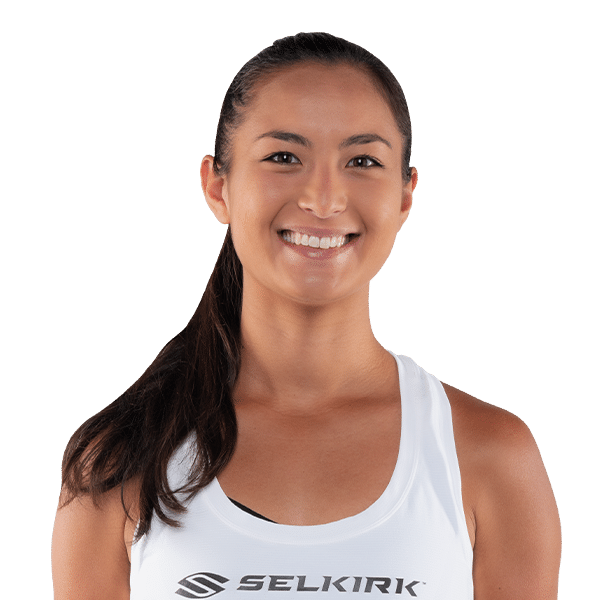 Jade Kawamoto
Women's
Jade Kawamoto
Women's

St. Louis Shock
St. Louis, MO
Gabriel Tardio
Men's
Hayden Patriquin
Men's
Anna Bright
Women's
Kate Fahey
Women's
Elsie Hendershot
Women's

Dallas Flash
Dallas, TX
JW Johnson
Men's
 Callie Smith
Women's
Tyra Black
Women's
Callie Smith
Women's
Tyra Black
Women's
Brooklyn Pickleball Team
Brooklyn, NY
 Dylan Frazier
Men's
Dylan Frazier
Men's
 Riley Newman
Men's
Riley Newman
Men's
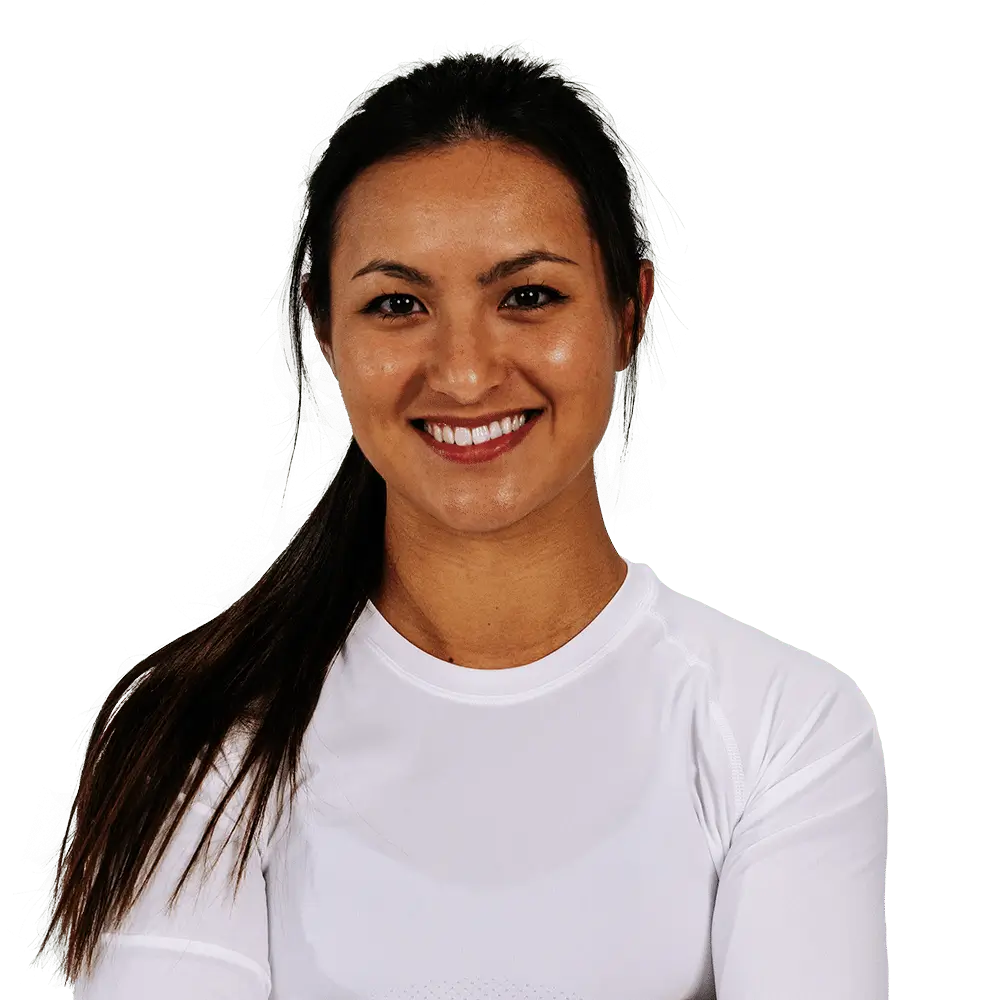 Jackie Kawamoto
Women's
Jackie Kawamoto
Women's
 Rachel Rohrabacher
Women's
Rachel Rohrabacher
Women's
New Jersey 5s
New Jersey
 Noe Khlif
Men's
Noe Khlif
Men's
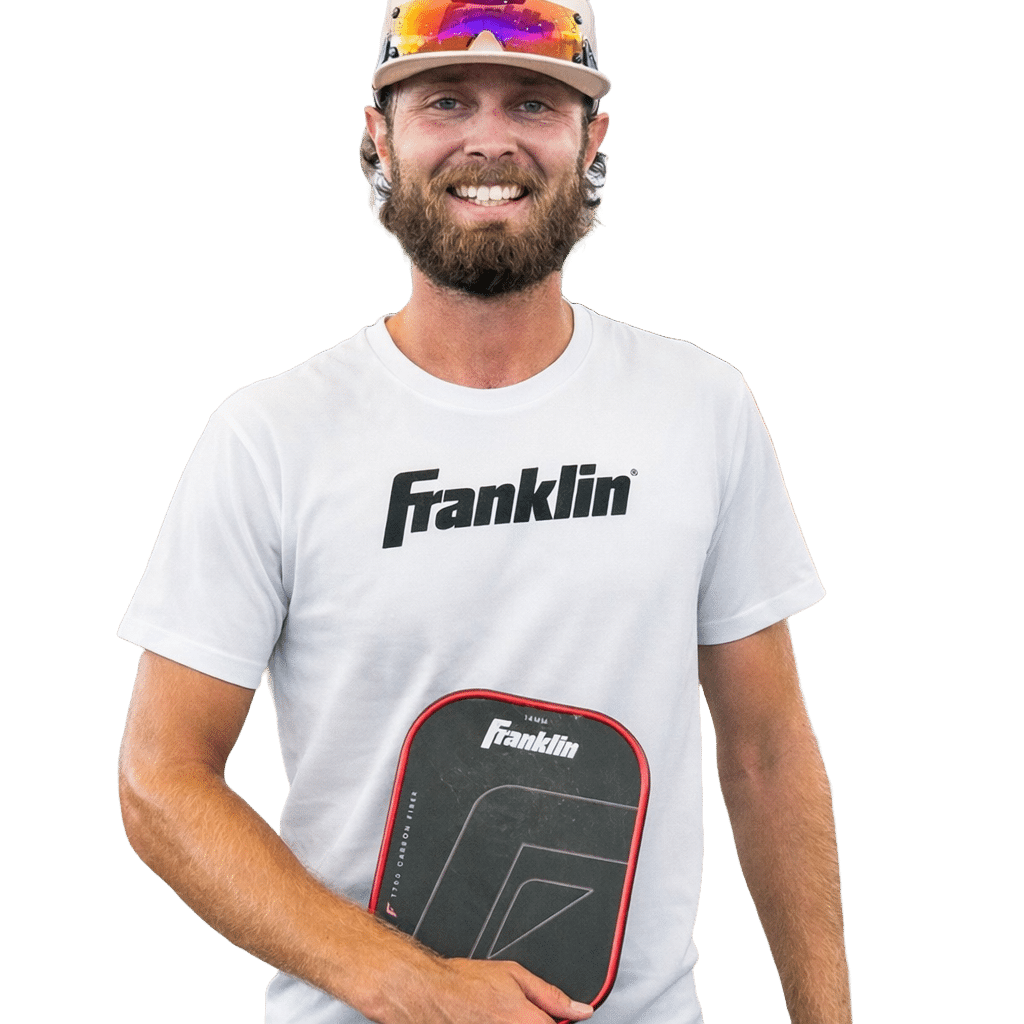 Will Howells
Men's
Jorja Johnson
Women's
Anna Leigh Waters
Women's
Will Howells
Men's
Jorja Johnson
Women's
Anna Leigh Waters
Women's
Las Vegas Night Owls
Las Vegas, NV
★ Tom Brady & Kim Clijsters Roscoe Bellamy
Men's
Brooke Buckner
Women's
Roscoe Bellamy
Men's
Brooke Buckner
Women's
Palm Beach Royals
Palm Beach, FL
 James Ignatowich
Men's
James Ignatowich
Men's
 AJ Koller
Men's
Quang Duong
Men's
AJ Koller
Men's
Quang Duong
Men's
 Tina Pisnik
Women's
Tina Pisnik
Women's
Phoenix Flames
Phoenix, AZ
 Jonathan Truong
Men's
Jessie Irvine
Women's
Jonathan Truong
Men's
Jessie Irvine
Women's
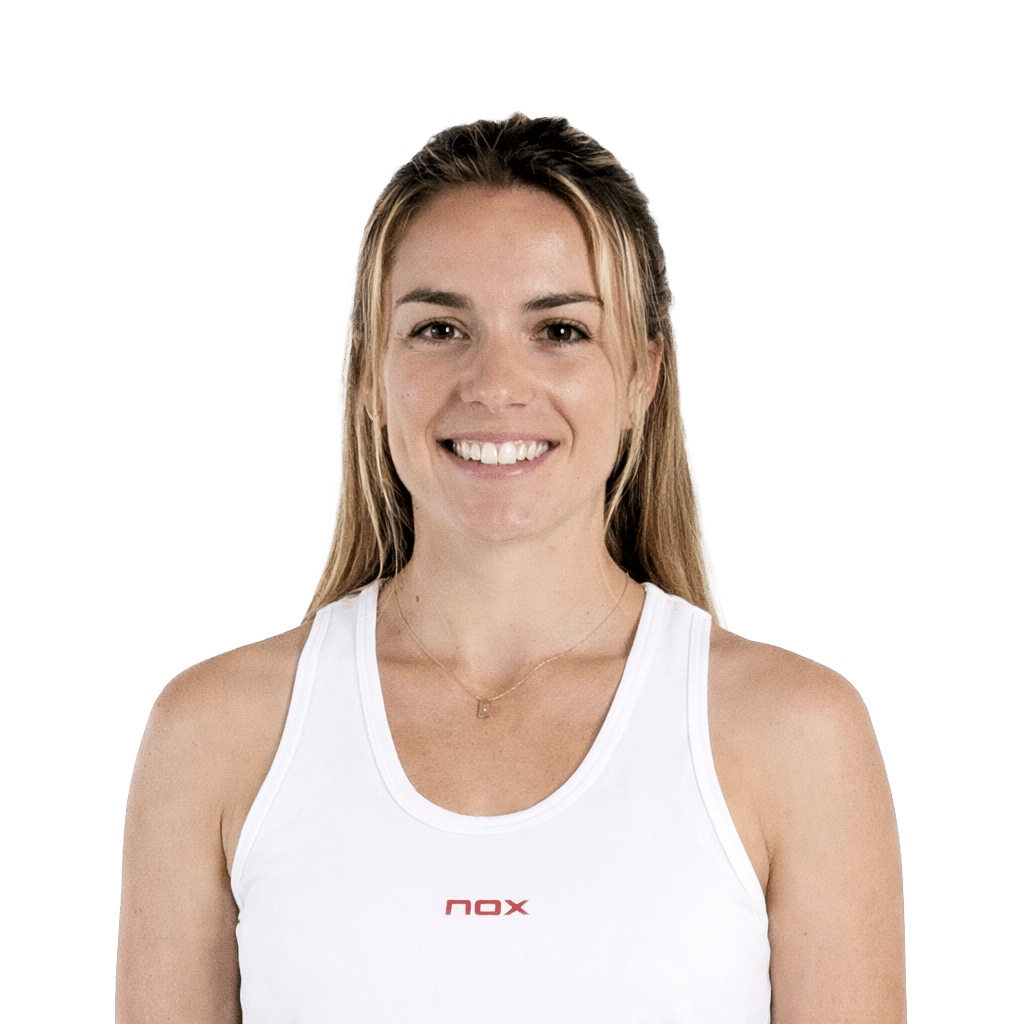 Judit Castillo
Women's
Judit Castillo
Women's
Rosters subject to change. 20 teams in total. Selected franchises shown above.
Headlines & Major Moves
$10M+ Mega Deal
Anna Leigh Waters → Franklin + Nike
The sport's biggest star ended her 7-year Paddletek partnership with a landmark dual-brand deal joining Franklin and Nike. Widely reported as exceeding $10M — unprecedented in pickleball history.
Biggest Free Agent
JW Johnson — Still Unsigned
After leaving Franklin in January 2026, JW Johnson became the hottest free agent in professional pickleball. With no paddle sponsor locked in, teams and brands scrambled to sign the game's most dynamic player.
ProXR → Paddletek Merger
Newman, Navratil & Garnett Switch
Following the ProXR acquisition by Paddletek, Riley Newman, Zane Navratil, and Connor Garnett all transitioned to Paddletek branding — reshaping the mid-tier paddle sponsorship landscape overnight.
MLP Record Draft Pick
Anna Bright → $1.23M (#1 Overall)
Bright was selected #1 overall by the St. Louis Shock in the 2026 MLP Draft for a record $1.23M pick price. The highest draft valuation in league history signals just how fast player values are rising.
MLP vs PPA Tour — Two Worlds
Two leagues. Two philosophies. One sport. Every key difference between team-based MLP and individual-based PPA Tour.
MLP
Major League Pickleball
PPA Tour
Professional Pickleball Association
Key Insight — Scoring
As of 2026, MLP uses side-out scoring to 11 for all regular games (Men's Doubles, Women's Doubles, Mixed Doubles). Only the DreamBreaker tiebreak uses rally scoring to 21. This format balances quicker regular games with a dramatically different rally-scored finale — the only such hybrid format in professional pickleball.
See Section 23: Tournaments for the full pro tour landscape.
A) How Points End
Point Resolution
Where Final Shots Happen
Final Shot Types
Rally Flow Progression
B) Error Analysis
Unforced Error Breakdown
Error Impact Stats
3 Core Coaching Metrics
"The biggest lie in pickleball is that you need to hit winners. You don't. Over half of all points are gifted by the other team's mistakes. Be the team that makes fewer of them."
C) Momentum
Momentum Thresholds
Pressure Performance
Once a team builds a 7+ unanswered point run, they win 50% of all DreamBreaker matches from that position. Momentum in pickleball is not a myth — it is measurable. Breaking a run requires changing pace, court position, shot selection, or partner communication.
Case study: In 2024 gold medal matches, when Anna Leigh Waters or Ben Johns won the first game, their combined record was 65–0. Game-one momentum at the elite level is essentially deterministic.
D) 3rd Shot Outcomes
Drop vs Drive — Pro Data
Drop Shot Metrics (UBC Research)
When Drives Win
Singles vs Doubles Strategy
E) Kitchen & Speed-Up
Speed-Up Timing
Dink Rally Stats
Attack Target Effectiveness
Serve & Return Data
"The data is unambiguous: the team that gets to the kitchen first and stays there wins. Period."
→ See Section 22: Playbook & Tactics for how to exploit these numbers.
F) Shot Outcome Analysis
Error Distribution — All Point-Ending Shots
Unforced Error Types Breakdown
Momentum Analysis — Consecutive Point Streaks
Third Shot Outcomes — Pro Level
Kitchen / NVZ Speed-Up Outcomes
Rally Length Distribution
Shot Placement Heat Map — Half Court View
Win Probability by Court Position
Serve Statistics — Pro Level
Dink Rally Statistics
G) Point Construction Data
Optimal 3rd Shot Choice by Return Depth
G) Win Rate Analysis
Data drawn from 22,000+ pro shots, PPA Tour match archives, and MDPI notational analysis. These probabilities represent true win-rate advantages — not just correlation.
Serving Team Win Rate
Third Shot Drop Success (Pro)
Kitchen Rally Win Rate (First to Line)
Points Won via Opponent Errors
H) Point Outcome Distribution
How points end differs dramatically between recreational and professional play. At higher levels, unforced errors drop and winners rise — but errors still dominate.
Stacked Point Outcome — Rec vs Pro
I) Game Length Statistics
J) Shot Selection Impact
Third Shot: Drop vs Drive
Dink Pattern Effectiveness
Speed-Up Success by Target Zone
Lob Success Rate Analysis
K) Common Scoring Patterns & Game Flow
Typical Score Progression to 11
Momentum Runs & Comebacks
L) Rec vs Pro — Full Statistical Comparison
Side-by-side look at the key metrics separating recreational 4.0 play from professional-tour-level competition.
| Metric | Rec (3.5–4.0) | Pro (Tour Level) | Key Insight |
|---|---|---|---|
| Rally Length | 4.2 shots | 8.7 shots | Pros sustain rallies 2x longer through superior reset skills |
| Unforced Error Rate | ~65% | ~52% | 13% fewer errors — the single biggest performance gap |
| Serve In % | ~93% | 97.8% | Near-perfect serving is table stakes at pro level |
| Third Shot Selection | ~50/50 drop/drive | ~49/51 drop/drive | 2024 PPA data: pros now mix drops and drives nearly equally |
| Time at Kitchen Line | ~35% of rally | ~70% of rally | Pros spend twice as much time at the NVZ — position is everything |
| Points Won at Net | ~55% | ~73% | Net position win-rate advantage grows with skill level |
| Points Won at Baseline | ~30% | ~17% | Baseline play yields fewer points at all levels — especially pro |
| Dink Rally Length | 2–3 exchanges | 6.2 exchanges | Pros dink 3x longer before attacking — patience is a weapon |
| Lob Success Rate | ~50% | ~20% | Lobs are far less effective against pros who have overhead court coverage |
The data is consistent across all metrics: the path from recreational to professional play is built on three pillars — (1) dramatically fewer unforced errors, (2) spending 2x more time at the kitchen line, and (3) executing the third-shot drop at a 65%+ success rate. Master these three and your win rate will follow the data upward.
The Health Dividend
Why Pickleball
Is The Sport
For Your Body
It burns more calories than walking, puts less stress on your joints than tennis, and — according to a growing stack of peer-reviewed research — cuts loneliness by nearly a third. No other sport in America is growing this fast, and the science of why is finally catching up.
Pickleball occupies a rare sweet spot: it delivers genuine cardiovascular intensity while remaining accessible to players of all ages, weights, and fitness levels. The smaller court reduces the explosive sprinting demands of tennis while keeping reaction-time requirements high — meaning your brain is as engaged as your body.
Sources: ACE-Sponsored Research (Dalleck et al., 2018) • APPA National Pickleball Report • Harvard Health Publishing
The fitness case for pickleball extends far beyond calorie burn. Here is what the science says about the whole-body, whole-mind benefits of regular play.
Calories Burned per Hour — Activity Comparison
150-lb (68 kg) person at moderate recreational intensity. MET-based estimates (Ainsworth et al., Compendium of Physical Activities).
Most recreational players achieve cardio zone 2–3 for the majority of their session — the optimal range for aerobic base development. Estimates based on MET values from the Compendium of Physical Activities (Ainsworth et al.).
Pre-Match Injury Prevention Checklist
The most common pickleball injuries are preventable. Follow this checklist to stay on the court.
Source: Injury patterns in pickleball, Orthopedic Journal of Sports Medicine (2024) →
Always consult a sports medicine physician before returning to play. Figures are typical mild-to-moderate cases.
No other major sport in America spans such a wide age demographic while keeping competition genuinely balanced. A 70-year-old with soft hands and kitchen mastery can beat a 30-year-old who over-powers every ball. That intergenerational equity is unique, and it matters to health.
A landmark 25-year Danish cohort study found that racket sports deliver the greatest longevity benefit of any physical activity — surpassing swimming, cycling, running, and gym exercise. The social component appears to be the difference-maker.
"Pickleball may be the most perfect exercise prescription ever created by accident — aerobic, social, cognitively stimulating, and low-impact enough to do at 75. If a pharmaceutical company designed a drug with these outcomes, it would be the best-selling drug in history."
— Dr. Michael Joyner, Mayo Clinic exercise physiologist, on the broader evidence base for racket sports→ See Section 04: Equipment for paddle ergonomics and elbow-safe grip selection.
→ See Section 11: Etiquette & Culture for the social infrastructure driving pickleball's growth.